0:00 / 0:00
A Tale of Two Children Living in Two Tomorrows - Parsha Bo - By Rabbi YY Jacobson
2,005 views
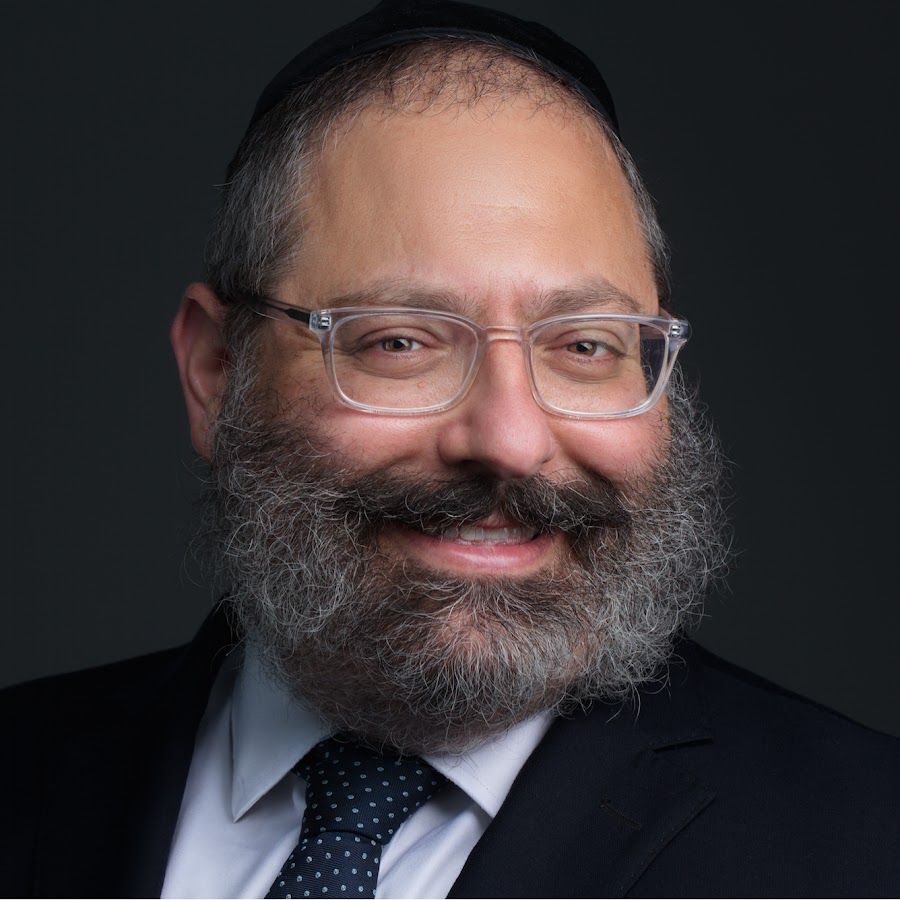
One lives in a “tomorrow” which is a continuum of “today;” the other lives in a “tomorrow” alienated from the “today.” How do we build bridges between the two? For Source Sheets: http://www.theyeshiva.net/jewish/94
Comments(0)
Transcript
Auto-generated transcript. Not time-synced to the video.
[Music]
[Applause]
[Music]
you
[Music]
[Applause]
good evening and welcome to all before I
begin the class tonight I would like to
invite each and every one of you to join
us next Sunday evening January 24th 2010
the night of the 10th of Shevat 5-7 70
at 8 o'clock p.m. for a live evening a
global evening of music and inspiration
commemorating 60 years of the leadership
of the lubavitcher rebbe at a live event
which will take place at Habad in boca
raton and florida with a live webcast at
the yeshiva dotnet that's next Sunday
January 24th 8 o'clock p.m. this
evenings class is dedicated in honor of
our new son
Avraham Moshe Ben Esther avi guile
Jacobsen in honor of his birth on the
20th of Tavis 5770 this evening's class
is also dedicated by our dear friends
the vid and EDA Schottenstein in the
loving memory of the Kadosh iam of
Mumbai including Rebecca Vril Maya and
risky hallsburg in the loving memory of
altar shoeless word love in the loving
memory of Avram dovid libera of pasha
Leia
özil a - hey nish Masson surah bit Sara
haha
[Music]
they tell the anecdotes about a farmer
from Texas who came to visit his fifth
cousin also a farmer in Israel and the
Israeli farmer wants to impress his
cousin from Texas he takes him around
his beautiful farm in the Holy Land
shows him the crop shows him the
vegetables shows him the trees the
fruits shows him the stables the animals
the cows the chickens and so on and so
forth and they're discussing their
respective farms and the man of Texas
turns to the farmer of Israel and he
says huh I see you don't understand what
a farm is let me tell you about my farm
back in Texas when I get into my tractor
in the morning to drive through my farm
it takes me three days to get from one
side of the farm to the other side of
the farm and the Israeli farmer looks at
as a remote cousin he gives a deep sigh
and he says yeah I know exactly what you
mean I also used to have such a tractor
this anecdotes demonstrating how two
people can communicate to each other but
yet their language is completely
different they don't even understand
that the language of each other is this
suitable introduction for the theme we
want to discuss this evening a tale of
two children living in to tomorrow's the
conclusion of the weekly portion of BOE
finds the Israelites set free from a
long and horrific Egyptian bondage and
slavery their leader unparalleled leader
and master moisture obey no Moses who
set them free speaks to them in the
aftermath of the Exodus
and one of the most important themes he
speaks to them again and again is about
education about shearing the story with
their children and with the generations
that will follow them one interesting
verse we will focus on this evening
please open your source sheet your
curriculum right below the video you
have a PDF document with all of the
sources source number one will also
bring it up on the screen source number
one parshas by chapter 13 verse number
14 you'd gimel dalet moses talks to the
jews and he says the high officials have
been some maher lamer Moses the amarte
love bhai secured I'd see uh no Hashem
omits rally me base of other when your
child will ask you tomorrow
what is this you will tell him with a
strong hand God has taken us out of the
house of slavery after Moses tells the
Jews that when you will come to the Holy
Land you will come to the land of the
canaanites vahana Akiva Akash
similarites economy and he gives them a
series of commandments namely the idea
that the oldest child the firstborn male
must be redeemed from the coin as well
as the firstborn cow the firstborn sheep
your child will ask you tomorrow what is
this what are these mitzvahs all about
and you will respond to him that God has
taken us out of Egypt now you know the
greatest biblical commentator is Rashi
Rashi is the acronym for bein new
it's cocky he lived in the 11th and 12th
century in Troy in France
for a while he was also in worms in
Germany vermeil's in Germany but most of
his life he lived in Troy in the country
of France
and he wrote the most basic fundamental
commentary on the Bible on the tomás as
well as on the Talmud he's known as
Arashi Rabbeinu was his name
slo-mo and his father's name Yitzhak
thus rational banished normally it's
kaki Rashi gives us an interpretation
here what seems to bother him is a very
obvious question what does the Torah
mean when it says when your child will
ask you tomorrow why tomorrow why will
this question happen only tomorrow in 24
hours why tomorrow why marker take a
look in Rashi second paragraph of source
number one please bring it up dr. Rashi
key is also been Komaki yes mother show
acts of via Schmucker show lockers man
there is a mocker there's a tomorrow
which is part of the today which means
now and there is a tomorrow which means
at a later time there's two markers
Rashi tells us sometimes the Torah says
mother earth tomorrow and it means now
it will happen tomorrow that will happen
tomorrow Tuesday in 24 hours but
sometimes when we use the word Makar
tomorrow it doesn't mean literally
tomorrow in 24 hours it means tomorrow
in terms of in a distant future at a
later time tomorrow may mean in a week
in a month in a year in 10 years and a
hundred years in a thousand years
tomorrow in the distant future at a
later time that is also included in the
word Makar tomorrow and Rashi continues
kaguya's air like this Makar here when
your child will ask you tomorrow doesn't
mean in 24 hours rather it means in the
distance in the distant future at a
later point in history a child may ask
you Mazdas
what is this what are all these rituals
and commandments and mitzvahs and laws
and you will talk to him you will
explain to him the story of the exodus
of Egypt and Rashi continues oka going
there's another example for this type of
mehar which means not tomorrow as in the
next day in the following day but
tomorrow at a later time and that is a
verse in yahushua and joshua muscular um
Reuben aid from Lebanon no the B'nai God
Reuben a Reuben and the story of the
children of God and removing two tribes
of Israel tomorrow your children might
tell our children there two tomorrow
does not mean tomorrow as in the
subsequent following day but tomorrow in
the distant future that story we will
discuss later in the class this is what
rash she tells us let's ask a simple
question in this Rashi why was it
necessary for Raschi to give us the
introduction yesh Maher show action
there is a tomorrow which is now that is
not relevant here it's obvious that when
it says tomorrow Moscow it could mean
literally tomorrow as in the next day
the following day in fact in the Torah
itself and the portion of the era Moses
tells Pharaoh uses the word Maha a few
times
tomorrow this plague will happen
tomorrow I will pray tomorrow it will
stop there Lamar means literally
tomorrow it's obvious it's simple it's a
no-brainer that Makar means acts of
there's a marker which means tomorrow as
within the next 24 hours or in 24 hours
or so that is not the novelty of Rashi
here what Rashi is trying to explain to
us is a new insight that yesh moach Osho
lacquers man sometimes when the Torah
uses the word tomorrow when it employs
determine maka it means not literally
tomorrow but tomorrow as a distant
future that is the novelty of Rashi so
why does Rashi begin his commentary with
the seemingly superfluous and
unnecessary statement yes Maher show
actual there's a mantra which means
today every word in raschi you must
realize is meticulous it's precise no
excessive and superfluous words
Rashi's commentary is a masterpiece in
the sense that every single word
sentence
is profoundly meticulous impeccably why
is this introduction necessary now she
should have began Kia shawls our
business tomorrow when your child asks
you tomorrow yes Marcus Urlacher's mom
sometimes the Torah will use the term
Maher tomorrow and it means not
literally in 24 hours but in a distant
future in fact in fact the same term was
used by the Torah at a later point and
that's exactly what Rashi does open up
source number 2 in Deuteronomy in the
portion of a scam and the Torah says
kiya shall have been the mother lame
Emma my ideas become Amish but too much
it's a rush I'm a Latino ask if your
child asks you tomorrow what are these
laws which God has commanded you take a
look in raschi a source number two the
second paragraph bringing up soccer
Ashley keeps all Cup income on her yes
marker show a phrase man sometimes the
Torah uses the word mother and what does
it mean it means the distant future
Rashi does not give us near the
introduction yesh mashter so acts of
each month cultural life as mom the
marker show actions are necessary rashly
goes straight to the point yes Marcos
lockers mom why here in BO does Raschi
give us this seemingly unnecessary
introduction another question Rashi
brings a proof from the book of Joshua
Joshua obeys Joshua 22 where the Torah
uses the word marker and it means not
the immediate fout that immediate day
following this day but it means a later
point in history a later point in time
why does rashly have to wait and bring
us a proof from Joshua 22 when in this
very same book of yahushua in chapter 6
in chapter 4 I stand corrected in
chapter 4 there's already a marker which
means the distant future source number 3
yahushua chapter 4 joshua commanded the
Jews to take stones
12 stones
set them up by the Jordanian river after
they crossed the river from the East
Jordan to the west of the Jordan to
enter into the Promised Land why
so he says source number three la Monte
is ice ice beaker become this shall be a
sign among you kiya Shaolin beneath the
Mahalo Marv Marv on am a lil ahem when
your children might ask you tomorrow
what is the meaning of these stones and
you will explain to them that these
stones represent the fact that you
crossed the Jordanian river and the
river split as you cross the river to
enter into the Holy Land
there to mock are your children will ask
you tomorrow doesn't mean tomorrow
Tuesday or Wednesday a Thursday next day
it means at a later point and this isn't
Joshua chapter 4 but rashly does not
bring this source he waits for Joshua
chapter 22 discussing the different
story why why not bring our earlier
source from Maher tonight I want to
share with you one explanation for this
it's an explanation that was presented
by the Lubavitch Ariba
at a Shabbos afternoon gathering or fir
brainian and Yiddish on Shabbos parshas
boy you taught of salaamed on the
Shabbos of the portion of bow the tenth
of Shabbat 1970 was actually the 20th
anniversary of the passing of his
father-in-law the previous Lubavitch
Rebbe Rabbi Yosef Yitzchok Schneersohn
the sixth Lubavitch Rebbe Oh passed away
on the tenth of sharat 1950 and this was
the 20th anniversary of his passing the
tenth of Shabbat 1970 there ever gave
then a lengthy explanation into this
Rashi but tonight I'm only calling one
idea a more homolytically and symbolic
explanation in this rashly based on the
Lubavitch Rebbe is explanation on that
Shabbos
the Torah here is addressing that
phenomenal concept of key issue havi now
when your child will ask you mass iswhat
is this this is not the only time the
Torah refers to your child asking
questions in this very portion of Bo
earlier Moses tells the Jews when your
children will tell you my avoid as I
slow him what is all this service that
you're doing later in BO he says we got
the television so you should tell the
story to your children here again for
hockey Sullivan for your child will ask
you invest and on that I quoted before
again Valhalla keys all covenant or your
child will ask you these four verses
correspond to the famous four children
in the Haggadah based on the fact that
there are four verses and the Commish
with the Torah addresses the
conversation between the parent and the
child in terms of Passover the Torah
here is presenting a very powerful idea
namely don't be scared of questions
encourage questions celebrate questions
embrace questions sometimes people think
that religion must be threatened by
questions if your children or students
ask too many questions or they run from
questions rebuke them chastise them for
asking questions how dare you ask
questions this is not a religion of
questions comes the Torah immediately
after the Exodus after they become
freemen before even they become a nation
at Sinai and Moses again and again and
yet again emphasizes the fact that
questions are not only not something you
should be threatened of but on the
contrary questions ought to be embraced
questions ought to be welcome
Judaism is never scared or insecure of
people children and students and people
asking questions to give a simple
example when your books are legal you
don't mind if somebody scrutinizes your
books or when your house
in a good condition you don't care if a
inspector comes and makes a thorough
inspection to examine the foundations
and other parts of the home you're
secure because you know that you could
look deeply into the house or deeply
through the books and you will not find
any worms you will not find any
destructive forces because you're
confident Judaism has the confidence to
allow for any question in the world ask
we're not scared of questions when there
are answers then there's no reason to be
intimidated by questions how above
our about the cool above the
Mishna says turnover tor a turnover
tourists search and search because it's
all the earth true you don't have to
wait till you understand everything in
order to observe the tour and the
mitzvahs in Judaism the order is NASA
before nish but the Jews at first will
do and then we will listen and
understand but understanding and asking
questions in order to be able to
appreciate and understand is not only
something you have to engage never if
you have no choice it's something you
should celebrate because if there is
real confidence if you understand that
your product is real its authentic then
never be afraid never be scared of
questions so the Torah says your child
will ask don't run don't chastise engage
the child but there are two types of
questions coming from two different
types of children and it's these two
types of questions and two types of
children that the Rashi is alluding to
in his commentary children by definition
belong tomorrow they belong to the
tomorrow they represent our future they
are the voice not of today but of
tomorrow but there are two tomorrow's
Rashi tells us
yes Maher show acts of the a Schmucker
Shula Hersman
there is a tomorrow which belongs to the
today
there is a tomorrow which is
disconnected from the today there's a
tomorrow which belongs to a distant
future you see there are two types of
children living in the tomorrow two
different tomorrow's there's a child who
represents to the tomorrow but his
tomorrow is a continuum of the today
this is a child for whom the values the
traditions the lifestyle the perspective
the veldt and sound the convictions and
ideals of his or her father grandfather
great-grandfather a precious are
valuable he cherishes them he holds them
sacred he loves them but he's a child he
wants to learn he wants to explore he's
curious she asks questions he shall have
been he asks questions he wants to
understand he's curious he wants to
discover he asks all types of questions
but then there is another child yes
Marshall honors Mon there's a child who
belongs to a tomorrow which is distant
alien and foreign to the today this is a
child who lives not only in a tomorrow
which seeks to continue and carry on the
torch the flame the passion of yesterday
a child who sees himself or herself in
the chain of millennion of continuing
the story of writing the next chapter of
continuing the song in the melody that's
a Maher show a show of it's a tomorrow
it belongs to the today but Rashi says
there's a Maher Shula a KERS man there's
a tomorrow which belongs not to today
this represents a child or a new
generation which identifies not with M
which empathizes not which appreciates
not the perspectives the values the
traditions the rituals the lifestyle the
faith the memories of their ancestors
this is a child who lives in a new
milling Yuen in the world not only
geographically not only technologically
not only as far as the timeline of
history is concerned but also
existentially thematically conceptually
the paradigms of this child
differ drastically from the paradigms of
his father or grandfather a
great-grandfather a great-grandmother
the very modalities of thought are
different it's not just this child or
youngster may have a disagreement may
have a question the very paradigm the
the very paradigms of thought the very
foundations of how to look at the world
of how to look at life of how to look at
virtually every reality in life is of a
different perspective it's a different
modality it's a martial actors man it's
a tomorrow which is separated from the
today by a very profound gulf visco
these questions coming from this child
very different type of questions it
factors the questions of a child who
identifies empathizes loves and just
wants to learn wants to understand the
questions of this child are completely
different because as very paradigms that
different his very foundations are
different you know they tell the
anecdote about a Jew who walks into a
store and he was a religious observant
Jew and it's a meat store and the man
standing behind the counter serves him
the meat and then he says tell me is the
food kosher is the food in the store
cause right I keep kosher so the man
gets a little bit insulted then he says
look up to the wall you see that man
with a long white beard hanging on the
wall he was my great grandfather and he
was a great rabbi in this in this city
in Poland how dare you doubt and ask me
of the food is kosher so to excuse me so
the Jew tells him I'll be very honest
with you I'll be very frank with you
forgive me if it was the other way
around if you were hanging up there on
the wall in the picture and that man was
standing right here behind the counter I
would have no question I wouldn't doubt
it but now that it's the other way
around your great-grandfather they with
the beard is up there hanging on the
wall and your hair bill
Yerba standing here behind the counter I
have a question is the food kosher or
not so sometimes we're dealing with the
situation that the child asks questions
not because he's young she's curious
they want to explore but the questions
are ever different caliber completely
the entire context in which you live in
is completely alien to him it's not
about a detail or about a nuance it's
the very paradigms and foundations are
completely different
we have seen this shift in Jewish
history at different periods but I want
to emphasize one there was a time when
Jewish children by nature continued the
legacy continued the lifestyle continued
the faith of their parents but then a
few hundred years ago and we know the
exact period at the end of the 1700s the
early 1800s with the French Revolution
with the Enlightenment which took over
Eastern Europe Western Europe and then
traveled to Eastern Europe a new
phenomenon occurred in the Jewish world
hundreds of thousands and then millions
of Jews were born and raised in a new
generation in a new educational system
in a new milieu deeply influenced by
movements which shook the world and
shook the very foundations of Judaism
and of Jewish existence and a new
generation slowly emerged which
represented not only a mockery
represented a motherless man we're
suddenly what was meaningful to the
father and the grandfather was
meaningless to the child what was
meaningful to the child was meaningless
to the father the very foundations of
their life the very foundations of their
perspectives completely alien one from
another there is that old Yiddish Saund
you know that song which describes the
Heder the old school in which Jewish
kids would grow up in pity pity gap
identified earnings to be hazed on their
ever learnt me dick in there are comets
Oliver who is actually in there
who's Akshay tired komets alefo suction
ah Himanta kanakam comets aha on the hot
stove burns flame and the rappers
sitting with the young children and
teaching them the olive Bay's the Hebrew
alphabet and he turned to the children
and he says say kinder laughs komets
alefo say it again and yet again ,
Tolliver and the melody continues this
song was composed to describe the Maher
show Asif the child who grows up within
the context of his Tata of his Aida of
his Bob of his Elton Baba
it's a tomorrow but it's a tomorrow that
seeks to continue the today but then
there is a child who grows up in a
different home in a different world
mashallah actors man his questions are
very different questions comes Rashi
back to Ashley and tells us when the
Torah says kiya shows up in Harlem when
your child will ask you tomorrow Ma's
ice there are two types of children who
will ask this question yes Maher show
Asif does a child will ask these
questions but he is emotionally
existentially intellectually
historically connected intertwined with
the past but there's also another child
yes Mahesh Elantras mom and for this
rash she brings a proof and this proof
is from the story of the children of God
then remove in Joshua chapter 22 and the
reason he brings this proof is because
this story really captures the idea
Rashi is trying to tell us about Marla
Osman it's not just tomorrow
it's not even just tomorrow as in time a
distant tomorrow it's a distant tomorrow
in the sense of a new era an era in
which the old paradigm has been replaced
with new paradigms
what is the story actually is referring
to it's a fascinating story in the book
of Joshua the tribe of God and removing
and half of Menasha was given permission
by Moses to settle at the eastern side
of the Jordanian River and not cross
over the Jordan to settle in the western
side of the Jordan but Moses made a
stipulation you can do it only if you
agree to fight with your brothers on the
front lines when they have to conquer
the land in Joshua they fulfill the
agreement the children of God the
children of the tribe of Reuben half of
Manasseh fight with their brothers to
settle the new land on the west the wars
are over and Joshua says you fulfilled
your condition now go back to your
families go back to your homes go back
to your farms on the eastern side of the
Jordan and they bid farewell to Joshua
with a leader and they go back on their
way back at the Jordan River the members
of the tribe of God removing in half of
Manasseh build a magnificent miss base a
magnificent altar and when the other
Jews ten tribes back on the west hear
about this
they are horrified why they see it as a
statement that they are separate there
was a Michigan there was a Tabernacle in
Shiloh that was erected the primary
sanctuary an abode for the divine
presence where Jews would come or
offering who were brought where prayers
were said this was the primary Myshkin
the tabernacle which would later
ultimately be relocated to Jerusalem the
mountain top of the base some endures
but now it's in Shiloh before it was
wandering in the desert for forty years
now it's in Shiloh
and yet these two-and-a-half tribe has
built their own altar they have their
own new religious center their own place
of sacrifice as the other Jews felt this
was a declaration of painful autonomy
we're not part of your people we are our
own people and we're not going to come
to your Tabernacle to offer this
sacrifice we're gonna offer the
sacrifices here which was forbidden in
Jewish law and the Jews fear that there
is a need to go and fight them and they
call the NIH's an army but before that
they send before any war they send a
representative a very prominent person
pinnace you remember princess princess
is the son of allah sir the son of Aaron
the high priest
they sent Pinkus to ask them what is the
meaning why would you do this
haven't you learnt of the previous
events of Jewish history what a disaster
this can create for you and for all of
us
were part of one people their answer is
very moving and it's this answer Rashi
is referring to in his commentary here
in ball take a look source number four
we have their answer via an uber Nehru
oven Obon a god Versace Savita Menasha
the children of Reuben and God and half
of Menasha speak to Israel and they say
kale la Kim Hashem Kaela Lucke masam
whoo yay day of Easter Allah we ADA God
the Lord God God the Lord God he knows
and Israel should not in Banaras member
melash amethyst GN who I am as a live my
solanum his bath wash of maharashtra MV
Mahalo soul of ILO minister mamata
syllabification Lama mass M who you've a
Koosh let him testify that we have not
built this altar to betray God to use it
as a place of sacrifices in lieu of the
temple in lieu of the tabernacle that is
not the reason Himalaya me died give me
divorce in us all a mur
Makar Yoruba nation love an anal aimer
mala hem vilasa malik is ro the only
we built this altar is because of
concern of a future event tomorrow your
children might tell our children what do
you have with God the God of Israel
Oakville Masonic M Binet know of a
nation a roving a goddess a yard in
English MK lobotomies be supinate him as
banana lability reassertion and your
children might tell our children there
is a border that God created between you
and us it's the Jordanian River you
don't have a part in God and your
children will wipe out our children not
allow them to fear God Vaughn I marry
the second Pirates second section and
source for bring it up van Naima we said
national on Olympus Asami's bath loyally
oil oil is over key a Dubonnet know obey
nation maybe they were saying about her
anal lavitus away this ashram life on
earth we said let us build an altar as a
monument not for sacrifices not to
substitute the Tabernacle in Shiloh but
to simply serve as a testimony between
our children and your children for
future generations following Reuben a
the Marylebone a know a little Halen
mushrooms in that your children will not
tell our children tomorrow you don't
have a part in God this is the purpose
of this altar as the verses go on to
explain so you see why Rashi brings this
verse mahuri I'm Ruben a from Lebanon oh
this is not just a tomorrow which
represents a distant future as far as
time is concerned it represents a new
era a match how can anybody
approach the members of the tribe of God
they removin and half of Menasha and say
you don't have a part in the God of
Israel you're not part of the Jewish
faith you're not part of the Covenant we
have with the Almighty what do you mean
we have just left our homes and our
families back in the east and we have
joined you on the frontlines to fight
your wars we have sacrificed our very
selves in order so that you should be
able to inherit your land how would
anybody even
tane the idea that they are not an equal
part of the Covenant of Judaism who
would have the hood spur the audacity to
reject them from the covenant of Israel
who would even think so that's today but
ma tomorrow we will not be here anymore
we will not be here the witnesses will
not be present any longer tomorrow it
will be your children and our children
or your great grandchildren and our
great-grandchildren and your children
living in the West and the promised land
might turn to our children and say
aimless m'kay labelled aquellas no
malice can vilela que you so what do you
have with the God of Israel your
strangers your alien you're not part of
it thus we need the altar we need an
eternal monument right here at the
Jordanian River built by us to represent
the fact that we too are part of the
reality of Eretz Israel the Land of
Israel
torrid Israel the Torah of Israel
aquellas draw the God of Israel so this
is a type of marker which is not just
tomorrow in a few years your child wants
to understand it represents a marker of
a new era were things that were obvious
in the past are not obvious any longer
we're people who sacrifice their lives
for you can now be seen as strangers as
outsiders it's a new era what was
obvious then is not obvious any longer
what was simple to that generation is
not any longer simple for this
generation you can't take anything for
granted this is the marker that Rashi is
referring to us in this portion as well
your child may ask you tomorrow a
question it's not only a child who is
steeped who is entrenched in the reality
of today merely continuing it into a new
generation it's a child for whom the
whole today is completely alien his
questions are different questions as
convictions are different conventions
his very context his modalities of
thought and experience are completely
different
comes Rashi and says the Torah is
referring also to this child and
primarily to this child he shall have
bin Hammam are when the child who is
still connected today asks questions
obviously you should answer obviously
you should respond obviously you should
embrace him and explain it to him
but the Torah is trying to tell us
something much deeper and something much
more revolutionary and something much
more difficult and something less
obvious when you encounter a child who
speaks the language of mashallah
Astra's mine he speaks a different
language his terms are different
his paradigms are different his
perspectives are completely different
you find no common denominator between
you and this child and he asks questions
and you may feel that the questions are
completely irrelevant and irreverent to
the world you come from don't run away
don't be intimidated
don't let him Hank don't leave him
hanging
don't escape don't flee don't chastise
them don't say I have nothing to talk to
you about form our tale of talk to him
you might ask why should I talk to him
how can I talk to her when our very
fundamental ideas are so different how
can I talk to him why should I talk to
him for this there are two answers
answer number one and I'm gonna ask you
to bring up again source number one in
your curriculum bring up source number
one take a look at the verse again
Vishakha benhamadi Mermoz is vimar tale
of what should you tell him the high
security onerous MMH sama base of autumn
God took us out of Egypt with a strong
hand
came the lubavitcher rebbe and said let
us read this verse a little deeper
when your child tomorrow asks you this
question you will tell him with a strong
hand God took us out of Egypt the Torah
is not only telling us what you should
answer him the Torah is also explaining
to us why you have to answer this to him
why you he's even asking these types of
questions because God took us out of
Egypt with a strong hand representing
the fact that God took us out of Egypt
through force through coercion if God
would have not needed to take you out of
your own Egypt with force then you would
have not perhaps not had a child who
asks these types of questions
Maharashtra's mom in other words the
fact that there is a child there is a
student who is so alienated who is so
far who is so remote from your very
foundations may actually be somewhat
your fault because even with you you
disguise may be forced if your Judaism
if your experience of the exodus of
Egypt to serve God would have been truly
tranquil truly serene if it would have
permeated and penetrated you in a very
wholesome and harmonious and real way
your child would have felt that that
would have gravitated to it but since by
you it's because a cured
God had to force you to come out of
Egypt so even though you are a committed
Jew and even though you may be an
observant Jew and even though you are a
Jew left Egypt but since by you it was
because a cured since you all sad to be
slept out since you are also repressing
a certain part of you which is alien
since you had to be coerced with a kaval
to be taken out then your child may be
responding to that deeper part of you
which never wanted to leave Egypt and he
or she refuses to leave Egypt it reminds
me of a story somebody once shared with
me that a Jew came to
moysha feinstein rabbi moshe feinstein
was one of the greatest her logic
authorities of the last generation he
passed away in 1986 and he lived on the
Lower East Side of Manhattan on East
Broadway he built his famous he-she with
inter Pharisee Rochelle I am now the
Lower East Side of Manhattan was a place
that was populated with thousands and
thousands of Jews it was actually their
first address when they came to the
United States especially in the mid 20th
century in the 1920s in the beginning of
the 20th century and then mid 20th
century was filled with Jews with
synagogues and Epis and teachers and
classes and communities malapa mulches
and Titian Shabbos and somebody asked
him said but all these Jews were very
committed Jews and yet most of their
children left Judaism why IRA Moshe
responded and he said it's true that the
parents were very committed Jews but the
common terminology that was used by them
when they were raising their children in
their homes they would say Oh
sister Vera design i8o it's difficult to
be Jewish was a famous expression so she
writes a zine I eat and he says children
don't want fair they don't want a hard
life they want a good life they want a
happy life they want an inspired life
they want an interesting life they want
a fun life an exciting life who wants a
shred of lemon who wants a caved-in
hunchback psychologically crushed and
repressed life you were very committed
Jews but it was Polly secured who was
with a strong hand got to take you out
with a strong hand so back to the talk
there ever said it may be your fault
that your child is so alien so don't run
away but there's something else even if
you are completely innocent even if the
fact of your child speak such a
different language is really not your
fault
you are truly innocent nonetheless the
Torah says kiya shall happen ha
he is your child be now
she is your child don't run away don't
be intimidated don't be overwhelmed
don't recoil into your own orbit into
your own comfort zone into your own
synagogue into your own community reach
out to this soiled Valmeyer tale of
speak to him explain to him enlighten
him enlighten her how relevant their
episode this is to our era and if this
was true in 1970 how much more so today
in 2010 today we live in a degeneration
in an era where so many Jews are
completely alienated from Judaism it's
not just there are questions to our
disagreements there are different ways
of approaching the same truth the same
reality it's a mocker but it's a maher
show a shove it's a tomorrow which is a
continuation of the today there are Jews
who live in a Marshall as man in a
tomorrow which is completely distant
completely alien the very foundations of
the Jewish approach to life to love to
marriage to children to faith to every
single aspect of life is completely
alien to them
comes the tour and says remember that
each one of these Jews are been huh
they are your soldier the connection
that you have with them is very deep
it's deeply profound don't run engage
him love him
listen to him talk to him build a bridge
reach out embrace let the affection
between you to flow remembrance benefits
your child even if it's a Maha life as
man never give up never flee never
become insecure never become pompous
bombastic or arrogant reach out to this
child find the courage within yourself
find the depth within yourself to cross
over what you might think are endless
borders and what might seem as an
unbridgeable gulf cross it over into
binah into the Mahalo Kozma and expose
him or her to the truth to the depth to
the richness of setting yourself free
every single day from the physical
psychological spiritual and emotional
Egypt have a wonderful evening
[Music]
[Applause]
[Music]
[Applause]
[Music]