0:00 / 0:00
Acharei-Kedoshim - Making the Right Investment
241 views
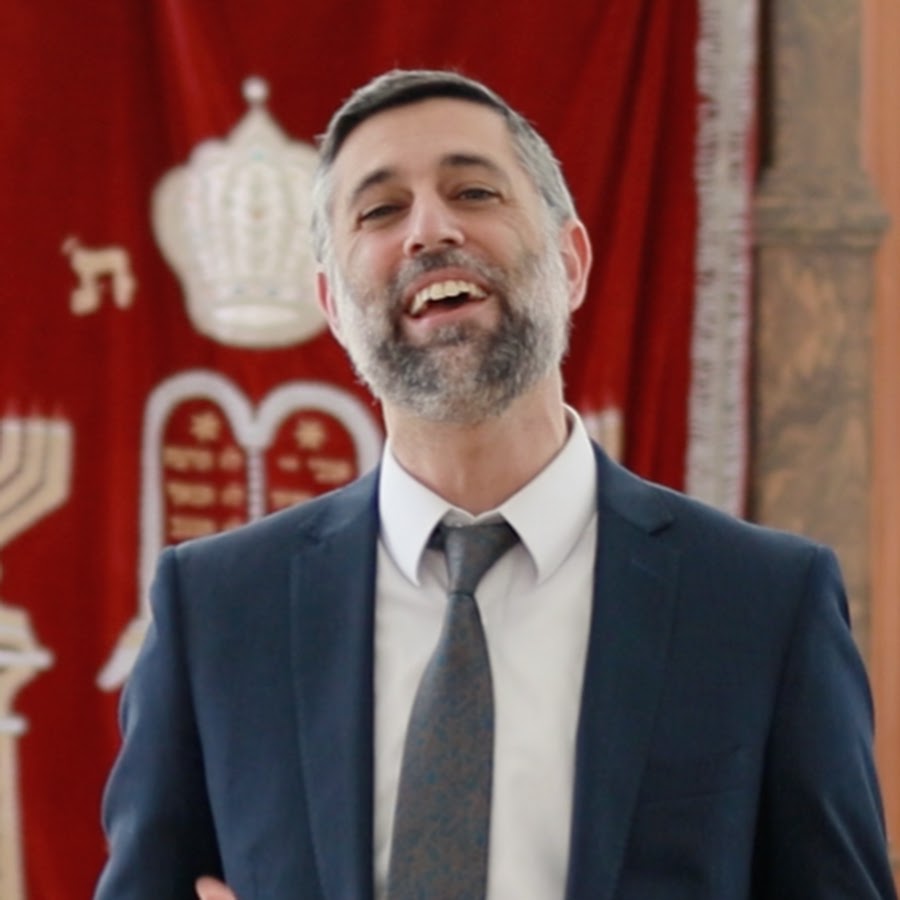
Why does the Torah enjoin us to only bring sacrifices in the Mishkan (Tabernacle) and not on public altars? What is meant by the altar being 'in front of the sanctuary of Hashem?' What is the use of the things in creation that seem to be useless? Why is the king a servant to those who work the earth? Why is property a better investment than merchandise? What is the best investment in spiritual terms when it comes to learning Torah? How does all this explain the reason why we are to only bring our sacrifices in the Mishkan? Find out in this week's Parsha Podcast.
Comments(0)
Transcript
Auto-generated transcript. Not time-synced to the video.
You're listening to the weekly partial
podcast with Ari Goldwag recorded with
the show's never-ending assistance in
our monthly show in Israel 5786
2026. This week's partial is partial of
Ramos and Kedoshim
and it is my Bar Mitzvah partial.
So, it's always fun to take a look at
this partial again.
And I'd like to share with you a
measure. It's on the Sukkot that have to
do with the concept of Sukkot goats.
Sukkot goats means that once we have a
Mishkan
once we have a base of Migdash
so
previous to that it was permitted to
bring carbonas on something called
bamos. Bamos
were altars that were public altars
they could be anywhere, they could be
basically anybody could bring. They have
to be a bachelor firstborn to be able to
use a bama to be the
one who brings the sacrifice there, but
it could be brought at basically
anywhere. Once there's a Mishkan however
or a base of Migdash so
the carbonas cannot be brought anywhere
a person would like to. Carbonas have to
be brought in the Mishkan or the base of
Migdash.
The Sukkot in this week's partial say
like this Adonai spoke to Moses and said
Hashem spoke to Moses
and said Adonai spoke to Aaron and his
sons and to all of the children of
Israel and say to them
This is in chapter 17
Sukkot olive through hey.
So, this is what he said.
This is what Hashem says to say each
each of the base of Israel any person
from the from the house of Israel
he wants to take
an ox or a lamb or a goat
in the encampment or he wants to
slaughter it outside of the or he wants
to he wants to
slaughter it outside of the encampment
the Pesach and bring it to the altar
and does not bring it to the entrance of
the tent of meeting the crib carbon of
Hashem to bring it as a sacrifice to
Hashem the name of Hashem Hashem
in front of the Mishkan the sanctuary
right? There's the inner area
the Kodesh and the Kodesh of Kadashim in
front of that in the in the
courtyard of the Mishkan was the altar.
So, if you didn't bring it there in
front of Hashem Adonai spoke to Moses
and said to say each each of
the person who's done so it's as if
they've spilled blood.
It's tantamount to murder.
The translation is very clear.
Okay. Don't do it. Don't bring carbonas
outside
of the Mishkan. Adonai spoke to Moses
and said to say each each of the
children of Israel and say to them
Adonai spoke to Moses and said
The sacrifices that the Jewish people
previously would bring out in the fields
they would bring sacrifices on bamos on
public altars
bring all those animals in bring them to
the base of Migdash bring them to the
Mishkan.
The result is that
the children of Israel say to them
Make sure it's brought to Hashem there.
Okay, so those are the Sukkot mens
we're going to see
I I believe we'll see from the from the
measure we're going to seemingly go off
on a tangent, but I think that it
teaches us a depth in what is the
concept behind
bringing these carbonas exclusively
in the Mishkan. You can't bring them
anywhere you want. Now there's a Mishkan
you got to bring it to the Mishkan.
That's the place where we meet Hashem.
In a certain like conceptual sense just
to give a little heads up. You know,
it's like can I serve Hashem however I
want?
Or are there rules to this relationship?
Can I do whatever I want in my
relationship with Hashem or does he have
requirements and and I I was thinking
about a marshal of a man and a woman the
husband likes violets
>> [snorts]
>> the wife likes roses and despises
violets.
And the husband brings to his wife
violets cuz he thinks that's how he
expresses love, but the wife says I hate
violets and throws them in his face says
bring me roses.
Right?
A relationship if I'm want to show love
to somebody I got to speak their love
language. They love roses I got to bring
them roses.
And in our relationship with Hashem it's
the same way Hashem wants us to serve
him in a certain way.
Right? And clearly everything that
Hashem does he created us so he wants us
to serve him in a certain way it's for
our benefit of course.
But we might have other ways of
thinking.
We might have other ways of believing
that this is how we serve Hashem, but we
got to serve Hashem so to speak in his
way. The carbon that we are bringing is
not brought wherever we want to. We
bring it inside.
We bring it in the Mishkan.
But let's see together a few other ideas
that relate to this and we'll see we'll
bring it back to the Mishkan and we'll
see
a deep idea. Each each of the base of
Israel each of the children of Israel
say to them Adonai spoke to Moses and
said
Any person from the children of Israel
that will bring a sacrifice they need to
bring it
in the Mishkan. Adonai spoke to Moses
and said to say each each of the
children of Israel
We're going to quote a Sukkot in Koheles
and we're going to give a few other
explanations for it and we're going to
bring it back to to carbonas.
The Sukkot says the children of Israel
say to them Adonai spoke to Moses Sukkot
in Koheles in Ecclesiastes chapter 8
verse 7 that there's an advantage in the
land
in everything.
There's an advantage in the land in
everything.
What does it mean?
Adonai spoke to Moses and said to say
each each of the children of Israel say
to them Adonai spoke to Moses and said
to say each each of the children of
You see something in the world it looks
like it's extraneous it's not necessary.
What do I need all these bugs for?
Right?
Adonai spoke to Moses and said to say
each each of the children of
Everything in the world has a place
everything has a purpose.
Adonai spoke to Moses and said to say
each each of the children
See I have a a palm tree and wrapping
around the palm tree
there's a vine that's growing up the
palm tree.
It's annoying I want the palm tree to be
free of
any other things I want it to look
beautiful. Why do they have to be these
vines? So, the measure says no you take
that vine cut it off make a rope.
Adonai spoke to Moses and said to say
each each of the children of Israel say
to them Adonai spoke to Moses
Another kind of plant that seems to be
extra unnecessary but you can take it
and you can use it
he says here to sweeten
a a herb an herb that's that's
bitter.
Okay, so something that seems extra
unnecessary, but it has there's no such
thing as extraneous in the world
everything has a purpose. Everything has
a a reason for being there.
Okay, so that's concept number one.
Everything has a purpose everything is
important.
But then we have the flip side of that
Adonai spoke to Moses and said to say
The Sukkot says afterwards in Koheles it
says that a king
is a servant of the field.
A king is the servant of the field.
Which means to say
let's see Adonai spoke to Moses and said
to say each each of the children of
Israel say to them Adonai spoke to Moses
and said to say each each of the
children of Israel say to them
You can be a king you have dominion over
the entire world
but you are still subservient to the
field. Which means to say
Adonai spoke to Moses and said to say
each each of the children of Israel say
to them Adonai spoke
If let's say the food produces there's
produce of the field
there's grain
there's fruits there's vegetables
if you have the produce so then you are
fed and you can serve your country can
be a good king. If there's no food you
can't serve your country. So, the king
is subservient to the field. Okay, this
the king despite his great power his
power only extends so far. He's still
limited. And he needs that farmer.
One of his own subjects perhaps
considered a lowly subject. He needs his
subjects to help him in order to be able
to help them.
So, the measure says therefore having a
lot of money is a nice thing, but it's
not enough.
Adonai spoke to Moses and said to say
each each of the Having money is great.
Adonai spoke to Moses and said to say
The
Sukkot is saying that
as the measure explained having money is
nice, but if you don't have the produce
of the field
you're missing something fundamental.
Your money won't help you. If you can't
eat can't spend money.
Okay, so it's very interesting. So,
basically what the measure is saying is
Adonai spoke to Moses and said to say
each each of the children of Israel say
to them Adonai spoke to Moses and said
to say each each Whoever is after money
but doesn't have any property
the measure is almost giving us
financial advice. You have money, but
you don't have property
it's not a good investment it's a
mistake. You need to have something that
will last longer in a certain sense.
Money comes money goes, but you have a
piece of land
so that can always produce it's a much
better investment.
You take your money you put it into land
and the land will continue to produce
because of Hashem year after year the
food that you need to live.
Adonai spoke to Moses and said to say
each each of the children of Israel say
to them Adonai spoke to Moses and said
to say each each of the children of
Israel say to them brings a Sukkot
Adonai spoke to Moses and said to say
each each of the children of Israel say
to them Adonai spoke to Moses and said
Similar idea. Guy goes on his ships he's
going out to buy merchants merchandise
he's a merchant and he comes back on his
ship with the merchandise he sells it.
But when he gets off his ship he's got
to stand on on solid ground.
Adonai spoke to Moses and said to say
each each of the children of Israel say
to them The Sukkot says something which
seems obvious.
If he gets off of this ship, he's
obviously going to stand on solid
ground. So, what is the saying?
The Yeshiva College of America.
Plus it is implying something else that
if you're a merchant and you have a
ship, your ship can sink. Your
merchandise
can be lost.
Your your efforts can be can come to
naught. However,
if you also have land,
the land is something you can stand on.
And ain't like ain't like have a good
measure. If a person is doesn't have
land, there's no greater foolishness
than this.
So, basically, the measure is telling us
a
a financial
truth,
but it's also telling us a spiritual
truth. And that is make sure you invest
in the things that last.
Make sure you invest in the things that
last. You want to know where to put your
money? Put your money into a piece of
land in Israel.
This is where the future is.
Don't invest in Israel
where the future is bleak.
Israel's future is in Israel. Invest in
the future. That's really what the
measure is saying. I'm extending it to
be talking about something different,
but
the measure is saying invest in the
things that last.
I'm in Israel on the earth calling you.
He says another shot.
He says that
I feel it much of the issue in the
modern era.
The first part of the second we said
before is talking about that things that
seem extra in the world. Everything has
a purpose. Everything has
an
necessary reason for being there.
Now, let's look at the Torah. Let's look
at the Torah itself. There are myths
that
that were not explained as much. They
seem to be so to speak extra.
They weren't explained at Sinai in the
same way. You got to
fill in the details.
Right? The Torah says you got to put on.
Doesn't explain exactly what they are,
exactly how they
are made, exactly all of the different
details of the law. It doesn't say it
explicitly in the Torah.
Those of those of those of all these
things.
I've got to enter.
But don't think that just because the
details weren't mentioned in the Torah,
so therefore it's extra and it's not
important.
Right? The Torah says
It had all of them like all of the
matters.
Call call
me for a micro mission to accept that
God is a feeling telling us the name of
God. Everything is included in Torah.
Everything is included in Torah. Every
detail of the Torah.
Every detail of the every detail of the
how you make it, what it looks like,
where you put it. All the details.
Every of this is given at Sinai. Not
only that,
even the things that we're going to say
right here, right now in 2026, 5786.
Everything that a future student of
Torah is going to say,
that information was given to
at Sinai.
Everything was included. He saw
a big picture.
Call me to see if you want to raise a
shoe. Then the second verse says you
might say that this is a new thing.
I very much like the island. Don't think
that any that you say was
is new.
It's all encompassed in Torah. It's all
given. It was there already from long
before.
Okay, so
everything all of Torah is included in
original revelation. Even the things
that we seem to be revealing now,
it was all given as a download, so to
speak,
to at Sinai.
Okay, there's nothing extra.
There's no detail that's not important.
And I would say
it's to encourage us, right? Oh, wow,
knew what we're going to say? No.
It's to encourage us to say that the
that we say, the new insights that we
have, the way that we apply the Torah to
this year, 2026.
The new depth, the new application,
all of that is included. All of that was
there at the beginning and it's
unfolding. We're watching it unfold.
We're watching the Torah unfold in our
lives.
The second part of the which says
that the king
serves the field. You have to be a good
student.
It's referring to somebody
who is learning one type of Torah, one
aspect of Torah, which is Talmud.
Talmud means Torah.
Right? It's the way of of of Talmudic
exegesis. I don't even know if that's
how you pronounce the word.
It's the way of
getting from what the say to understand
what is the application of it. Well,
that's the Torah.
But that person who learns
how to how to learn it out from the
Torah, so the second half is about
he still needs the the somebody who
knows the Torah.
You have to know how to figure it out
from the but you got to know where the
end is.
So, somebody who knows the
who knows the
which means basically the tick-tock, 1 2
3 4 5 6 of what is the Torah.
What is the actual things that we do?
What is the explicit will of God?
You
got to know that if you want to be a
a good student.
You want to understand the depths. You
want to figure out how we know it. How
did we figure out that that's the but
you got to know what the is to start
with
in order to see the depth from before.
Okay?
Now, the measure says the opposite as
well.
The measure says the opposite. The
measure says the opposite.
The
the opposite is also true.
The opposite is also true. What's the
opposite? That a person who knows the
Torah also needs to know how you get
there.
He needs to have an explanation from the
person who knows how to find the
explanation from the
Torah.
The feeling of these
of these Torah.
So, a person who's focused on one aspect
of Torah has to also have the he he's
subservient to a person who knows the
other aspects of Torah.
And having one thing is not enough.
The way of Torah.
Says the measure is
if you like to have a lot,
so you're not going to have it's not
going to be what you're looking for. You
need to have the like we said before,
you need to have the earth. You need to
have a piece of land. What does it mean
in this context to have a piece of land?
Should call me in the
Torah of the world.
My issue is that I like it.
The first aspect is
that if a person has Torah, is learning,
is studying, is trying to understand the
will of but he doesn't have the depth
of of what goes on under the surface of
how we get there.
So, he's missing.
He's missing if a person just does
things superficially, so then he's
missing the depth of it. He's missing
the connection.
The connection in Torah. That's
possible. Okay, so it's not enough
to have
action. You need to have the depth of
understanding of why we're doing this
action.
But then the measure says one last thing
here in this context, which I think is
really the depth of it. The Torah
He says that
if a person learns, but he doesn't
teach,
so there's no greater foolishness than
this.
There's no greater emptiness than this.
Which means to say
which means to say as I understand it
based on the
perhaps a parallel from to the previous
concept in the measure,
where do I want to invest myself? I want
to invest myself in something that
lasts.
I want to take my time. I want to take
my Torah learning.
How do I get the most out of it? What's
what's the long-term investment advice?
The measure seems to me to be saying
that if I'm just learning,
that's nice.
I'm just collecting money. I'm spending
the money. I'm learning for myself.
But when I start teaching,
when I start giving it over to somebody
else,
when I teach my children,
when I teach when I give over in a
podcast, when I teach a a share
in a Yeshiva,
so
I'm I'm paying it forward, so to speak.
I'm doing something that's going to
last. Doing something that's that's
that's solid.
You know, just like when I have a piece
of land, so it's going to bring returns.
We're going to have fruits and crops
every year from that piece of land.
Whereas the money that I get, I take it,
I spend it. It's a one-time deal. I need
something
that gives me consistent
income,
passive income.
It's the same thing in it's the same
thing in learning Torah. When I when I
teach, I'm giving I'm I'm giving it over
to somebody else who's going to
produce fruits later as well.
The teaching that I'm giving is not just
for myself.
It's also something that's going to last
beyond me.
Now, let's come back. We're going to
talk for a moment about the
Torah.
And the measure says something
which is profound.
And I think that it really parallels
what we've we've been speaking about
in these two other concepts.
And we have our papa saying you have to
say all of it. You have to say all of
it. You have to say all of it. of
midbar, who come on Mishkan. As we said
at the beginning,
in the in the
in a originally, when the Jewish people
were in the the midbar, they were
allowed to bring carbonus before there
was a Mishkan
on a bama, on a public altar. Didn't
have to be in a specific location. And I
would add, Moshe Rabbeinu, when he would
receive a nevuah, he could receive a
nevuah anywhere, a prophecy. He could
speak to God anywhere.
But when it came to the building of the
Mishkan, once there was a Mishkan, he
had to hear Hashem's voice only. He
could only hear Hashem's voice in the
Mishkan.
The tenainon, tam ano who come on
Mishkan who is mutar to avoid the
b'chirus. Originally, as it says,
a person could bring a a carbon on a
bama.
And the avodah, the service was done by
the firstborn males. As you come on
Mishkan, as through a bama avoid the
b'chirus. Once there was a Mishkan, you
couldn't bring a carbon wherever you
want. And not anybody could bring those
carbonus. It had to be done by Kohanim,
by priests, children of Aaron. Who is
from the army? Israel bama bamidbar.
And so,
the thing is like this, that did the
Jews do this properly?
Did we Did we
tow the line on bringing our carbonus in
the correct place? The Midrash says no,
we didn't.
We didn't. We made a mistake.
They would bring carbonus on altars
outside of the Mishkan at that time. And
we do find in Tanakh that that was a a
long-standing issue that all of Israel
had.
They would bring carbonus on a on a
public altar instead of bringing it to
the Beit Hamikdash, to the temple.
So, they actually did this already in
the times of the of the wilderness, says
the Midrash.
Why you poraneous voice on them?
And the result was that
disasters happened to the Jewish people.
There was a tremendous negative impact
of it.
We We thought we're serving Hashem.
We're trying to serve Hashem in our way.
We're bringing Hashem violets, but
Hashem wants roses.
But the result was
that bad things happened. Why you almost
avoid the b'chirus who are going?
And it was a chillul Hashem because
it looked terrible. Look, they're
serving him.
People of the the nations of the world
would say, "Hey, the Jews are serving
him, but God is letting them die.
He's killing them."
Feel like you spoke to Moshe Rabbeinu
Israel you should be so physical and
avoid
So, Moshe Rabbeinu is enjoined
to tell the Jewish people,
"There's one place that you got to bring
your carbonus. You don't want stuff to
happen to you. Bring it to the right
place.
Just like Moshe Rabbeinu could only hear
my voice in in the Mishkan, in the
Tabernacle,
the place to have a relationship with
Hashem is in the Mishkan, in the Beit
Hamikdash.
In Eretz Yisrael, I'll add.
This is the place.
Can you have a relationship with Hashem
elsewhere? Yes, you can.
Is Eretz Yisrael the main place where
our relationship is? Yes, it is.
Yes, it is. The Beit Hamikdash is the
place to bring those carbonus. And when
we bring the carbonus outside,
it results in in danger. It results in
in poraneous.
Yeah.
Eretz Yisrael has a special protection.
It's not to say there's no danger here,
but Eretz Yisrael has a a special
protection. The Nazis couldn't get into
the land of Israel. They were stopped at
the gates.
A Kadush Baruch Hu protects us specially
in Eretz Yisrael.
Look at the wars that we've been
fighting of late.
Look at the amazing special protection
Hashem has given to us.
But what I want to bring out from here
is that we see from the first two parts
of the Midrash.
Midrash gives us the financial advice
and he gives us the spiritual advice.
Invest in
the long-lasting
the long-lasting investment.
The thing that gives you the most
returns.
Buy karka, live buy land.
Have students. Teach students.
Don't just spend the Don't just get the
money for yourself and spend it. That's
a short-term
short-term thing. You get money, you
spend the money.
Take your money and invest it in
something deep.
Take your carbon. Don't bring it outside
of the Beit Hamikdash. That's like
spending money. That's not the deep
investment.
When you bring a carbon to the Beit
Hamikdash, this is how I understand what
the Midrash is trying to imply.
When you bring a carbon to the Beit
Hamikdash, what you're really saying is,
"I believe in what it says in that Torah
inside of that Aron."
Inside of the Torah, inside of that
Aron, which is the Mishkan Hashem,
right?
We said in the pasuk as we read it, it
stuck out. We're supposed to bring
the the carbon on the altar in front of
the Mishkan Hashem,
in front of the Tabernacle. What's the
Tabernacle? It's really the place which
which houses the Kodesh, the Kodesh
Hakodashim.
It houses the Kodesh, which has in it
the mizbeach hazahav, the golden altar,
which is a small altar, incense
offering. And it has the shulchan, which
has the lechem upon him.
Both of those two things represent our
relationship with Hashem, the menorah,
our spiritual relationship with Hashem.
And in the Holy of Holies is the Aron,
the special box which contains within it
the Torah,
which is the ultimate relationship with
Hashem,
which is the the
greatest expression of what Hashem wants
from us.
When I bring a carbon in front of the
Mishkan,
what I'm really saying is, "Hashem, I
want you. I want a relationship with you
on your terms."
It's not just I'm going to bring this
carbon wherever I want. Oh, Hashem,
forgive me for the sin I've done. Oh,
Hashem, I want to thank you even
on my terms. That's a that's a carbon
outside of the Beit Hamikdash, outside
of the Mishkan.
No, it's in front of the Mishkan Hashem.
It's inside of the Beit Hamikdash.
That's the real investment. That's the
long-lasting investment.
It's important to have a relationship
with Hashem anywhere.
It's That's true.
I can ask Hashem for anything.
I can ask Hashem for success in a card
game. I'm going to win. Backgammon game.
I can ask Hashem for success in in my
business.
I can ask Hashem for anything.
But what's the main thing I want to ask
Hashem for? I want to ask Hashem for
success in my relationship with him.
I want to ask Hashem for success in my
learning.
I want to ask Hashem for success
in my teaching.
I want to ask Hashem for success in my
relationship with him, the the greatest
investment ever.
I want to ask Hashem to have something
which lasts forever.
The thing that lasts forever is is
wherever I plant those seeds
in a piece of land
which is
which is the Beit Hamikdash, the
Mishkan, which is that eternal
relationship
between me and Hashem, my children and
Hashem, people around me and Hashem.
That's where I wanted it to go. That's
where I want my investment to be.
That's where I want to bring my carbon.
That's where I want to bring my
sacrifice. I want to get inside of the
Mishkan Hashem.
I want to bring it here. I want to get
inside of Eretz Yisrael, which is the
Mishkan Hashem.
Chazal say that that whoever lives in
chutz la'aretz is done like he doesn't
have a God. It's like they don't have a
God. What they're really saying is that
it's easy to get distracted there. It's
easy to lose sight what is the center.
Is it getting rich?
Is it having wherewithal? I need those
things. I need parnassah. I need
livelihood. Those are important. But I
need them so that
I have the real investment, the real
piece of land, which is
my relationship with Hashem.
And when I live in Eretz Yisrael, so I'm
reminded of that all the time that this
is what it's really about. And when I
forget that,
they're going to remind me. The people
around me are going to remind me.
The the whether it's my community or
whether it's my enemies.
They might remind me with ballistic
missiles.
Reminds me of of something that I heard
recently that
that
Rav Shmuel Auerbach said that the Arabs
have been coming less and less to the to
Har Habayit
because they've seen how
the Jews are doing hishtachavaya.
Those who obviously they have rabbonim
who permit them to go up there.
They've been doing hishtachavaya.
They've been falling completely on their
faces in front of Hakadosh Baruch Hu.
And the Arabs recognize that when we
fall on our faces,
when we come make ourselves completely
subservient to Hashem, they're afraid.
That's it. That's the essence
of what it's about. Bringing that carbon
in front in the Mishkan shows me that
this is what it's about. Even my
relationship with Hashem is for the
relationship with Hashem, not for my own
self-serving needs.
I want to bless you. I ask you to bless
me. Hashem should help us
that we should be able indeed
to recognize, to take all of our
investments,
to take all of the things that we do and
direct them. Bring them into the
Mishkan.
Bring them into the Mishkan. Hashem
should help us that we should be able to
make the right investments, have the
right pieces of land,
have the right
actions that indeed
unfold here in this world
and extend on forever
in our relationship with Hashem. Thank
you so much for listening. Have a
wonderful Shabbos.
This podcast was made possible through
the gracious donations of listeners like
you. For more podcasts like this, please
visit www.arigoldwag.com
or search on iTunes Ari Goldwag.