0:00 / 0:00
Are You A Leader? - Devarim -The Parshah On Fire
15 views
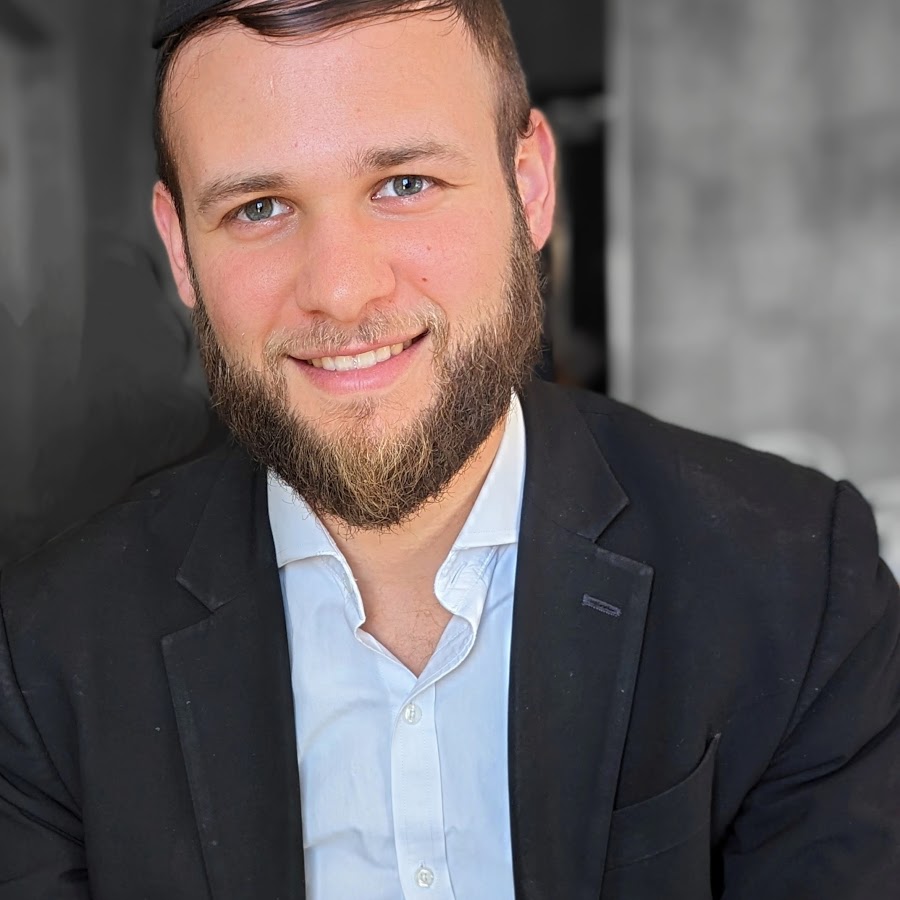
Moshe’s final speech, arguably the greatest speech in world history, begins with him telling us to have fair and balance leaders. Why is that? Why does he start his speech to all of the Jewish people with something that is applicable to less than one percent of them? The answer might surprise you
Comments(0)
Transcript
Auto-generated transcript. Not time-synced to the video.
[Music]
For what was one of the greatest
speeches in all of human history exactly
37 days before his death, Moshe got up
to address the Jewish people. Camped
right on the border of Aritzel, the Jews
were as close they had ever been to
finally entering the land they had
waited 40 years for. Misha in his final
opportunity to teach and inspire the
nation he so masterfully nurtured the
last four decades. He gathered them all
together, cleared his throat, and
addressed the entire people. The people
leaned in, eager to hear what his
parting words would be. Now, what's
strange is what Moshe chose to talk
about first. The very first thing he
spoke about was seemingly only
applicable to less than 1% of the
population. discussing laws regarding
judges and leaders being fair and
honest. Leaders wise and discerning
should lead you with impartiality and
righteousness.
Moshe beckoned us. Now granted, proper
leadership is an important topic, but is
it more important than, I don't know,
reminding us of the dangers of
assimilating into the Cananani culture?
Is it more important than a reminder to
focus on spiritual pursuits like
building a mammikt or to prevent the
material aspects of the land from taking
dominance? Is it more important than
reminding us not to forget about Hashem
as we settle into the land? Why was the
reiteration of the importance of
balanced and fair leadership and
judgment? The absolute first thing that
Moshe imparted in his farewell speech.
We we find a similar occurrence in the
beginning of Peravas. Peravas, the
authoritative guide book to the morals
and ideals of a Tory life does not begin
with concepts like loving Hashem or
kindness or the importance of prayer.
Topics you would think it would begin
with. The very first thing it begins
with is the importance of judges to be
patient while adjudicating judgment. The
very first mission all the begins.
It calls for leaders to think through
their decisions before making them. Why
is that of all things what the official
book of our morals and ideals begins
with? Aren't there other ideas that
would seem far more foundational?
Let's take a step back for a second.
Ever wonder why the Jewish people often
refer to their leaders by the books they
wrote and not by their actual names? If
you were to go visit the grebba back in
the day, Rahuda Arur,
one would have told the wagon driver to
take him to the house of the ms for
that's what he was called. He wouldn't
know what you were talking about if you
asked him where's Yehuda.
Or when we talk about Reb Abram
Carellites or Misha Sofur, we call them
theam.
We say stories about the
Yehuda. We read about the passion of the
Noyama and the Kushas Ley. Isn't that a
little strange? Why don't we refer to
them by their real names? No other group
in society does this. We don't refer to
Leo Toltoy as War and Peace. If you
would meet JK Rowling on the street, you
wouldn't run home and tell your friends
that you saw Mrs. Harry Potter. So why
do we do that with our leaders?
I was once giving a class to a group of
college kids in Highland Park and I
asked them the following question. If
you were to walk into a bar and see your
chemistry teacher completely drunk and
engaged in a fist fight with someone,
would you have any less respect for the
material he teaches you the next day in
class? They all said no. So then I asked
him, if they were to walk into that same
bar and see their rabbi drunk and
engaged in a fist fight, would they
respect the rabbi's toyra class less?
They all answered yes. What's the
difference between the two scenarios?
The answer is that Toryra is like any
other is unlike any other subject in the
world. Tory is transformative knowledge.
It is knowledge and wisdom that is
supposed to transform and uplift its
learners and teachers. Even parts of
Tyra that are technical and procedural
and seemingly unholy, like the laws of
farming or the makeup of a cow's
esophagus have spiritual sparks embedded
in them which should elevate the learner
to moral and ethical heights. So, it
stands to reason that a teacher of Tory
that did not become elevated by what he
is teaching is likely an unqualified
teacher. The Tyra's intrinsic holiness
buried deep within it is supposed to
utterly transform and elevate those that
allow their souls to tap into it. Hence,
therefore, our Tory leaders who have
devoted their entire lives to the holy
books of Tyra they authored have become
elevated by the very books they wrote.
It's transformative knowledge. It
transformed them. Therefore, the very
name of their book becomes synonymous
with the name of the author. report. It
is to some degree the name of their
soul. It is who he is. It is who he
became. So a Jewish leader does far more
than merely ensure that the general
populace maintains peace and that no
riots break out. A Jewish Tyra leader
elevates the entire Jewish nation by
elevating himself. He creates new
definitions of normal. We look to our
leaders as our connectors to Hashem's
Tory and ideals. If they are not
balanced and righteous, they do not they
not only render the Tyra into a mere
subject, they threaten to derail the
entire Jewish people. They guide us and
they prod us and they show us the right
way of life. If they don't live a life
of fairness and humility, then how can
we?
When Moshe looked at the Jews poised and
ready to enter the land, he knew all too
well that if the leaders they would
follow would be morally corrupt and
unholy, the very bedrock of the nation
would crumble. In order for the nation
to flourish spiritually in art, first
and foremost, the most important thing
was for the judges, the leaders, the
teachers to be kind and patient and
balanced and fair. No matter how concret
how concretized a society seems, if the
leaders at top are hotty, dishonest and
corrupt, that society will crumble. A
clear example of this is ancient Rome.
ancient realm was far more sophisticated
than virtually any society that preceded
it and way more sophisticated than
almost any society that came after it
for close to a thousand years. They had
a formal government with a congress.
They had elections. They had complex
aqueducts and running water and sewer
systems. They had an army that conquered
virtually the entire known world. So
what went wrong? How did such a thing
disintegrate? What caused the ruin of
Rome? The answer is good oldfashioned
greed. When Diocclesian died in 286 CE,
a fragmenting fight broke out amongst
his two successors, Maximus and Flavius
Seis, and before long, the lack of peace
drove the Roman Empire, perhaps the most
complex and accomplished world empire in
all of human history, to its end. If
there's corruption and hottiness at the
top, there is little hope for the
bottom. That being said, there is still
a puzzling point. If Misha was calling
attention to the importance of quality
leadership, why did he address the
entire Jewish people as a whole? Why not
just address the leaders and future
leaders? Gather all the leaders into a
conference center, serve a little coffee
and give this talk to them. Why give it
to the whole people? Perhaps the answer
is that there is no one in the Jewish
people who is not at at least on a small
level a leader. Some people lead cities,
some people lead communities, some
people lead schools, while other lead
sisterhoods, some people lead
organizations, and others lead
households. Whether we're a high ranking
position or not, we lead we lead our own
personal lives. And leading a Torah
lifestyle is completely incompatible
with hottiness, selfishness, and right
unrighteousness. Leadership of any level
requires humility and compassion and a
heaping dose of selflessness.
The moment we stepped foot into Erit
Israel, we experienced a transformation
from being sheep in Hashem's flock to
leading leaders fighting battles,
leaders building cities, leaders
founding diverse communities, leaders
building families. In his speech, Mosa
pleaded with us to lead with balance and
integrity, to be exemplary, to recognize
that our congregants, our students, our
children look up to us. If we are
selfish and dishonest, what hope is
there for them?
Each and every one of us is tasked with
leading our precious children and
implanting in them the Tyra and what it
stands for. The very first commandment
in the Torah, Peru, Revu, be fruitful
and multiply, is not merely a mitzvah to
have children and then drop them off
somewhere and hope they make it in life.
There are two distinct commandments,
Peru and Revu. The word peru comes from
the word pre or fruit just like fruit
are abundant and plentiful. So we're
charged with being abundant and
plentiful. But then there's also revu
which means to increase
explains we are commanded to multiply
our child to expand him to inject his
life with meaning and spirit. We are
charged and commanded with raising him
in the literal sense of the word from a
life of mundane to a life of sanctity.
If we are immoral and hotty, we are
unqualified leaders of our own children.
We are missing out on Revu. So Misha
began his speech by charging us to be
humble and balanced and patient. The
entire Pieros begins with the need for
our leaders to be patient for if we fail
at the top we fail at the bottom.
One need not look very far to find
individuals who led the world be it
politically or culturally who proved to
be some of the lowest humans on earth.
Some of the world's most famous
philosophers and novelists and essaists
and thinkers and writers and kings and
emperors scraped the bottom of human
society. Even religious institutions
like the church and mosques were plagued
for centuries with abuse, corruption,
and even outright moral decay. The most
popular people on Earth by far. The rock
stars, the actors, the sports players
who billions upon billions of people
idolize and look up to are often
extremely subpar humans at best and
often outright disgusting people at
worst. They are caught up in horrific
scandals. They bounce in and out of
jail. These are the decadent individuals
who adorn the posters on the walls of
kids around the world.
We on the other hand, the Jewish people
are lucky to look up to leaders who have
morals and values. Leaders that
virtually never think self selfishly.
Leaders that almost never put themselves
first. Our children put up posters and
pictures on their walls of people who
are balanced and kind, who encourage us
to be caring and honest and humble and
righteous. Moshe was not picked to lead
the Jewish people because of his
charisma and flare. He had a speech
impediment. It hindered every word he
uttered. He was picked because he was a
kind shepherd. He was picked because he
was labeled by Hashem to be the humblest
man on the face of the earth. Yoshu was
not picked to lead the Jewish people
because of his good looks or his orary
skills.
The medisha.
It says Yoshu was picked because he got
up early to set up the benches of the
room in which Misha gave his Tory
classes. It was his humility and his
care that propelled him to the role of
leadership. The entire world follows the
opinion of Basil over Bashi. Why is
that? Not because they were smarter, not
because they displayed more intellectual
prowess. We followed their lead because
according to the gar and
they were kinder and more patient than
their counterparts.
The entire Ashkanazi Tyra world follows
the leadership of a 16th century Polish
scholar from the city of Krakow name is
Israelis the Rama. Why is that? He
realized that Jewish law was way too
vast for the typical person to learn in
its entirety. So he began writing a book
organizing and condensing it.
Unbeknownst to him, at the exact same
time, a Spanish scholar living in SAS
named Ysef Caro, the base Ysef was
working on a similar book. And instead
of publishing his own safer and
competing as would have been the case in
almost any other arena in society with
no compunctions, the Ramad decided to
allow the basis to publish his book and
condensed his own safer to mere
annotations of the basis. He displayed
immense humility by giving up publishing
his own safer and accordingly. The name
he chose to call his annotations summed
up his tremendous me the best. While
car's book was called the set table is
called his annotations the mappa the
tablecloth.
Our leaders are the ones who give us
direction in our lives nurturing us
encouraging us. We look up to them from
our youth as the ultimate role models in
life and we should be proud to claim
such tremendous people as our leaders.
My family had a neighbor in Rochester
named Gordon Letterman. He tragically
died young of cancer. He was a brilliant
fellow and he excelled in his studies
and eventually got into Harvard
University. He was one of the only
Orthodox Jews on campus and he knew he
was different but he didn't bother. He
was proud of it.
Now, Harvard has a custom that every
freshman delivers a short speech at the
beginning of the year about an
individual who inspires them. With the
room filled to capacity, each freshman
got up and talked about a figure they
look up to. One student talked about how
he idolized John F. Kennedy. Another
talked about Michael Jordan. And after
the crowd heard all about Bill Gates and
Walt Disney and Martin Luther King Jr.
and Marlon Monroe and Edgar J. Hoover
and Fidel Castro and Henry Ford. It was
finally Gordon's turn. He got up and he
scanned the room. Being the only
religious Jew present in a room filled
with the world's future politicians and
CEOs and Supreme Court judges, he was
acutely conscious of the attention on
him as he began to speak. So Gordon
cleared his throat and began. I would
like to talk about a man who no one in
this room has heard of. He lived in
utter poverty in a little town in Europe
that no one here has ever been to. And
yet he led millions upon millions of
people throughout his lifetime. His
writings have been taught in every
corner of the globe and have sold more
copies than some of the world's best
novelists. He had some of the smartest
people on earth clamoring to get even a
few words with him. His opinion was
sought in virtually every area of life
from the deepest most esoteric spiritual
concepts to global political strategies.
He was known by millions of people
throughout the world as the greatest
sage on the face of the earth. He had a
steady stream of people waiting to talk
to him for the duration of the day for
the greater part of the over 100 years
of his life. He would give as much
attention to a foreign diplomat or
governor as he would to the crying widow
who had nothing to eat. He was
enormously scrupulous never to speak
even one word of gossip. And he even
started a campaign to eradicate gossip
on a global scale. He humbly led
millions of people in the proper path of
life and led by example. He was the very
definition of kindness, loving and
caring. Despite having millions of
people looking up to him as their
leader, he lived in a one room house
with a dirt floor. Despite advising and
guiding some of the wealthiest people on
Earth, he could almost count his worldly
possessions on both hands. This man was
quite possibly the most selfless and
humble man on the planet. This man
you've never heard of was referred to as
the the global leader of the Jewish
people. and he is my inspiration.
With that, Gordon looked at the stunned
audience, frozen in silence, and
returned to a seat.
[Music]