0:00 / 0:00
Are you judged for sins you did not know you can't do?
1,389 views
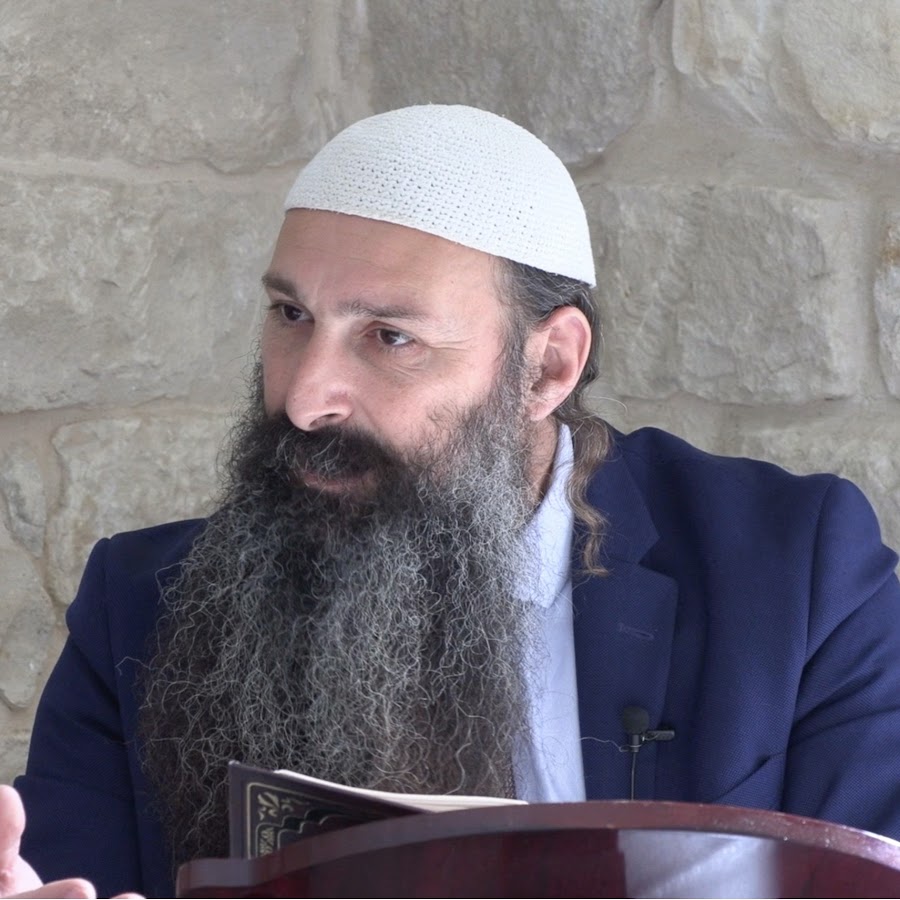
See the whole story at http://www.alonanava.com Alon Anava shares his near-death experience in depth. A must see video if you are interested in life after death. After his clinical death, Alon experienced a reality that is both frightening and hopeful. Alon was truly given a second chance. See what Alon has done with a second chance. This experience led Alon down a completely different path, allowing him to truly choose life - eternal life.
Categories:
Torah
Comments(0)
Transcript
Auto-generated transcript. Not time-synced to the video.
Aigal is asking a question.
uh she's actually asking a few questions
and she basically saying that she heard
that a person is not accountable for
their sins till the age of 20
and also that the a person's wedding day
is like a yum keeper
that all their sins are being forgiven
and take into consideration these two uh
details
A if one sees all the sins, if one sees
the sins
from you know the the birth till that
age and B if those sins are being judged
and if the person is going to be judged
for those sins and three
uh if the person is being judged by
himself.
So first of all regarding the third
question when the soul is being judged
then everybody's there. So everybody
sees it. That's part of the the the
judgment or part of I mean part of the
trial that everybody's there. That's why
in my experience when I'm saying that
that I was judged like it was it was so
embarrassing because everybody was there
and everybody saw it. So everybody saw
my all my things, all my personal
things, my private things, everybody saw
it and it was just extremely
embarrassing. So in my case, everybody
was there. And when I'm saying
everybody, all the souls of the Jews
were there.
From what I know from looking it up and
reading from different sources, then
when a soul is being judged, then
everybody's there being a part of that
trial. So that's regarding that.
Regarding that a person is not
accountable for his sins till the age of
20. Uh it's not correct. Uh it's more
correct that a man is not accountable
for his sins till the age of mitzvah
from the age of 13.
All the sins that a boy does till he
reaches the age of baritzvah the boy the
sin basically is not his. It actually
goes the father is accountable for that
sin his father and once the boy turns 13
he's be he becomes a mitzvah meaning
that he's obligated in doing mitzvah and
from that day on he is accountable for
his sins same thing with a girl till the
age of 12 till the age of mitzvah then
the girl is not accountable for that her
sins are you know her father is
accountable for her sins is once the
girl becomes 12, she becomes a but
mitzvah. Meaning that she has to follow
the mitzvah and anything that she does
from that age and on then she's
accountable for
uh with a woman is a little bit
different. Uh up until that age her
father is basically responsible for her.
from that age till she gets marriage
till she gets ma marriage then her
father is still accountable for uh her
sins not exactly all the sins it's more
like
vows and once she gets married she
becomes she goes to the domain of her
husband and from that point on her
husband is responsible for her for good
and for bad.
Uh it is true that the day of the
wedding is like a yum keeper. Uh
you know there's there's a you know a
person has once a year a day a special
day a yum keeper that he can you know
pray for hashm to forgive his sins. The
yumke keeper once a year is forgiving
sins between man and god does not
forgive
on on sins between man and man. So if
somebody comes to a yum keeper and he's
asking for forgiveness from God and he
still has some all sorts of open issues
with other people, he first needs to
appease those people and close those
those matters before he can come and ask
forgiveness to from Hashem. And if
somebody's
angry about a certain individual and
they don't forgive him because he did
something or he said something, then he
has a problem on Yumkeeper because his
sins will not be forgiven as long as
there's another person out there that is
angry at him and expecting an apology or
something. And this has nothing to do
just with Jews. It's any person. If a
Jew hurts a non-Jew and that non-Jew has
a certain, you know, feelings towards
him, he's upset, he's angry, he's
expecting an apology or whatever, that
Jew has to go and appease that non-Jew
before he can stand in front of Hashem
and ask for forgiveness.
So, the day of the wedding is like a yum
kipper. We see it that uh you know the
the the bride is dressed with a white
dress and the groom is dressed with a
white kit like a robe which represents
uh you know that the sins are being
washed off as it says in the book of in
the Psalms of King David. It says
your sins will be will get whitened like
snow. That's f one of the reasons why
the bride wears white and the groom
wears white uh on the day of the
wedding. But yes, the day of the wedding
is like a yum keeper and you start a a
clean slate. Now going back to the
questions,
everything that the soul did, whether
it's accountable for it or whether it's
not accountable for it, the soul sees
everything. So the soul sees things and
acts and sins that it did when it was 8
years old.
uh it doesn't get judged for that. It
doesn't get accountable for that but it
sees it. So the soul sees from the day
it was born till the day he died. Uh I
saw like my whole life now sins that
that person did when he was young and
and was not accountable for he still
sees it but he doesn't get judged for
that. But here comes a different thing.
First of all, another major thing is
that a person a soul does does not get
accountable for a sin for something he
didn't know. So if a person was born for
example in a in in a place that he
wasn't
brought up as a Jew and he wasn't taught
anything and he didn't know that he has
to keep Shabbat and he didn't know that
he is not allowed to eat certain things
and he's not getting accountable for
those sins. He doesn't get judged for
what he didn't know.
But at the same time,
he did he still did a certain blemish.
And what I mean by that is take for
example a kid, a child that by mistake
he spills something on the floor. So the
parent doesn't get upset. He doesn't
start screaming or or punishing him. He
says, "Don't worry, nothing happened. It
just spilled. But since you did it,
please go take a rag and clean your
mess. So the parent is not angry and the
parent is not punishing the kid, but it
he still tells the kid, please go clean
the mess. So when a soul is in this body
and the body committed a sin and it that
sin was committed because he didn't
know, the person just didn't know. So he
doesn't get accountable for that and he
doesn't get judged for that and he
doesn't get punished for that. But he
still created the sin. He still created
that spiritual blemish. So it's still
kind of under the the the responsibility
of that sin of that soul. So the soul
will not get punished for that but it's
kind of asked to be you made you made a
problem. Can you clean it please? So
it's kind of on the same weight. So the
soul does not get punished for that. But
that's why in in in some cases either a
soul has to come down back to this world
what's called a gilgul a reincarnation
not because it was bad or anything
because he had it had to fix something.
He did something wrong even not
knowingly and it he created that
spiritual blemish and the soul is being
requested to go down and fix it.
Sometimes a person can do something
unknowingly and his offspring, his child
or his grandchild or his greatgrandchild
can come down to this world and fix it
for him. So there's many different ways
how how the how Hashem works. But the
fact is that when a person does the
opposite of Hashem's will, when a person
does a sin, if he knew what he's doing,
then the person the soul gets judged for
that. And if it needs to, it might get
punished for that. But the person didn't
know nothing. He doesn't get judged for
what he didn't know. But the spiritual
blemish that he created as a result of
doing that sin is still under that
soul's responsibility
to fix it. Exactly like the example I
gave with a child. The child spills
something on the floor. He didn't do it
on purpose and he does. the parent
doesn't punish him but the parent tells
him nicely please go and fix your mess.
So
to kind of you know
sum it up then first of all up until the
age of but and bar mitzvah the kid has
no responsibility after that the the
person has responsibility for his sins.
Uh there's also a concept that is taught
in the oral Torah saying that the fact
that you don't don't know something, you
know, you can't come and say, "Hey, I
didn't know." Because you do have an
obligation to go and study and research
in order for you to know.
And there's a Mishna that's saying that
one needs to study in order to know that
what he's supposed to do. So, a Jew has
an obligation to go and research and
study. Hey, I'm a Jew. What am I
supposed to do? Am I supposed to do
this? Am I am I not supposed to do that?
And we have a lot of books compiled by
different sages that basically give us a
manual script about this world, what
we're allowed to do, what we're not
allowed to do. And we do as Jews have an
obligation to research what we're
allowed to do, what we're supposed to
do, and what we're not supposed to do.
So but what a person doesn't know even
religious people who you know they
practice practice every day some things
they don't know because they just don't
know. So a what they don't know they
don't get judged for that but they will
get judged for the fact that you hey you
had an obligation to go and study you
had an obligation to go and research
what you're allowed to do and what
you're not allowed to do. So there's a
thin line between I didn't know and I I
please don't judge me until I didn't
know but you know I was supposed to go
and find out. It's almost like you know
getting hired for a certain job and the
boss tells you you know part of your job
is that you have to kind of train
yourself. You have to figure out what's
going on in in this trade and you have
to know what to do and what not to do.
So, you know, when we're sent down to
this world, the the the the soul while
it's in the womb, while it's in the
stomach of the mother, it studies the
whole Torah. So, the soul knows
everything and it knows what it's
obligated to do. And even in the book of
Tanya, it says
the soul, right? Before it comes down to
this world, they make him take an oath
that you must be a sadic, a righteous
person, and not be a wicked person.
So the soul knows what it has to do and
what it's obligating in doing. And
you know when a when a when a Jew is
completely not surrounded by Torah and
he's born into an environment that has
no uh teaching whatsoever of Judaism,
then a the person will not get judged
and accounted for anything.
uh but the from heaven they will assist
him to go and and and and look for it at
some point. The person who is very far
away from Judaism you know sometime and
at some point of his life he feels like
this need to search for something he
feels a certain emptiness he feels
something something is drawing him and
he's looking for what so
you know each person is getting his
signs to to get closer to Hashem
and and and for the for the religious
people who know about Torin mitzvah we
have a great obligation and opportunity
to teach those other Jews about to
mitzvot. But in general to kind of sum
it up and answer the question, one does
not get judged for things he didn't
know.
And to correct the age of 20, it's a
person is obligated in mitzvot from the
age that he becomes uh bat mitzvah for a
girl or bitzvah for a boy. And one
should not, you know, count on the the
fact that, oh, I didn't know. I'm not
going to get judged for that. Because
the thing is that we're not supposed to
live our life in fear. Oh, I'm going to
do a sin. I'm going to get judged for
that. I'm going to get punished for
that. That's not how we're supposed to
conduct our life. We're not supposed to
walk around all day long in fear that,
hey, I might do something and I'm going
to get judged for that. That's not the
point where we're supposed to do. But
we're supposed to to to live our life by
saying I'm here to serve Hashem. Let me
learn how I'm supposed to do it so I can
minimize my m minimize my mistakes.
But uh
when a person doesn't know something, he
doesn't get judged for that. But as I
said before, which is extremely
important, he still when a person does a
sin, he still creates a spiritual
blemish. Like for example, when a person
keeps Shabbat, a Jew is obligated in
keeping Shabbat. If by mistake he broke
Shabbat, he he he did it by mistake. He
by mistake he leaned on the wall and he
turned the light off by completely not
planned. It was completely by mistake.
So he's not going to get punished like
oh that he he broke Shabbat. But
according to according to the Jewish
code of law, if a person broke Shabbat
by mistake, he's still obligated to
bring an offering, a kban. That's
obviously at the time of the beta
mikdash. So if a person by mistake
desecrated shabas shabbat, he broke
shabas, he still obligated bringing a
cobban all the time. And even though he
didn't do it on purpose. Why? Cuz that
person by that act created that blemish.
So he's still kind of responsible for
that. So he's not getting punished for
that. He just has to do a certain act to
fix it.
So even though we do a lot of things
that we know we we you know we didn't
know we still have that responsibility
to of of that spiritual blemish and one
wants to to fix that spiritual blemish
so much more so when they're still in
this world. the person can do chuva. And
it even says right before yum kipur that
when a person has to do chuva, when a
person has to do what's called vidi like
a uh
uh I forgot the word in in English like
I I'll remember in a second but a person
has to do vidi which is a confess
confession sorry person has to do a
confession right before yam kipu. So
it's it it says to us that one needs to
do chuva first of the things that he
knows. That's the easy thing. But one
should do chu of the things that he
doesn't know because these are the
things that are more severe. And how
does a person does a chuva repent for
something he doesn't know? One needs to
think to go through his mind and be like
even every day one should be like maybe
I did something today that I'm not
supposed to do and I don't even know
about it. which is even worse because it
means that person is not learned enough
to know what he's not supposed to do.
And there comes that obligation we have
by the Torah that we have to we have an
obligation to study and research what
we're obligating obligated in doing. So
not to scare anyone. We're not, you
know, supposed to walk in the all day
long with a fear that maybe I'm going to
do something and and I'm going to be
punished for that. That's not how Hashem
works. Hashem is very merciful and very
and very and very forgiving. One just
needs to to to strive to do his best to
learn what he's supposed to do and what
he's not supposed to do. And things that
were done by mistake and by not really
knowing, one doesn't really get
accountable for that.
And just to touch one thing from the
question in the beginning, yes, the soul
sees everything. Whether it's
accountable for that or whether it's not
accountable for that, the soul sees
everything from the day it was born till
the day it left this world. And and not
only the soul sees it, everybody sees
it. The whole all the souls of the Jews
from all generations, they see
everything. They they have they have
access to the information. When I was
there, it felt like I felt that all the
souls from all generations of all the
Jews are there. That's why it was so
embarrassing. This whole process was
like embarrassing cuz everybody saw
everything that I did. Everything that I
ever thought everything that everything
that I ever did in in in all the levels
of thought, speech and did every
everything was obvious and everybody saw
it. So one should really strive to to to
be true to be honest not only not only
to be good on the outside one needs to
be good in the inside because everything
on the inside is going to be is is is
vis is obvious to all the souls. So one
needs to be very pure from the inside
and and by nature when some somebody is
very pure and clean from the inside on
the outside everything will will just uh
follow will be pure and Hey.