0:00 / 0:00
Ari Goldwag - Miketz - Wake Up Call
554 views
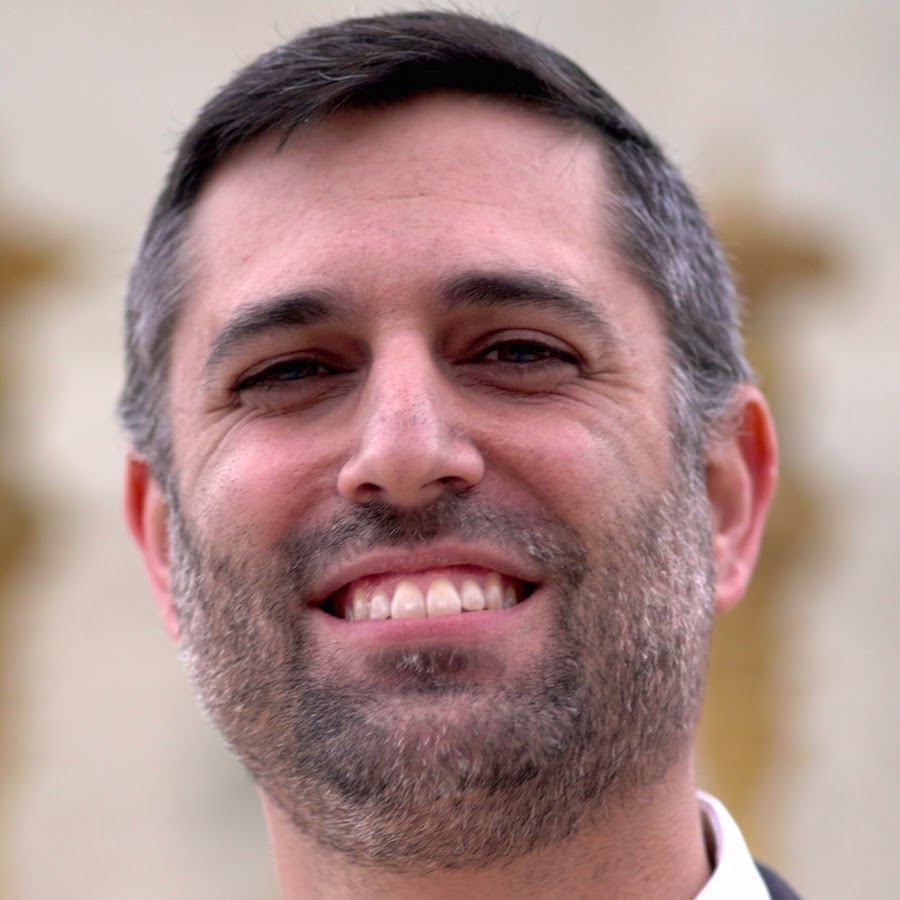
Why do the brothers only start speaking about their guilt in regards to the sale of Yosef when they have been released from incarceration? Why don't they think of it at the beginning? What is the depth of the idea that Yosef is telling them when he says, "Do this and live?" What does it mean to really live both in a spiritual and physical sense? How does one answer the 'wake up call?' Find out in this week's parsha podcast.
Featuring:
Ari Goldwag
Comments(0)
Transcript
Auto-generated transcript. Not time-synced to the video.
You're listening to the weekly para
podcast recorded with Hashem's never
ending assistance in mammish Israel 5776
2015. This week's para is parasikates.
We have the continuation of the story
with Yoseph and his brothers and we have
the beginning of the fulfillment of
Yoseph's dream. Yseph dreamt that his
brothers would bow down to him that they
would come to him. They would be
subservient to him in regards to the
alumis, the sheavs of wheat. And indeed
they came and they became subservient.
They bowed down to him in regards to
food. He provided them with their needs.
And in the process of this whole story
in this whole uh chain of events, the
Torah tells us about the interaction
that Yseph has with his brothers are the
commentaries or sages explain that part
of what Yseph was trying to do with them
was to guide them to help them to help
them see the mistake that they had made
to create a tuquin rectification of it
to really to also bring about as say the
the completion of the fulfillment of the
dreams such that all the brothers would
bow down to him including his brother
Binyam and Benjamin
And the thing that I really would like
to focus in on in the story, in this
particular chapter of the story, because
we're really in the middle of the story,
we don't get to completion until next
week. But the idea I want to focus in on
is the idea that the brothers have a
recognition very quickly that the story
the the way that it's unfolding that
which is occurring to them is a result
of something that they did in the past
is a result of their selling of their
brothers selling Yoseph down into
slavery. And the Pik tells us that the
realization comes if we look at it
carefully the realization comes at an
interesting point in the story. Yseph
has accused his brothers of being spies.
And the brothers say, "No, we're not
spies. We are 12 brothers. One is still
back with his father. One of them is
missing. But we're not spies. We're just
10 brothers, the sons of one person." So
Yseph responds, and I'm going to read
the verses inside in chapter 42:15.
Yseph says, "This is how I'm going to
test you."
He says, "I swear by Pharaoh that you
won't leave here
unless your younger brother comes and
shows himself here."
First says, "Send off one person.
He'll go and he'll bring back one of you
this this brother that you speak about
and the rest of you will be
incarcerated."
And in this way, we'll be able to test
your words if the truth is with you. And
if not, I swear by Pharaoh that you are
spies.
The verse tells us that he put them into
incarceration for three days.
And then at the end of the three days,
Joseph says to them, you know, I changed
my mind. At on the third day, he says
instead, this is what you need to do if
you want to live
and you should know that I fear God. And
for explained that his statement of I
fear God is a statement of obviously you
have big families. You are 10 people.
You need to be able to provide for your
families. So I'm going to send you back.
I'm going to send all of you back except
for one with enough food to provide for
your families.
Yseph continues and says, "If you are
being honest,
so one of the brothers, one of you is
going to be incarcerated alone.
And you go and bring the food for your
families.
Your younger brother, I want you to
bring him along with you. Bring him back
to me. I'll see the truth of your words
and then you won't die."
And that's what they did. Now what's
interesting here is the next
the next verse tells us
that one said to the other each one said
to to his brother
they started to talk to each other they
didn't know that Yseph understood them
because Yseph was speaking to them in
Egyptian and there was a translator
between them as the verse tells us but
they were speaking to each other and
they were saying we are guilty
we saw our brother they're referencing
Yseph we saw his pain.
He was pleading with us and we didn't
listen.
That's why this difficult situation is
occurring to us.
Ruin answers them. He responds
says, "I told you do not sin against the
boy. Do not sin against him and you
didn't listen."
Ruv confirms what they're saying and say
and he says that now God is demanding of
us of his blood meaning all of this is
occurring as a direct result of our sin
with selling our brother and selling
Joseph and the Torah continues and tells
us how Yseph heard this and he turns
away and he cries he becomes very
emotional but as in reading these verses
I can't help but but question it's very
strange the strange thing is that they
are put in jail for 3 days right away
they're incarcerated and then they come
out of jail and Yseph says to them, you
know, I'm sending you all back home and
except for one person and all of a
sudden they wake up. It's like, why
didn't they wake up the first time? This
question is actually asked by the or I'm
not going to get into his answer, but
certainly it's it's an important
question to ask. Why are they getting
why are they all of a sudden waking up
to the fact that this is connected to
the sin of Yoseph to selling Yoseph only
after they're incarcerated for 3 days?
They didn't think about it during They
didn't think about it at the beginning
of the story. They only notice at the
end as as they're being sent off and
Shimon is being placed in jail alone. At
that moment, at that point, something
changes in their awareness. They start
to say, "Hey, this must be because of
the fact that we did that great sin."
What changed? What happened here? Why is
that wakeup call? Why are they waking up
to the wakeup call, so to speak, only
after a few days? Why don't they make
that comment right away? So to try to
understand this, I want to share with
you something that actually just
happened to me over the last few days.
I'm a little bit embarrassed about the
story, but I feel like there there's a
powerful message within the story within
this this uh occurrence that happened to
me just now that I think really explains
what's going on here and is a powerful
lesson powerful lesson in experiencing
humiliation,
experiencing difficulty and challenges.
Two nights ago, I was on my way to
Jerusalem to yushim in order to sing at
a kanuka at a party for the kanuka for
the celebration for yeshiva inim called
toraa and I brought my son with me. We
were we were driving my son was going to
sing with me. He did sing with me and um
as we pulled out of chameh I was in a
car accident and I was responsible. I I
was not focused on the road completely.
I was a little distracted at the moment.
car in front of me slowed down. I
backended the car in front of me. The
car I was driving, the front of it got
smashed. The back of his car was
smashed. Thank god I was okay. My son
was okay. We were just a little bit
shaken up. Person, the people in front
of me also, thank God they were okay.
But we were really shaken up. My son was
more shaken up than me, interestingly.
He was more aware of what had been going
on. I had been distracted for the
moment. And so he felt like, you know,
he felt the trauma of it. And I felt
more of a of a guilt, a humiliation over
the fact that I was distracted from the
road for the moment and I caused this
accident. One of the challenges of the
situation was that this was a rented car
and so it had it had full insurance.
Thank Godashem I had full insurance and
so I didn't really have to pay anything.
I had I had paid for the insurance and I
caused I caused this damage but it felt
very uh you know I felt like I had a
lack of closure on it. I I did something
wrong and yet I didn't have really a way
to do a tikun to do a rectification of
it. I also didn't have a full sense of
of the danger that had occurred or was
was I really in mortal danger. Did I do
something that I could have I could have
gotten killed. I could have killed
someone else. I definitely had this
sense that I could have hurt someone
else. I personally didn't nothing
happened to me. My son, we were okay. At
least physically we were okay.
definitely had this um challenging
situation. The emotional factor of it,
but the physical factor of it didn't
seem to be so great. I had a discussion
with my RV this morning with my with the
rabbi Mashul as to whether or not I need
to make a there's a when a person is in
a life-threatening situation. So,
there's an obligation to say a blessing,
a special blessing to thank God that the
person was saved. And I described in the
situation, I said, "We weren't moving
that fast. the car in front of us was
moving about the same speed as us, you
know, and he said to me, he's like, if
you if he was going 30 km an hour and I
was going 40 km an hour, so the the the
impact speed was about 10 km an hour, it
wasn't a major it could have been that
it wasn't a major danger. And then I
mentioned that the front end of the car
was was became an accordion or at least
to a certain extent it did. The car was
still functioning right afterwards. Not
so well, but it was still drivable. And
um but he said look if the front of the
car you know got smashed in so that
means that the front of the car really
saved you and you should indeed say you
should indeed say this blessing thanking
God for sparing your life. I felt like
as as I heard this as my as my rabbi
said this to me I it made me it gave me
more of an opportunity to have closure
on the incident because there's a
recognition all of a sudden that hey I
was in mortal danger. I was indeed in
danger. I I did something irresponsible
and it could have caused great damage to
myself, to my son, to someone else. And
by saying, by recognizing it's an
obligation to thank God for saving my
life, for preventing any major damage to
h happening to me physically and to
someone else in that statement, in that
blessing is a recognition of the fact
that there was a danger that occurred
that it it just brought it home to me.
It brought it home to me. It didn't
really completely register until I until
I heard that. And and I think that as we
read the story as we read the story of
of Yosesephadic
as of his brothers, the first their
first interaction with Yoseph, they
didn't immediately as as I understand
it, they didn't immediately register
what was going on. It didn't completely
penetrate to them that there was
something that was happening. There was
no recognition that they were in mortal
danger. If you read the sukim and you
read the verses, all Yoseph says to them
is, "I'm putting you in jail because you
are spies." He doesn't say anything
about their lives. He doesn't say
anything about the fact that their lives
are on the line. That doesn't register
for them at all. When they come out of
jail, the verse says like this, this is
in verse 18.
On the third day, he says to them, when
they come out of jail,
do this if you want to live.
do this if you want to live. Inherent in
this statement of do this and you want
to live is two things. First of all,
you're in mortal danger right now. I'm
accusing you of being spies. That's a
that's a fatal offense. If you are
really spies and you're coming to search
out ways to penetrate into Egypt in
order to do something because you're
from a different country, a different
nationality, you should know that that's
a that that you're liable for death.
That's one aspect of it. Another aspect
of it is and this is what spoke to them
perhaps that you have done something to
be you've done something which makes you
liable for death. You don't realize that
you are liable for death for some
action. All of a sudden they're hearing
liable for death. Liable for death. What
did we do to be liable for death? Again
in verse 20, he says,
I bring your younger brother to you,
then I'll know the truth of your words
and you will not die. Meaning again, he
was saying to them, if you want to get
out of here clean without being liable
for death, you need to know that you
need to bring this younger brother of
yours, but you are liable for death. He
didn't say anything about death until
now. And then it's immediately after he
says this, that's when they say to each
other, we're li we've done something
wrong to be liable for death. They start
to hear the words liable for death. I
did something. I did something which was
a close call. I did something where I
almost killed somebody. I almost killed
somebody. The brothers realized and I'm
realizing myself personally. I could
have hurt somebody. I could have killed
myself. I could have caused death to
somebody who I love who is dear to I
could have caused death to someone else
with my carelessness, with my
irresponsibility.
And even more so, here they are coming
into Egypt. And they need to they need
to take care of their families. They
came down here to get food to provide
for their families. And here they are.
Not only are they in mortal danger
because of something that they've done
in the past spiritually that they
recognize now, but their very families,
the very future of the Jewish people,
the very future of the entire world is
at stake. The very future of Kali Israel
is at stake because if they don't bring
back the food, their families could die.
So what's hitting them is a recognition
that that mistake that they made with
Yoseph, that mistake that they made to
sell him, they didn't listen as he
pleaded with them. And Ruven, an amazing
thing that the Mapor say, Ruven says to
them, I told you don't sin against the
child. Don't sin against this boy. the
things that he was doing, the the the
dreams that he was telling us, the
things that have aroused our hatred, our
animosity, it was all coming because he
was a boy. He's just a child and you
didn't listen. The mistake that we made
is was a mortal mistake. We have
endangered ourselves. We've endangered
our children. We've endangered our
family. We've endangered the Jewish
people. We've endangered the world with
our mistake. Yes. The mistakes that we
make, the mistakes that we make have
farreaching ramifications.
For me personally, the the what just
happened to me, this story, this
accident that occurred to me, it it
brought home to me. It's like, yeah,
I've been distracted on the road before,
but thank God, it's always been okay.
I've never never gotten into an
accident. I've been driving safely for
20 years. I've never been in an accident
before. and and to for me to have that
recognition and I had a discussion with
my father as well about this for for for
it's a recognition that hey I got I'm
taking my life into my hands I have to
be so careful I'm taking my family's
life into my hands there's a
responsibility that I have and it's true
on a simple level on a on a physical
level when I get in the car and and I'm
driving around I'm I'm responsible for
those around me and others are
responsible for me as well I'm putting
my life in the hands of other people
when I when I drive out in my car, but
also on a spiritual level, if I'm not
being spiritually who I need to be, I'm
affecting all of those around me. I'm
affecting my family. I'm affecting my
children. I'm affecting Kalisrael. I
need to know that I have a
responsibility. I think that's a central
theme in the story of Ysef. The central
theme is that every single Jew has a
responsibility for every single other
Jew. I have a responsibility toward
myself and what I do affects all of
those around me both in a spiritual
sense and in a physical sense and I need
to take that responsibility so seriously
and I want to extend that even further
and talk about the idea of if I have a
talent let's say if I have a spiritual
ability I have an ability to inspire
others whether it's through speaking
saying a dvar Torah it's at my family
it's my children or or inspiring them to
say what they have heard listening to
what they have heard spiritual ideas if
I have the ability to inspire people
that way if I have the ability let's say
I have a talent in art or singing or
there's some myriad ways different
different ways that I can inspire others
that that I have Hashem is shining
through me I have a chance to inspire
others if I don't use that ability if I
don't share that with others if I'm not
willing to take risks in order to give
that to to to to share that with others
to inspire others is I'm not just
affecting myself. I'm not just
endangering myself. I'm endangering
others. And another point which is
within this idea is that sometimes it's
possible for me to make my willingness
to share with others to inspire others
dependent on some selfish factor. I will
only share my Torah at the table let's
say if people listen to me if everyone
gives me their complete wrapped
attention. I will only share my music
with people if if I sell 20,000, 50,000,
100,000 copies of my album. I will only
share if if I get a million hits on my
video. I'm talking for myself. That's
the Yates. That's how the the
selfishness comes in. I'm not willing to
take a risk. Am I willing to take a risk
in sharing what I have? Am I willing to
take that risk? And if I'm not, so I'm
withholding from myself and I'm
withholding from everyone. The point is
that there's a responsibility that I
have on a spiritual level, on a physical
level that I have to take seriously.
Sometimes Hashem will give me a wakeup
call and I won't get it right away. I
won't it won't register right away and
it will take the the the the statement
of somebody else that, hey, this is your
life. This is your life. You risked your
life. You did something irresponsible
that risked your life. The brothers saw
that. I saw that each and every one of
us has to know that our life is not just
a physical life. There's a spiritual
life. There's a life that we have which
is sharing with others godliness.
There's a life that we have which is
inspiring others, inspiring ourselves.
And we have to be able to do that. We
have to recognize that that's what
that's what it means to really be alive.
We can't give up our lives.
This is what you need to do in order to
live. You have to recognize that your
life is at stake here that the
distractions the the things that take us
away for our focus from our focus. It's
so easy to lose focus to lose the
opportunities that are there in front of
us for us to to imbue within our lives
spirituality to share that spirituality
with others to do things in our lives
that are real accomplishments on a
spiritual level that really bring God
into the world. I want to bless you and
please bless me back. Hashem should help
us to be able to recognize that this is
our life. this is what we need to do to
live and sometimes there's a wakeup call
that's necessary and sometimes it's
enough to hear it from someone else to
help us to recognize especially during
this time of Kaneka when we're lighting
up those minoras we have a chance to to
to show the the light of the manora is
the light of our souls it's the light of
Hashem in the world it's the recognition
that Hashem is there with us in
everything and we have an opportunity at
every second to live not to die but to
live and to live not just for ourselves
but for our families and for all of Am
Israel, for all of the Jewish people and
for all of the world. So I bless you and
please bless me back should help us to
be able to light up that light to
recognize what it is that we need to do
in order to really live. Thank you so
much for listening. Have a wonderful
Shabas.
This podcast was made possible through
the gracious donations of listeners like
you. For more podcasts like this, please
visit www.rigoldwag.com.
arioldwag.com
or search on iTunes Ari Goldwag.
[Music]