Cantor Israel Goldstein - Al Tiro

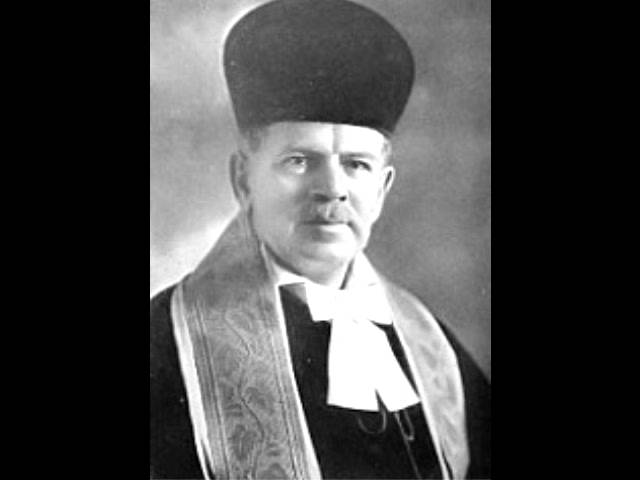
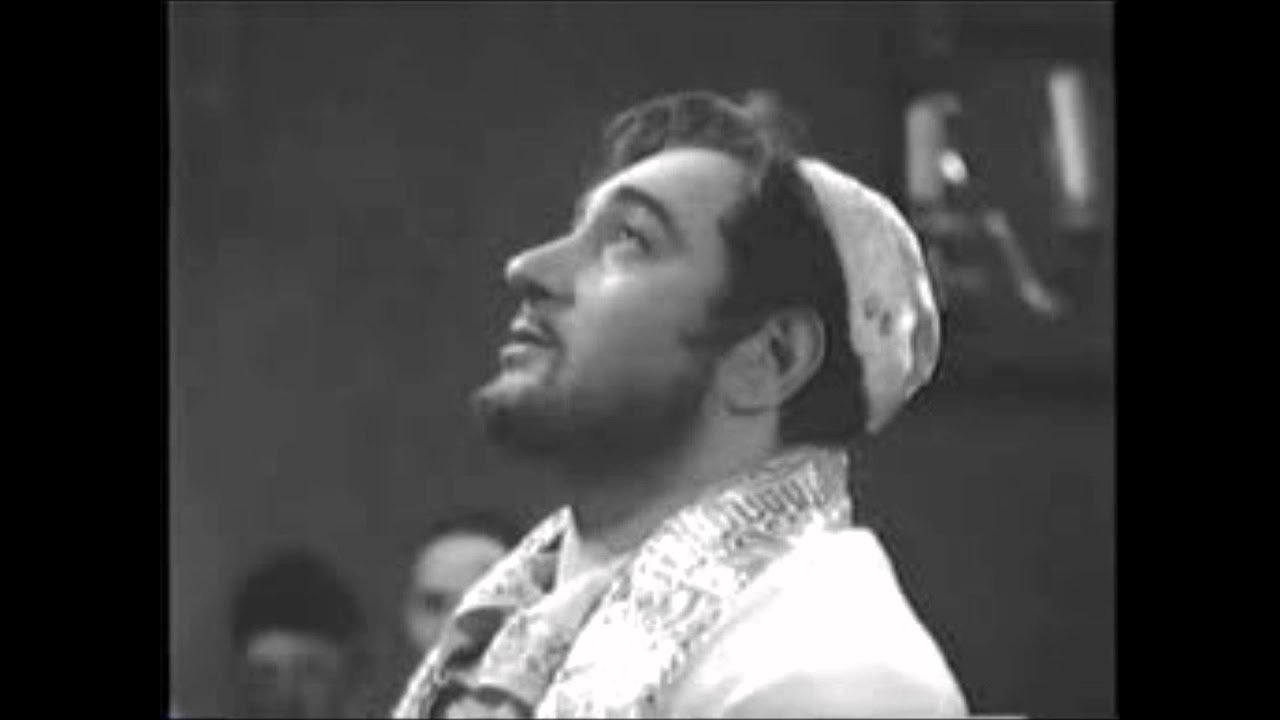
Credit and a thanks to Cantors Assembly for this video Cantor Israel Goldstein The Voice of Joy and Gladness at the School of Sacred Music Cantor Israel Goldstein reflects on his life and career at the culmination of his nineteen years of dedicated leadership of the School of Sacred Music. How did a British soccer player become the Director of the School of Sacred Music (SSM)? Cantor Israel Goldstein’s journey from avid London athlete to renowned New York cantor illuminates the trajectory of 20th-century Jewish history and the evolution of the cantorate from its Golden Age to its contemporary vigor. The roots of Goldstein’s life’s work can be traced to his primary role model, his father, Cantor Jacob Goldstein, who during the 1920s and early 1930s was the cantor of the leading Orthodox synagogue in Vilna, known as the Jerusalem of Lithuania and a vibrant cultural and religious center of Jewish life. Despite the vitality of life in Vilna, his mother, Toba, foresaw the impending threat of the Shoah, and the family immigrated to London, where a colleague had recommended his father to the New Synagogue in Stamford Hill, then a prosperous suburb of the city. Goldstein was born there in 1936, survived the London blitz as a young child, and was evacuated periodically to Wales and other safe havens. After the war, he attended the Avigdor High School where many of his classmates were orphaned Orthodox children who had been rescued from Nazi Europe by the school’s founder, Rabbi Solomon Schonfeld. Goldstein’s vocal talents were recognized when he was five years old. “I sang in my father’s men and boys choir, which was situated in the loft of a cathedral-like synagogue that seated 1800 people and would be packed to the rafters on Jewish holidays, with the windows open so the many people standing outside could listen,” he recalls. “My father leading these services was an incredible, electrifying experience. I remember saying to myself, if this is what being a cantor is all about, I want to get in on this!” The choir had about 30 singers on Shabbat, and as many as 60 on holidays. Goldstein memorized the music by ear. “I soon had my own following – all the girls and women in the balcony who could see me in the loft! My choir position was boy alto, but when you talk about positions, I was right half of my soccer team,” he adds. His family immigrated in the early 1950s to New York, where he graduated from a yeshiva high school on the Lower East Side. There was no soccer team, but Goldstein followed baseball and basketball. “I couldn’t get into football – I just didn’t understand that game.” He attended Yeshiva University for a short while, but left to study at HUC-JIR. “My father did not encourage me to become a cantor, because he felt that the Golden Age of the cantorate had passed, but he said that if I wanted to do this, I had to go to HUC-JIR, which he knew to be the best school and the place where many of his colleagues taught.” Goldstein studied with the giants of cantorial art: Cantors Moshe Ganchoff, Abraham Shapiro, Eric Werner, Abraham Binder, Isadore Freed, Lazar Weiner, and Lawrence Avery, and received his B.A. and investiture in 1959. While he never studied formally with his father, he learned by observing and listening to him, by being in his choir, then leading his choir and occasionally substituting for him at the pulpit. At HUC-JIR Goldstein participated in the School of Sacred Music’s renewal of Jewish music in America after the Shoah, when liturgical traditions were transplanted from the destroyed synagogues and communities of Europe. Simultaneously, he became enthralled with the possibilities of contemporary music in the synagogue and the importance of the organ at that time. “Of the many composers I admired, Isadore Freed affected me the most, because he opened up all kinds of harmonic possibilities that had not been possible in my traditional approach to music and indicated a new direction for me.” Goldstein initially served a congregation in Stamford, Connecticut for a year and in Caldwell, New Jersey for two years, but found a home for the past forty-three years at the Jericho Jewish Center. The call to join the faculty at his alma mater came in 1974 from his mentor, Cantor Avery. He began teaching during the academic year that culminated with the investiture of the first woman cantor, Barbara Ostfeld, and he has witnessed the burgeoning number of female students and their successful integration in the field over the decades
Comments(1)
Loading comments...