0:00 / 0:00
TheYeshiva.net - Rabbi Yossi Paltiel: Maamar - Veata Tetzaveh 5741 - Part 1
4,436 views
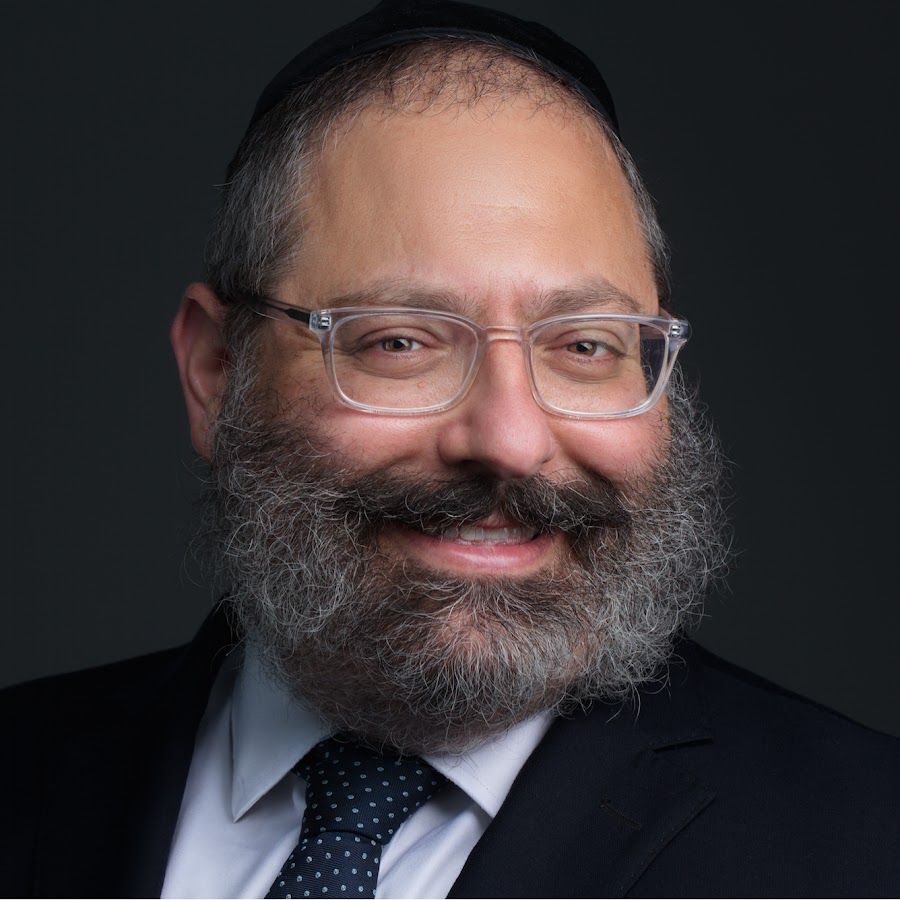
http://theyeshiva.net/ The Role of a Rebbe: Nurturing the Faith
Categories:
Torah
Comments(0)
Transcript
Auto-generated transcript. Not time-synced to the video.
This is Vayata Tetzeveh.
We are getting ready for Gimel Tammuz.
And it's appropriate that we should
learn the maamar Vayata Tetzeveh. Last
year
we overviewed the maamar. We learned the
maamar in one
class, which means in other words that
we didn't really learn the maamar. We
just touched
on key points.
With the help of God and may Hashem may
Hashem Yisborach
hopefully now that this year we're going
to do four classes on the maamar.
And we'll learn it all. That's the plan.
Before we begin the maamar, of course,
it's appropriate that I give you a bit
of an introduction.
The Rebbe
started saying my maamarim, obviously,
on Yud Shvat 5711, 1951.
And the Rebbe
in contrast to all of his predecessors,
except for the Alter Rebbe,
did not write his own Chassidus. The
Rebbe didn't have the time or whatever
the reason was. The bottom line is the
Rebbe did not write his own maamarim.
Instead, hanachos were written,
transcripts were written.
And um
that was it, for the most part.
On rare occasion, the Rebbe edited a
maamar, was magiha maamar. There was
literally a handful of what they called
mugiha'dike maamarim, edited maamarim
from the Rebbe.
Beginning, of course,
with the first two maamarim that the
Rebbe said, Bosi Legani and Eis Sheves
B'Ganem, and so on.
Rabbi Yoel had asked the Rebbe then,
first he hoped the Rebbe would actually
write write the maamarim himself, and
the Rebbe
didn't. That's the fact.
And then he, of course, asked the Rebbe
that the Rebbe should edit the maamarim,
but the Rebbe said he doesn't have the
time.
Um over the years, many people asked the
Rebbe to magiha the maamarim. I read in
a number of places that Reb Dovid
Einhorn used to
ask the Rebbe
many times to edit the my ma'amorim.
And of course, on many occasions the
Rebbe said that he has not he's not
editing my ma'amorim because people are
not that interested in it.
But the Rebbe did say to Rebbe Yisrael
in the earlier years that the time would
come of them one day the time would
come.
And about '86 men vov men vov for shmuel
men zayin
b'derech haserusa d'leila came entirely
from the Rebbe the Rebbe started editing
my ma'amorim.
At first there was a trickle and then it
became a pattern for every yom tov the
parsha not every week but for every
special occasion the Rebbe edited that
was magiha ma'amar.
The ma'amorim were selected by Rebbe
Yisrael I'm imagining.
He prepared the ma'amorim for the
Rebbe's editing so I would imagine he
chose the ma'amorim.
And as far as I know and I could be
wrong but as far as I know the Rebbe was
never consulted he just chose the
ma'amorim.
Tav shin nun bet Purim katan was an
occasion like any other it was Purim
katan it was appropriate to prepare a
ma'amar
so Rebbe Yisrael prepared a ma'amar.
And on the face of it it was a ma'amar
that's no different than any other
ma'amar the Rebbe had said a ma'amar in
tav shin mem alef 1981 which is actually
quite short. You can see the hanacha if
you can get a hold of the unedited
version.
And Rebbe Yisrael developed the ma'amar
very very comprehensively if you will.
He sent it into the Rebbe and the Rebbe
edited it again what looked like a
perfectly ordinary thing.
And um
when the ma'amar was printed and I'm not
sure whether this happened at the time
of the editing or at a certain point
later on
but if you look on the last page of this
PDF
you'll see that the Rebbe wrote
in the second asterisk v'yihi ratzon
sheyafil poel lasuf hapula l'toiva he
hopes that the ma'amar will have the
desired effect v'azman geroma this time
appropriate l'vadi mazal others the time
of health ask God let's see it.
This these words yihi ratzon sheyafil
poel l'toiva were unusual.
And again, at the time it seemed benign,
insignificant.
But in hindsight, it was extraordinarily
significant.
Now, the the Hamshakhah Sefer is the
rest of the story is that the Rebbe went
to the oil and put on cotton which was I
believe it was a Tuesday.
And he said that they should print the
Kuntres
together with $2, I believe, and a piece
of Lekach.
One of the unusual
aspects of Tafshin Nun Beis of that
year, 1992,
which was full of unusual aspects,
was the fact that the Rebbe gave Lekach
on four different occasions. The Rebbe
gave Lekach on Tishrei.
I think the Rebbe gave Lekach with
Chanukah gelt.
The Rebbe gave Lekach with the Kuntres
of Chof Beis Shvat.
And the Rebbe gave Lekach with the
Kuntres Purim Katan.
And again, at the time everybody
wondered why all of a sudden the Rebbe
was giving Lekach so frequently. And of
course, after the fact we realized that
the Rebbe
was busy preparing for
what was to come.
And the giving Lekach was quite
significant.
The Rebbe gave this Kuntres out for a
very long time, maybe for 4 hours.
And what was unusual about the
distribution of this Kuntres, as far as
I remember,
was the fact that when the Rebbe was
finished distributing the Kuntresim,
after standing I believe for 4 hours
handing them out, and he was leaving the
Shul,
and people came in late, running in last
minutes, the Rebbe stopped several times
to hand out more of them, in the middle
of the Shul, in the back of the Shul,
and maybe upstairs as well.
This was unusual. This idea that the
Rebbe should stop on the way out to give
more
was
as far as I know, unprecedented, and it
reflects
the Rebbe's
strong desire to give the Ma'amar out
more than other Ma'amarim.
And again, in hindsight,
um
the significance, the seriousness of the
maamer and the
so to speak, the desperate desire that
ever to give it to as many people as
possible
has become very, very clear.
Now, although
this maamer was selected by a human
being, by a boss of the dome,
and prepared like any other maamer and
edited like any other maamer,
the fact is this is the most recent
maamer we have from the Rebbe.
And as a consequence, this becomes the
maamer with which we live
until we have more maamor.
Just like the Rebbe made from Bosi
Legani,
which the previous Rebbe gave out not
for yahrtzeit. The previous Rebbe gave
out Bosi Legani for his grandmother's
yahrtzeit and for his mother's
yahrtzeit.
And then of course, when
what Yud Shvat became,
so the Rebbe
explained that the previous Rebbe always
intended that this maamer should be for
his
Yud Shvat.
And the Rebbe explained that everything
that happens in the world of a Rebbe is
exact and precise and hashgacha protis
is very revealed.
So it's obvious and it's self-understood
that the same history of the maamer
V'Ata Tetzaveh
consequently, V'Ata Tetzaveh becomes a
maamer
that is far more important, far more
reaching
than an ordinary maamer.
The previous Rebbe
gave out a maamer Bosi Legani.
The Rebbe spoke about it from the first
moment after the histalkus and spoke
about it repeatedly.
And he referred to it by many names. And
one of the allusions that Rebbe made
about the maamer Bosi Legani is that
it's the previous Rebbe's tzava'a, the
previous Rebbe's will.
And the Rebbe used to say that in this
maamer, the Rebbe al tzava'a, every
question you could possibly ask, the
previous Rebbe already answered in the
maamer.
And over the course of all the years of
the Rebbe's nasi'us, the Rebbe studied
and studied and studied the maamer Bosi
Legani.
And of course, when you look at the
Rebbe's Siyum you see how the Rebbe's
Siyum is the actualization of the Bas
Elokim. Beginning of course with the
idea of Os Elokim for Shavuos
and Taanim. Being Ma'amar.
Carbon is Beheima into a carbon and then
Shtus into Shtus DeKedusha and Shakai
into Kodesh and Simchas Hashem.
And Bitzus Ha'Otzros.
And Midos Hanitzachin. All the ideas
which are the foundation of the Rebbe's
Nesius
are found in the Bas Elokim and the
Rebbe referred to it as the previous
Rebbe's Siyum.
So it it stands to reason it goes
without saying I think
that Va'eschanan is the Rebbe's Siyum.
And when we learn this Ma'amar
we're learning a Ma'amar that is talking
to us through time.
It it's talking to us today and right
now. This is the Rebbe's message to us.
But there's a difference between the Bas
Elokim and Va'eschanan.
And the difference is this.
If
the Rebbe
had not studied the Bas Elokim
and not explained it and not elaborated
upon it and not exposed its secrets, we
wouldn't see
how that Ma'amar is extraordinary.
Because of all the time and effort the
Rebbe put into expounding on the
Ma'amar, everybody says yeah, Bas Elokim
is not just another Ma'amar, it's an
extraordinary Ma'amar.
Va'eschanan needs no explaining.
Va'eschanan shouts at you. Va'eschanan
very plainly and very overtly and very
obviously is special and different.
And it talks to us.
Because what this Ma'amar is about is
what is a Rebbe.
But more than simply describing what a
Rebbe is, it's describing the Rebbe's
influence on his Chassidim.
And more specifically still how
different the Rebbe is because they live
in different times, have different
influences on his Chassidim.
and how our Rebbe of course it's spoken
cryptically but our Rebbe has his
particular
on our particular generation. So the
mind of
explains itself and it talks to us about
what's a Rebbe and what is a Hasidic and
what are the expectations of the Rebbe
from us from his Hasidic.
So Atosab is very special
and the right thing to do really is
every year after you know
whenever your preparations for Gimmel
Tammuz begin this is the
this is the passion this is our life we
learn Atosab.
So with Hashem's help this year we're
going to do so to speak a longer version
of the Atosab than we did in previous
years.
What is the essence of the mind of
Atosab in in one thought
what is the gist what is the spirit what
is the core
of this mind of the Atosab.
And the answer is
the Atosab
is an instruction manual
to a Rebbe to a Nussi.
The Chumash the Torah says everything
to everybody that they need to know.
You have sections in the Torah that talk
to only to a king.
You have sections in the Torah that talk
only to a God.
You have sections in the Torah that talk
only to a to a coin.
Where in the Torah do you have a
discussion between the God and a Nussi
and a Rebbe and a Nussi and a God.
And the answer is these two of the
Atosab and the subsequent possible.
And that's what this mind is about that
mind this moment is going to bring
forward
this
Indian this idea that there's two Sukum
in the Amish
which are instructions from Hashem to
measure of a venue and to all the motion
of a venue is which would come after
measure of a venue and they all of
course are in the same spirit in the
same neshama is past due to the measure
of a whole daughter of a daughter of the
presence of measure of a venue in each
later generation and so on and the outer
that saw that is Hashem telling measure
of a venue what it is that is measure of
a venue is task.
That's what this moment is going to be
about.
And there's a lot of detail that's
intriguing that's almost compelling that
really really
uh
moves a person.
When we start this moment you will see
that we're going to have four questions
approximately four or five questions.
But there is a question which is
unwritten.
There's a question in this moment which
does not appear in the text.
And it is this unwritten question which
is really the most important question.
And there is this this unwritten
question which sets up the questions
that are written and the answer that is
given or the answers that are given.
What is the unwritten question?
The unwritten question is
that you have two Sukum in the beginning
of Tetzaveh that talk about the mitzvah
of Shemen Zayit for the menorah.
In Parshas Emor
these two Sukum are repeated almost word
for word. Vayidaber Adonai el-Moshe
lemor
tzav et-bnei Yisrael ve-yikchu elecha
shemen zayit zach katit la-ma'or
le-ha'alot ner tamid and so on.
And the question is why
does the Torah twice
almost verbatim repeat this instruction
for the performance of this mitzvah of
lighting Shemen in the menorah? That's
the question that's not written in the
Bible, it's the unwritten question if
you will.
Now Rashi asks the question. Rashi in
Parshat Tetzaveh asks the question.
But Rashi does not ask it in Parshat
Tetzaveh cuz when you learn Parshat
Tetzaveh you don't have a question.
Rashi asks it in Parshat Emor
because as the Rebbe always explained
when a child learns something for the
second time, that's when he asks, "Why
is it repeated twice?"
So in Parshat Emor Rashi asks the
question, "Why are we reading about
Shaman again almost verbatim what we
read in the beginning of Parshat
Tetzaveh? It was already written in the
beginning of Parshat Tetzaveh."
And Rashi gives a pshat answer, a simple
answer.
Rashi's answer is
that the mitzvah of preparing the oil
to light the menorah is recorded in
Parshat Emor in Vayikra, Leviticus.
In Teitelbaum.
The two p'sukim in the beginning of
Parshat Tetzaveh
that speak about Shaman are not a
mitzvah
but a secret word.
That the first two p'sukim of Parshat
Tetzaveh are not the mitzvah of
preparing oil
but rather it's a story. Hashem is
talking to Moshe about building the
Mishkan.
And as he's talking to him about
building the Mishkan he says to him,
"Remember I told you to take olives
because one day you're going to need
them. And Vi'Atah Tetzaveh means you
will one day in the future instruct the
Jewish people to prepare, take these
olives, make them into oil, and use them
for the menorah."
In other words, these two p'sukim have
no practical use.
They're simply a prediction. They're
simply a foretelling. Vi'Atah Tetzaveh
you will later on tell the Jewish people
about Shaman. When does it happen? In
fact, in Sefer Vayikra in Parshat Emor.
That's Rashi's answer.
Now for a five-year-old child to a Ben
Chamish L'Mikra that's a satisfactory
answer. That the Torah sometimes tells
us things that it's going to tell us
later.
But of course, the whole magic and
beauty of Torah is that what's an answer
on one level is a question on another
level.
And Hasidus is not happy with this
answer.
Hasidus does not find this answer
satisfactory, sufficient.
So Hasidus in effect reopens the
question Rashi asks, and here it's
unwritten.
How come in the beginning of Parshas
Tetzaveh you have two psukim that are
repeated almost verbatim in Parshas
Emor?
Now Hasidus agrees with Rashi about one
thing.
And that is that the mitzvah of shemen
is there, not here.
The mitzvah of appearing shemen for the
menorah is Parshas Emor.
What about the first two psukim in
Parshas Tetzaveh?
Says Hasidus, the first two psukim in
Parshas Tetzaveh have nothing whatsoever
to do with shemen, nothing to do with
oil.
Instead,
the first two psukim in Parshas Tetzaveh
is Hashem telling Moshe Rabbeinu, and
especially those of the Moshe Rabbeinu
dor of a dor, every Moshe Rabbeinu that
will follow after the physical Moshe
Rabbeinu, hilchos ha rebbe, the
instructions for a rebbe. Where in Torah
does the Eibershter tell Moshe Rabbeinu
what Moshe Rabbeinu's job is on a
fundamental level, not on a technical
level, not on a detailed level, but on a
core level? What is his basic function?
And the answer is these two psukim.
So if you ask the question Rashi asks,
how come twice in the Chumash is the
same thing written almost word for word?
And the answer is, because what's
written in the beginning of Parshas
Vayakhel Tetzaveh has nothing to do with
shemen, it's all about Moshe Rabbeinu,
Moshe Rabbeinu's role. And the halachos
of shemen are Parshas Emor.
But here is where the plot thickens.
How do you know this?
Maybe over here he's talking about
shemen, over there he's talking about
something else.
And of course the answer is the change
of language.
In Parshas Emor it says "Vayedaber
Hashem el Moshe leimor tzav es Bnei
Yisrael" which is a standard lashon
standard term or standard form.
Our parsha begins with "Ve'ata
tetzaveh". It doesn't say "Vayedaber
Hashem el Moshe leimor tzav" it says
"Ve'ata tetzaveh".
And Chassidus interprets that "Ve'ata
tetzaveh" doesn't mean "and you should
command" but rather "Ve'ata tetzaveh"
means "you should connect".
In other words, all over the Chumash
when Hashem says to Moshe Rabbeinu
leimor he should repeat to the Jewish
people "tzav", "imor", "daber"
the key is the message, not the
messenger.
God Almighty says to Moshe Rabbeinu
"Pass along a message to Klal Yisrael,
to the Jewish nation"
to the community of Jewish people, which
is what the word "tzav" means,
"command", "imor" means "speak" and
"daber" means "to talk" and so forth.
But here it says "tetzaveh".
And the understanding of the maamar is
that the word "tetzaveh" denotes
that it's not so much about the message
as it is about the messenger. "Ve'ata
tetzaveh" suggests that the key is not
what Moshe Rabbeinu was telling Jewish
people, but that Moshe Rabbeinu is
saying it.
And that's how we know
that the mitzvah of shemen in Parshas
Tetzaveh
in our parsha, Parshas Tetzaveh, begins
"Ve'ata tetzaveh" is not about oil at
all, it's Hashem instructing Moshe
Rabbeinu about what is Moshe Rabbeinu's
task. "Ve'ata tetzaveh" your job is to
do tetzaveh.
Now,
but to hug of kasha, why is this?
Why is it that in Parshas Tetzaveh it
doesn't use an ordinary lashon
an ordinary form, "Vayedaber Hashem el
Moshe leimor tzav"
and instead it says this unusual form
"Ve'ata tetzaveh es Bnei Yisrael"? And
of course everybody knows the answer.
The answer is because in Parshas
Tetzaveh Moshe Rabbeinu's name is never
mentioned, ever, not even once.
Why not?
Because when Moshe Rabbeinu was
negotiating with Hashem to save the the
cloud of yourself from the golden eagle.
And the Torah said, "Moshe Rabbeinu from
my book."
So Moshe Rabbeinu said to the Jewish
people, "If you're not going to forgive
the Jewish people
erase
my name, take me out of the safe of
Torah."
And God Almighty says, "Me
and you and
Hashem says I will erase from my safe of
those who sinned to me against me and
not you."
But we know that when a righteous speaks
even if he says something conditionally,
"If you don't forgive the Jewish
people."
And in fact Hashem did forgive the
Jewish people.
But since Moshe Rabbeinu said, "Take my
name out of the safe of Torah." It's a
trace, it's a trace.
So Hashem forgave the Jewish people and
Moshe Rabbeinu's name appears in every
beginning with till the end.
But from one name is absent. That's the
name of the Torah.
And of course the question becomes
of all the whatever it is 40, I don't
know what it is, 42, 43
that
you have
from
until the end of the
why is it that this that Moshe
Rabbeinu's name is never mentioned?
So there's first of all there's a
there's a
what's the
Hashem tells Moshe Rabbeinu he sees so
Moshe Rabbeinu tells Hashem
if you're not going to forgive the Jews
erase my name from the Torah. Hashem of
course forgives the Jews but it leaves a
trace, it leaves a mark.
So which
are you going to take Moshe Rabbeinu's
name out out of?
So Hashem says, "You know what?
Let's wait till next week." Get the
and Hashem thinks should I take Moshe
Rabbeinu's name
let's wait till next week. Get the
until you complete the whole
come back to
last chance cuz
it's the story of Moshe Rabbeinu telling
them Yeah.
so by default Tisha B'Av becomes the
Parsha where Moshe Rabbeinu's name is
never mentioned cuz there's simply no
other place to do it.
But there's a deeper p'shat, a much
deeper p'shat, and an incredibly
meaningful p'shat, which the Rebbe
explains in his sichos. And that is
Parshas Tetzaveh always occurs around
Zayin Adar Rishon in an every year in a
leap year.
Zayin Adar is the yahrtzeit of Moshe
Rabbeinu.
And the fact that Moshe Rabbeinu's name
is never written in Parshas Tetzaveh is
because it's linked to the histalkus of
Moshe Rabbeinu.
What's the connection?
The connection is
that we know that Moshe Rabbeinu came in
many gilgulim, many incarnations,
reincarnations.
But that the other neshamos
who were the same neshamos as Moshe
Rabbeinu had different names, whether
it's Iyov
or it's
Shimon bar Yochai or whatever it is,
they're various different neshamos that
are the same neshama of Moshe Rabbeinu.
And the question becomes a name of a
person goes to the very essence of the
person.
And if the name of the person goes to
the very essence of the person, when
that neshama comes back again, it should
have the same name.
How come the other gilgulim of Moshe
Rabbeinu have different
names?
And the answer is because the name is
takke the essence of the person.
But the name is the essence of the
neshama that relates to the guf. It's
the levusha atzmi that allows the
neshama to come into the body.
But the neshamos in Gan Eden are higher
than a name. Like you have by ya
Shimshon haGibur, l'mah zeh atisha
lishmi u'peli.
Avraham Avinu, Avinu Yaakov Avinu said
l'mah zeh atisha lishmi.
Oh, that's by the malachim. But a
neshama in Gan Eden has no name.
Says the Rebbe, when a person's neshama
is al ila u'maila, person has passes
away, neshama is al ila u'maila, he is
raised higher than a name.
But the idea that he's higher than a
name is not seen as a negative thing. To
the contrary, that the neshama is
connected to its essence on such a high
level that it's above a name.
So, Parshas Tetzaveh does not have a
name for Moshe Rabbeinu because it's
speaking to Moshe Rabbeinu as Moshe is
higher than a name. As Moshe is in a
state of histalkus above the madreiga of
a name, the only way to identify Moshe
Rabbeinu is to say "Ata", you.
So, in Parshas V'Ata Tetzaveh,
where Moshe Rabbeinu is standing on such
a high level that he's even higher than
the idea of a name
cuz it's linked to his infinite
histalkus, his passing.
But, not chas v'shalom that that means a
departure, but rather that this is the
very core of Moshe Rabbeinu's neshama on
such a high level that Moshe doesn't
even have the name Moshe in this parsha.
The first two psukim are the
instructions to Moshe Rabbeinu himself
and to every Moshe Rabbeinu which is
going to come after him.
In the parsha which is
connected to
Moshe Rabbeinu's histalkus. And it talks
about Moshe Rabbeinu on a level where
Moshe Rabbeinu does not have a name,
this is where these two psukim are V'Ata
Tetzaveh
So, when you think about
hashgacha protis of this maamar, yeah?
Somebody prepared a maamar
and he wasn't thinking anything
and sent it into the Rebbe and the Rebbe
edited it and he gave it out and he said
he was going to distribute it. How many
kuntreisim did the Rebbe give out in
1992 alone in days?
And it all seemed so ordinary.
But, when you look at the details and
the specifics, they shout at you and
they say he needs a pell this is
extraordinary.
In other words,
Reb Yisrael Yitzchak chose a maamar, the
Rebbe chose a maamar.
And the maamar, the way the maamar is
written and what the maamar says and
what the maamar is about is a message to
every single chossid and to every single
Yid until Mashiach comes about what the
Rebbe is
and what Chassidim are and what's the
relationship between Chassidim and the
Rebbe in general and what's the
relationship between Chassidim and
Rebbe, particularly in our generation?
And it fell out by Sgokha Protis in
Parshas Tetzaveh.
Because Parshas Tetzaveh is the perfect
parsha to talk about this concept for
more than reason one reason, including
the idea because it's in the beginning
of Parshas Tetzaveh that you have the
singing of Tetzaveh es Bnei Yisrael.
Now, this is a general introduction.
Now I have to give you another
introduction.
And I'm going to give you this
introduction in two points.
Number one,
this ma'amar
is broken up into three parts.
It's going to take us four classes to
learn it because the third part is so
long that it's impossible to learn in
one evening, we'll do it in two
evenings.
Now,
you'll get another mashpia, he'll tell
you the ma'amar has more parts, you
know, you could divide it into more
parts if you wish, but at least to me,
at least the way I'm teaching it to you,
the ma'amar is divided into three
sections.
The first section is one level, the
second section is a higher level, and
the third section is a higher level
still.
What marks the end of one section and
the beginning of the next section is
questions, kashas.
In general, questions are doors.
You learn a pasuk.
If you have no questions on that pasuk,
there's no richness, there's no light
from that pasuk. When you analyze, when
you question, the deeper you question,
the more reward you get for the
question, the more answers you get.
The Rebbe's going to begin the ma'amar
with a bunch of questions.
And twice in the ma'amar later on, the
truth is there's a third time, but the
first time I'm going to count as part of
the beginning of the ma'amar, twice in
the ma'amar later on, the Rebbe
punctuates the ma'amar with additional
questions.
Each additional question is a door to a
greater depth.
The first part of the mind man in my
opinion
uh finishes on line
67. Where it says "I will mention the
same thing on your mind." There's a
question there.
We're going to stop right there at the
word "moed" and we're going to begin
next class at "avel".
The third section
begins on line 133. Again, with "sod
avin" question.
And you learn the mind man to line 67,
you have one level of clarity.
A question is asked which forces the
issue. It challenges the original
understanding of the mind man and adds a
whole new depth.
And then when you get to the third set
of questions, again that have a pushes
it further and then adds a much much
much deeper depth than the depth you
understood even the second time.
So that's the structure of this mind
man. The mind man begins with a bunch of
questions, introduces an idea
and explains it.
Then challenges it and introduces a much
deeper idea.
Beginning like I said on line 67 and
then again on line 133, the second
insight is challenged again and a whole
new a third idea is introduced to the
mind man. And that's how we're going to
be learning it. Today we're going to
learn the first
section. Believe that next week we're
going to learn the second section and
the couple of weeks after that we're
going to be doing with Hashem's help the
final section. This is the first way to
describe it.
What we are going to have in this mind
man
is a discussion on Moshe Rabbeinu.
We are out to the tavern means Moshe
Rabbeinu's job is to connect
the hidden to Hashem.
But in this mind man we're going to have
three personalities, three Moshe
Rabbeinus.
The first Moshe Rabbeinu will be Moshe
Rabbeinu agashmi, the physical man Moshe
Rabbeinu
who was a shepherd, a rebbe, a nassi
of Klal Yisrael in one of the holiest
times in our history. We were living in
a cloud literally and figuratively
eating mud and so on. The Jewish people
were in the highest madrega. And Moshe
Rabbeinu was there at that time.
The second personality is going to be
Mordechai during the time of the
Gezeira, which was one of the greatest
lows of the Jewish people, the most
antithetical
generation or history or moment to that
of Moshe Rabbeinu. As the Jewish people
faced certain
annihilation
and Mordechai shepherded them through
that. That's going to be the second
Moshe Rabbeinu.
And the third Moshe Rabbeinu is going to
be this same Mordechai after the Nes.
Haman was dead. The war was over.
Haman's children were hung. The Jewish
people are now honored and respected and
uplifted and so on. But they're in
Golus.
And in this Ma'amar we're going to
encounter three ideas of a Rebbe. There
are as many Rebbes as there are
generations.
Or I if I may say so, there's many
generations as there are Rebbes.
But our Ma'amar is going to focus on
three: Moshe Rabbeinu, Mordechai during
the most severe time of crisis, and
Mordechai when the crisis lifted.
Now, although this is not explicit,
anybody who reads this will come away
with a clear impression
that the Mordechai of the crisis time
of which the Rebbe speaks is describing
the previous Rebbe, the Friediker Rebbe
in the times of the Soviet Union and so
on. And the Rebbe refers to the previous
Rebbe in the Ma'amar.
But what's vague, but also quite
evident, is that the Mordechai after the
miracle
is the Rebbe himself.
Because Jewish people are living in
Golus and they're not afraid.
And they're safe and they're well-to-do
and they may even be growing in
ruchniyus.
It is only that that katzvi avda
d'ahashvei dishana, we find ourselves in
Golus.
And Mordechai after the Gezeira, after
the miracle, and the Rebbe's nesius is
defined by impressing upon Jewish people
that you shouldn't enjoy Golus Achman
L'Tzlan, you should appreciate even in
the best of times in Golus the need for
Mashiach. And that's what this Maimer is
going to be about. The Nisius of Moshe
Rabbeinu, the Nisius of Mordechai in the
time of the Gzeira, and the Nisius of
Mordechai after the miracle occurred.
But I want to make it clear, these three
things are not consistent
with the division of the Maimer into
three parts that I mentioned before.
They're not the same. It's very
important that you appreciate that
although I'm giving you several examples
of three, but it's not the same three.
The Maimer is divided as I explained to
you into these sections of
division divided by questions,
punctuated by questions.
But it doesn't necessarily mean that the
first section is Moshe, the second
section is Mordechai, and the third
second is section is the second
Mordechai. It's not necessarily divided
that way.
And one final
point that I want to make is
that what this Pasuk does is this Maimer
does is analyze a Pasuk.
Everybody's analyzing Psukim. Rashi is
analyzing Psukim. Even Ezra's analyzing
Psukim. Ramban is analyzing Psukim.
The Alshich is analyzing Psukim.
Kabbalah is analyzing Everyone's
analyzing Psukim.
And of course, any analysis of Torah is
about questions.
The deeper you go into Torah, the more
subtle the questions become.
And the questions are keys. They're
doors. They're openings to answers.
This is Chassidus. Chassidus asks the
most subtle questions.
And this Maimer is going to take a Pasuk
in the Chumash
15 words at the top of Esther 1:1,
Vayikolchu Shmen Zayis Zoch
Koses L'Mord L'Holes Ner Tomid
and study it.
And it's going to challenge every word
in the Pasuk. Why is this word here? Why
is it written this way? Why is it
written in this order?
And as we go through this Maimer
and we explore the three Rebbes that I
just described
each later Rebbe is going to apply
the possuk more exactly, more precisely.
In other words,
if we explain the possuk
as a reference to Moshe Rabbeinu
the physical
of the generation of the desert,
we will only be able to justify, I
think, 10 words.
11 words. The word not the word "kosos"
and not the word "lamoed".
Which means that you're left with with
gaps.
If
you'll explain this possuk as referring
to Mordechai during the terrible time of
the
year, you'll be able to explain one more
word.
"Kosos".
All those 12 words will be explicable.
The last three words
are not going to make so much sense.
And also the position of "lamoed" is
going to be a little bit odd.
But,
as the Maimon concludes,
and you explain this possuk as an
allusion to Mordechai to Moshe Rabbeinu
the times of
but the
where Jewish people are comfortable and
well materially and spiritually, all 15
words in the possuk become precise and
all 15 words become precise in the order
in which they appear. "Kosos lamoed" is
where it should be.
And these are my introductory This is my
opening to the Maimon.
So, this is a Maimon
without a doubt is a Maimon connected to
Gimmel Tammuz.
It's about the Rebbe and we have to
learn it and we have to live in it and
we have to find
meaning, direction, and energy, joy
in the Maimon.
The Maimon can be divided into three
parts. It's going to speak about three
Moshe Rabbeinus and each later Moshe
Rabbeinu is going to justify the
structure of the possuk more precisely
than according to the earlier Mordechai.
Moshe Rabbeinu.
Anyway, time for us to start. Let's read
the text.
V'atah tetzaveh es Bnei Yisrael, God
Almighty tells Moshe Rabbeinu,
you should instruct the Jewish people.
V'yikchu eilecha shemen zayis zach, they
should bring to you, to Moshe Rabbeinu,
pure olive oil, kosis, which has been
crushed, lamaor to be the basis for
light,
l'haalos ner tamid, to make the candle
burn in the Beis Hamikdash, which is
called ner tamid, a constant light. This
is the possuk.
And the simple reading of the possuk is
Hashem telling Moshe Rabbeinu what to
do, to prepare shemen, to prepare oil
that's going to be used for the menorah.
That's it.
In the meantime, we don't know anything
more than the initial interpretation
that Hashem is telling Moshe Rabbeinu
to tell Klal Yisrael to prepare the oil
in a special way for the menorah.
So, the Rebbe says, "V'di hu ha'yud
ha'yud kemazo." All of us know the
questions.
Now, the Rebbe said the reason we know
the questions is because this maamar,
like every maamar Chassidus, is not
original.
People who are experts
in Chassidus Chabad will tell you
that virtually every maamar can be
traced back to the Alter Rebbe.
And in some cases, you can find a maamar
in the draft, in the version of every
one of the seven Rebbeim.
This maamar from the Rebbe, "V'atah
tetzaveh," is based on a maamar of the
previous Rebbe, which begins with
"Vayikchu l'Yud."
In the previous Rebbe's maamar,
"Vayikchu l'Yud," in page gimel, it
begins with "L'havin zayis zach dam
chilis umasha kosis v'atah tetzaveh."
In the middle of the previous Rebbe's
maamar, it begins with "V'atah
tetzaveh."
The previous Rebbe's maamar in page
zayin is based on a maamar from his
father, the Rebbe Rashab from 19 19.
19.
And that maamar begins, you guessed it,
Vayata Tetzaveh.
So, the Rebbe changed from the Friediker
Rebbe who had changed from the Rebbe
Rashab. The Rebbe Rashab said Vayata
Tetzaveh, the Friediker Rebbe modified
it and made it into Vayikbeluhu because
of the time of Mesiras Nefesh, and the
Rebbe remodified it back to Vayata
Tetzaveh. This ma'amar you can trace all
the way back to the Tzemach Tzedek.
So, the questions are familiar and the
answers are familiar, but the depth
and the exactitude that the Rebbe is
going to squeeze out of this ma'amar is
very original.
You do have a Yekum Purkan, so we all
know the questions.
The whole Let's see Vayishlach Beshalach
as a rule in Torah on them Mitzvas Bnei
Yisrael. The Yitzav is there. The word
that is used to denote to pass along a
message or an instruction is Tzav, which
means to command or Daber or Omer.
Vayikaneim, but here it's written Vayata
Tetzaveh Bnei Yisrael, you should do the
act of the Tzaveh for the Jewish people
or to the Jewish people.
Now, everybody knows the answer to the
question.
The reason it says Vayata Tetzaveh
instead of Tzav
is cuz it doesn't say Vayedaber Hashem
el Moshe leimor.
Every Parshas Chumash where Moshe
Rabbeinu's name is mentioned, the first
pasuk is God Almighty told Moshe
Rabbeinu leimor. Leimor means to repeat
to the Jewish people, then it says Tzav.
But, Parshas Tetazveh never has Moshe
Rabbeinu's name.
And it doesn't have Moshe Rabbeinu's
name, it's not going to say Vayedaber
Hashem elav. It says Vayata, it's spoken
in first person.
Shlishi amedaber, talking directly to
Moshe to Moshe Rabbeinu, the Ramban
explains it as brings always.
Vayata Tetazveh, you will Tetazveh. So,
the change of form from Tzav to Tetazveh
is a technical thing. I'm not a expert
in Hebrew grammar, but it has to do with
the fact that our parsha is not being
spoken as the whole Torah is written in
third person, it's written in first
person, second person.
So, the question Vayata Tetazveh on the
surface of it is not that much of a
question because it's simply because of
the fact that in Parshas Tetazveh
Moshe Rabbeinu is never mentioned. So,
there's no beginning with "Vayedaber
Hashem el Moshe leimor" like parshas
Terumah and parshas Ki Sisa before and
after. So, one has no choice but to say
"Va'ata tetzaveh".
But the maamar asks the question
nevertheless because after all
even if the reason it says "Va'ata
tetzaveh" is because there's no
"Vayedaber Hashem el Moshe leimor", the
question still the lashon, the form is
unusual.
But there's another reason the question
is being asked. And that's what the
Rebbe says now, "Lo heiseh va'ata I want
to add
that "Diuk masheh kasuv "Va'ata
tetzaveh" you look at the words "Va'ata
tetzaveh".
The impression that it leaves with you
is not only that we're using the words
"Va'ata tetzaveh" because you have no
choice because Moshe Rabbeinu's name
isn't mentioned.
Because "Hu leidak ba'al lashon" it's
not just a modification of language.
"El hagamba hateich"
the word "Va'ata tetzaveh" changes the
structure of the pasuk. How?
Normally, Hashem says to Moshe Rabbeinu
to pass along a message to the Jewish
people.
So, Moshe Rabbeinu was a messenger.
What's the most important thing in Moshe
Rabbeinu's being God's messenger to pass
things along to Klal Yisrael?
The message, what he's saying.
And the "Va'ata tetzaveh" the form
suggests that the critical component is
not the message but the messenger,
Moshe. The focus shifts away from what
Moshe Rabbeinu was going to say to that
Moshe Rabbeinu is going to say. And
that's what the maamar wants to
understand. Why here "Va'ata tetzaveh"
is not about Moshe giving a message but
about the fact that Moshe Rabbeinu is
being a messenger.
"The lashon "Va'ata tetzaveh" mashma"
the language, the form of "Va'ata
tetzaveh" suggests "She'Moshehu
metzaveh" that the key is not the
message but the messenger and the fact
that Moshe Rabbeinu is the one giving
the message. "Etzli orich lehavin" the
question is how do you make sure "Hu
hashliach" Moshe is simply a messenger.
An emissary. "Leim said he also be a
good as to pass along to the Jewish
people the divine command, which he does
hundreds of times in the Chumash.
Why all of a sudden here do we use a
form that seems to shift the priority
away from our being
communicating a message to the simple
fact that he is the messenger. That's
the first question.
And of course the answer is going to be
because that's exactly what this is
about. In this there is no message.
Or to say it differently, this has a
message, but the message is to alone,
not for us. It doesn't
mean you should command.
It means it's your job to connect as
you'll see soon.
The question the second question is it
says
the oil should be brought to our being.
The
oil should be brought to our being and
the question is obvious.
The meats of the candles was given
ostensibly to the
to our being.
So why are you bringing the oil to
he has to give it to anyway.
Why bring the oil to
they should give to give it to directly.
That's the second question.
The third question is
the same and the game is the same.
That the reason for this oil is to make
a fire.
A light a candle that will produce
light. The Hebrew word for light is
light.
But it doesn't say light, which means to
shine light. It's which means to be a
source for light. It
should say a word that denotes to make a
candle that produces light, not the
candle which is a source for light. Why
does it say light rather than light?
And the last question is
the
very next it says
that the menorah lit from night until
morning, as you know, I'm sure. This is
almost like
a possum based on the Gemara whether the
menorah was lit only by night, also by
day and by night. And it was lit by day
and by night. Most other possums don't
agree.
But
from night until morning is not
constant.
It's only from night until morning.
The candle should burn constantly. And
as you'll see later on in the mind, the
observation
is not only whether it was only by night
or by night and
by day, but that there's no difference
between night and day. These are the
four questions.
So we continue on line 10 of the
previous
Rebbe's mind.
Remember how he did the famous mind
which he said in Moscow a few months
before his arrest when he was throwing
his life away literally. He was here in
his own
community in Russia and he found himself
in Moscow on business.
And they see them heard that he was
there and they invited him to say a mind
and he had no choice as he writes. And
he came to the Lubavitcher show. The
place was so packed. It was
out into the street and he said the mind
aloud.
And he knew very well that there were
people from the government who were
listening to every word. And he spoke
fearlessly about going into fire and he
said this never happened before in his
life. And the mind that year began with
the word
which talked about never happened
before.
He never put them cotton tough fresh
said in 1927 put them cotton.
So the Rebbe explains the
word
that over here the word
does not mean to command, but it means
to connect to
join the Rebbe.
And the title of
is not you should give instructions
where the emphasis is on the message not
to the messenger.
But that you should connect and the
instruction is to make sure himself. In
this person make sure is not a
messenger, make sure is a binder, a
connector of the Rebbe to the top.
But there when that's why it says the
after the Sabbath of the day
You should do the act of the act of the
In other words
Make sure that we knew ties and connects
the sons of Israel with
godliness.
So after the means connecting to the
That's a job.
A Rebbe does many things.
But above all else, he connects into the
Rebbe.
The external functions of a Rebbe, his
leadership and his counsel and his
guidance are secondary to the key.
What is the key? A job of a Rebbe
is to connect
I want you to know this is the most
remarkable opinion
printed
from the
Bal Shem Tov himself.
How this opinion reached us is a miracle
onto itself, but it's from the
Acher Sones.
It's printed It's printed in Bal Shem
Tov. It's printed in the
Alter Rebbe's printed in the Alter
Rebbe.
It may be in the Alter Rebbe's Igros
Kodesh also, I'm not sure.
The opinion is three or four lines.
I can't tell to you verbatim because I
haven't seen it in a long time.
But it begins with a The Bal Shem Tov
gave a nefesh to the Mezritcher Maggid.
And he said to the Maggid, "Everybody
gives for Rosh Hashanah.
I also want to give a but I'm afraid."
Dear
made it to give and you he said to the
Holy Maggid I'm not afraid to give a and
he gave him a pen. And it begins
and so on.
For example, my table the regular stuff.
And then it says
I should connect myself to whoever they
may be shlep them out of whatever
schmaltz they may find themselves in and
bring them closer to the That's the
second opinion.
And you can look it up to see the exact
language. That's a opinion of a Rebbe. A
Rebbe's to connect into the Rebbe.
And that's about the to connect into the
Rebbe. Hu.
By day, he shall mesh meshpili yeshurun
makasheish made in tzof, and of course,
when Moishe Rabbeinu
has this effect on klal Yisrael
to connect them to the ein sof, by days
of nachas yesurim yesurin of Moishe,
Moishe Rabbeinu benefits.
We answered the first question.
The reality of the tzav doesn't mean to
command, it means to connect.
And now we're answering the second
question, why are you bringing the oil
to Moishe?
And the answer is Moishe gives and
Moishe gets.
Moishe gives us a connection to the
Eibishter, and Moishe has a benefit.
Now,
when you read the ma'amar at this point,
the two separated things.
Moishe connects us to the Eibishter.
And his s'char is amana s'l'chavod
atzmo, he gets some benefit that's
entirely separate from the fact that
he's connecting us to the Eibishter.
Later on in this ma'amar, near the end,
chapter 11, perek yud alef,
the Alter the the Rebbe is going to go
back to this idea again
of yikra alecha, of Moishe Rabbeinu
benefiting
from connecting us to the Eibishter.
But there he's going to explain it
sh'lei amana s'l'chavod atzmo. What is
Moishe Rabbeinu's s'char for connecting
us to the Eibishter, that his connecting
us to the Eibishter is even better than
the connection he makes between us and
the Eibishter.
So here,
the yikra alecha is separate. He gives
us something and he gets something
different.
As this ma'amar is going to get deeper
and deeper, it's going to be he gives us
something and he gets something more,
and that something more is more of what
he gave us.
But in the meantime, it's two separate
things.
By days of nachas yesurim yesurin of
Moishe, Moishe gives us a connection to
the Adam HaRishon and ein sof, and he
benefits. The Moishe and Yisrael are
like the doer and the action, like
Moishe and the Jewish people are like
feet and head.
Moishe calls them as in the possuk
sheish me'os elef ragli,
600,000 feet. Ha'am asher anochi
b'kirbo, the people amongst whom I am,
Now the generation of Moishe Rabbeinu
when the neshamos of Atzilus they are
dead and it calls them feet compared to
Moshe Rabbeinu.
Because even though they were so great,
Moshe was much higher. The whole Yisrael
and
the Moshe of the whole generation of the
feet of Moshe Rabbeinu. Moshe who shall
have Moshe their head.
That's how disparate, that's how far
apart Moshe was from his generation.
They were neshamos of Atzilus and he was
from Melech.
But with Moshe
just like in the human experience
the take the head
the mark of the such a place the
head cannot reach by itself. In other
words in
one aspect the foot becomes the head and
the head becomes the foot and that is
the idea of mobility.
To go from place to place you don't have
to have a head, you have to have feet.
And the feet carry the head.
The Moshe of Yisrael the same as the
Moshe Rabbeinu and the Jewish people.
The
Yisrael are the of Moshe. Yisrael which
are the feet of Moshe Rabbeinu because
of Moshe's relationship to Klal Yisrael.
And Klal Yisrael are only the feet
compared to Moshe Rabbeinu, but they act
as feet to raise Moshe Rabbeinu to a
madreiga above the madreiga Moshe
Rabbeinu would have by himself.
It is hinted in the
hinted in the passuk.
When it says Moshe Rabbeinu
that the nation I am leading is like the
feet compared to a head, but he adds the
word
Moshe says I using the word amongst them
and of course you know what says that
the letters plus a which goes on Kesser.
And
because Moshe Rabbeinu was the head and
he has feet attached to him Moshe
Rabbeinu has an advantage. He's raised
up from a madreiga of you know in the
the Buddha.
The Friediker Rebbe
The freedom of culture by the Kamler.
When the freedom of culture by the
Kamler, it's not a culture by the
Kamler, it's a culture of the freedom of
Kamler.
The freedom of Kamler said all the
medicine is not given culture.
All the medicine was not a river.
Able to give a river what they can send
it.
Had he been a river, it would be
impossible for him to sin.
That's what the quote is.
Of course, the question becomes all the
medicine was not a river.
What's that river? A river is a national
class, a general soul.
There is no more general We're all parts
of his soul, even my shoulder been.
How could the freedom of Kamler say all
the medicine is
He's the river of rivers. He includes
every medicine that will ever exist.
What's the answer?
My shoulder been had the medicine of a
river. But he didn't have seed him.
They were no people.
Had there been a flock
of feet
who all the medicine was shaping, he
would never do anything. As great as all
the medicine was in his own personal
standing,
the fact that he did the river, however
you explain the river, and he ate from
the tree of knowledge of good and evil
is because he didn't have an ugly and
feet.
So the freedom says, a river is so high,
I can see them are so plain, but the
discussion, the bond between the freedom
and the river and the river and the
freedom is not only for the benefit of
the freedom. For your own the benefit
for the river. And because of this
discussion, a river is above sin. The
river told many people in different
occasions in different ways, all the
cultures I have have from the freedom,
which is so ironic and so strange.
But this is what the person is saying,
my shoulder becomes our river and he has
an alley.
Is that who when the river concludes?
Line 19 of yard of the Sabbath of
Israel.
Answered the question one, may shoulder
been a connected to the Easter.
The equal of the Zion is the game and he
benefits and he has an alley.
Should I say something through my
shoulder been?
That gets out of here culture.
commands and connects and
ties the Israel the made in
through this you saw the ice formation
the oil is brought to motion not to
why does the tell you to bring the oil
to motion not to cuz this is not about
oil at all this is about the
emotion
as the
for being
a
great nation in other words
taste this formation motion benefits
Now if we accept the introductory
question that I gave you
we have already answered three out of
five questions
We've answered what this possible is
about it's not about oil it's a mission
connecting into the nation
that's why it says we have to do the
same
and that motion has a dividend benefit
and on some level you could say okay all
that remains to be explained is
questions for about
question five about the husband and the
diamond
but as you'll see as the moment unfolds
there's so much more to say about the
and there's so much more to say also
about the diamond
but let us continue
so far
we translate the words
based on the right the
we translate
to connect
in
we're going to repeat the same point but
we're going to change forms
we're no longer going to use the
expression that we had twice or three
times in base
the
nation is the made in of
and instead we're going to use the
expression
the finest
in your two
give
food and clothing to the Jewish people
in the area of faith later on in the
moment
online
101 and 102, we're going to change
again.
And over there it's going to say Shushan
U'Mefanes Es Hamona Atzmo.
It's a third idea.
What's going to happen at the moment,
we'll get to it in some next week,
believe me or not.
Is we're going to change from the
expression L'Kash L'Chav Bnei Yisrael
L'Melech Ein Sof to the expression read.
Line 22, please.
The fires there to explain this Magden
by Mayman in the previous labor develops
the concept of L'Kash L'Chav Es Bnei
Yisrael L'Melech Ein Sof with the
following. Shamai Sh'Rabbenu Nikra
Mehemna Meisha Skol D'Raya Mehemna, the
trusted shepherd, the loyal dedicated
shepherd.
The Shnei Pirushim B'Zeh, there's two
insights into those two words D'Raya
Mehemna.
The first is Sh'Raya Mehemna Sh'Yisrael
is dedicated shepherd, that's his job.
But the second one is that his job is to
shepherd faith itself. Shushan U'Mefanes
Es Yisrael, he provides Mazones, which
means food, or Parnosoh, which means
clothing and jewelry and makeup.
Es Yisrael for the Jewish people Binyan
Hamuna, in the matter of faith. Mazones
and Parnosoh terms used in Chosuva.
Mazones means food and Parnosoh means
expenses. A husband has an obligation to
provide his wife with what she needs.
One is Pnimius and one is Makif. So, the
Mayman when talking about Moshe Rabbenu
giving Yidden Hamuna uses both
expressions. From Moshe Rabbenu we get
Emuna in the form of Mazones, which you
can internalize.
And we get Emuna in the form of
Parnosoh, which is not so internalized.
These words Zon U'Mefanes Es Yisrael
Binyan Hamuna is exactly the same idea
as L'Kash L'Chav Bnei Yisrael L'Melech
Ein Sof, but different words.
The difference is
that in the words L'Kash L'Chav
Bnei Yisrael L'Melech Ein Sof we imagine
Ein Sof as being someplace else, the
Aibershter.
When you change from that form
to lo and behold you learn
you learn that the Ain Soph, the God,
the Godliness
to which you want to attach a Jew is
inside the Jew himself. It's his own
soul, the Godliness within him. That's
what the issue is.
And the Rebbe explains in line 24 the
following.
The Emunah, the idea of faith,
every Jew has.
We don't need faith from anyone. Not
even from Moshe Rabbeinu.
Why not? Because she saw him I mean and
the reason Jewish people are believers
is because bene ma'aminim, they're the
children of believers. A believes
cuz he has proof. In other words, a
intellectual understands there's a God
and then uses his faith to transcend his
intellect.
A Jew's Emunah has no connection to
intellect even indirectly. The Emunah is
from his father. In other words, the
neshama, the yechida.
A Jew believes is not because he has
answers to questions, because he has no
questions in the first place.
Therefore, you don't need Moshe Rabbeinu
to give us faith. Faith we already have.
Where did we get faith from? Avraham
Avinu. You know, it says in the
Ma'amarim based on Midrash Chazal,
shuddi me reisha mona, which means we
have a matana, we have a gift me reisha
le ma'aminim from the first believer.
Who was the first believer? The first
believer is Avraham Avinu.
We don't need Emunah from anybody. We're
Jewish, we have a Jewish soul, we
automatically have Emunah. Albeit,
however,
afsheshati be bechinas makif.
The faith could be indirect, hidden.
I could believe in the Aibershter and do
whatever I want.
As the Gemara says, of course Chassidus
always brings it.
Ganva pumachta rachmana kari, a thief
digs a tunnel to break and enter and
steal.
And the Alter Rebbe has a letter taf kuf
sameach alef which was written from
Kalisk and he takes it a go a further.
A person who breaks and enters is coming
also to kill or be killed.
He comes at your house to steal, you'll
stand there as well, he'll kill you and
all this stuff.
So, a man who's a thief and a potential
murderer stands by the opening of the
tunnel about to enter into somebody
else's home to do his evil deeds, and he
davens, he prays to God Almighty to be
successful.
This is the ultimate hypocrisy.
How could a person be such a hypocrite,
believe in the to daven to him, and to
daven to him to help him violate what
the says?
And of course, the answer to that
question is simple.
The greatest asset of
a faith is its greatest liability.
What's the greatest thing about faith by
a Jew?
That it's inherited. I don't have to
earn it. It's my soul.
What's the greatest liability about
faith?
That it's inherited. That I didn't have
to earn it. I was born with it.
Cuz whatever you're born with and you
don't earn, you don't value. You take it
for granted.
So, the upside of is that it's
a gift from Avinu. Ma'aminim Bnei
Ma'aminim. The downside of is that if I
can believe in the and even daven to the
to to help me violate the wishes of
Baruch. And this is where comes in.
does not give faith, but he gives the
faith
some teeth.
V'zeh
lines 25
and you'll find it says in the moon.
being the shepherd and the provider
for Jewish people in the area of faith
who is not that is giving the faith.
Faith we have already from the moon. But
moon to be missed, that the belief
should be revealed. means revealed. What
does revealed mean? That because I
believe in God, I don't steal.
And the says
it says exactly this in the What does it
say in the moon?
How
moon of the faith comes from on high,
from the moon.
Not from the moon.
Yitzchak Espanol in the name.
The going to have
and also the two expressions, food and
clothing from the source of a moon in
the my law.
I got you. I did my share. The neshama
believes, I am going to believe as my
neshama believes with such a certitude,
with such a strength that I'm going to
do what the Rebbe wants because I
believe and I have faith because of
Rebbe Nachman of Uman. My faith is
internalized and grounded because of the
Rebbe Nachman of Uman of every
generation and the Rebbe Nachman of Uman
specifically of our generation.
So, the words Rebbe Nachman of Uman will
not replace
the words Rebbe Nachman of Uman will not
replace the words Rebbe Nachman of Uman
and what we're learning is that Rebbe
Nachman of Uman is not really giving us
anything. He's simply cultivating what
we have naturally.
And the Rebbe continues in line 28 Rebbe
Nachman of Uman will not replace
after the previous Rebbe explains to us
what Rebbe Nachman of Uman means.
And what does Rebbe Nachman of Uman
mean? Rebbe Nachman of Uman will not
replace Rebbe Nachman of Uman. Rebbe
Nachman of Uman will not replace Rebbe
Nachman of Uman. Rebbe Nachman of Uman
will not replace
He goes on to say something else.
The Rebbe Nachman of Uman said I'm going
to speak of Rebbe Nachman of Uman as
being a trusted shepherd. The intent
here is Rebbe Nachman of Uman will not
replace Rebbe Nachman of Uman. It
doesn't mean only the It means also
the Rebbe Nachman of Uman of next
generations.
The Rebbe Nachman of Uman will not
replace the Rebbe Nachman of Uman. The
Rebbe Nachman of Uman will not replace
the Rebbe Nachman of Uman. The Rebbe
Nachman of Uman will not replace the
Rebbe Nachman of Uman. The Rebbe Nachman
of Uman will not replace the Rebbe
Nachman of Uman. The Rebbe Nachman of
Uman will not replace the Rebbe Nachman
of Uman. The Rebbe Nachman of Uman will
not replace the Rebbe Nachman of Uman.
The Rebbe Nachman of Uman will not
replace the Rebbe Nachman of Uman. The
Rebbe Nachman of Uman will not replace
the Rebbe Nachman of Uman. The Rebbe
Nachman of Uman will
Faith is Rebbe Nachman of Uman. And the
Rebbe Nachman of Uman will not replace
the Rebbe Nachman of Uman. The Rebbe
Nachman of Uman will not replace the
Rebbe Nachman of Uman. The Rebbe Nachman
of Uman will
And every Rebbe has the same task, to
internalize faith.
For example, the Rebbe Nachman of Uman
gives an example.
And when you look at it at face value,
it seems that the The is arbitrary, but
you see later on it's not so arbitrary.
Mordechai, there were many Rabbis, Moshe
was a Rabbi, Yeshua was a Rabbi, a
Schneebalg Knaaz was a Rabbi, Ibn
Gabirol was a Rabbi, David was a Rabbi,
was a Rabbi, and so on. And so
on.
But he picks on Mordechai.
Mordechai was the Rabbi in his
generation.
Mordechai and Moshe were equal. Now
you'll see later in the Ma'amar
in Seif
Zayin, that although in every generation
there's a Rabbi Nasi HaDor Moshe
Rabbeinu, certain Rabbis are in a class
by themselves.
And Moshe and Mordechai were in that
class.
What is that class? That class is a
Rabbi who is Mashpia on the whole
generation begoy.
A Rabbi's influence is not limited to
one country, but to the entire globe.
Moshe affected every Jew on the planet,
and so did Mordechai. So although
Mordechai is an example like any other
example, but there's something more
precise about this choice.
Shegam bizman gzeiras Haman, what did
Mordechai do? It was a time of a decree.
Shealim be'datei de'keyam u'meitzvos,
how you ask kosher to mesiras nefesh,
learning Torah and doing mitzvos was
life threatening, was risking one's
life. Because first of all, Mordechai
was Haman was going to kill all the
Jewish people on the 13th day of Adar of
the following year.
But in addition, it's indicated from
here that the Yidden were not allowed to
learn Torah in the interim.
And if they would learn Torah in the
interim, they'd be killed before.
You'd give a lot. So there was a mesiras
nefesh attached to learning Torah, and
he dafka did it, and dafka with
children, and dafka in large numbers.
Shegam bizman Haman, the times of Haman,
line 32.
Shealim be'datei de'keyam u'meitzvos, us
learning Torah and doing mitzvos then,
hayu kosher de'mesiras nefesh, was
connected to mesiras nefesh.
Nevertheless, he called us, but I've
been gathered together groups of Jewish
people lechazeik es am Yisrael and
strengthen their faith. Shall you saw
all of the Jewish nation by the Sham and
the maybe
for La made Hazik and to be firm.
Believe what I say that became a mitzvah
and learning Torah and doing mitzvah. So
on the surface, Mordecai was encouraging
Jewish practice.
But under the surface through these
practices, through this focus he was
strengthening you the Shamona.
So the Mimer says just like Masha
Rabbeinu
is a Rebbe who doesn't give us faith but
strengthens the faith we have be Russia.
From Avraham Avinu internalizes it. The
same with your mouth. That's So far so
good, right?
Now comes the first question.
Now I don't count this if the way I do
my the way I do my two three I don't
count this. But some would count this
also as a question. Let's keep reading
line 34.
Well after they shame of I had bad luck.
The Mimer explains
in in a lot of detail, quite at length.
Shamash of his bash to say the relation
of all data that Masha Rabbeinu and that
Rebbe does not see the Masha Rabbeinu of
all later generations. Me Hazik is
Shamona the Israel strengthens Jewish
faith which was the point he made
before.
Then comes the new point.
Me Vaya Dio Kosha na Kosas a game
Shamona the game of Kosas. The Fiddler
moves on from topic to topic.
He discusses at length how Mordecai was
a Rebbe like any other.
And because he was a Rebbe like any
other he strengthened you the Shamona.
But in his times the form of that
strengthening was Mesiras Nefesh.
And he immediately adjacent to that
conversation starts talking about Kosas
Lamoid and here's how he explains.
Lamoid, you want to reach the source?
The light of not the light which is the
answer of course to the third of our
four questions. Lamoid not the light.
Which means in plain English Yechida
versus Chaya. Lamoid is Yechida, the
light is Chaya.
And the Fiddler Rebbe explained
Shamash mana goes in the times of Golos.
Shakalah of the that every single Jew is
Nishbar of the
It's broken and crushed.
Crushed?
We didn't have time to say it in other
words.
essence
which is higher than higher.
Now, first of all, I want to say
something very interesting.
In this entire mind, the word Yechida is
never mentioned.
The word Chaya is never mentioned.
You'll see later on in the mid stream
next week that instead of using the
words Chaya and Yechida, they use of the
word etzem and mazal.
So,
the previous Rebbe continues
after explaining the role of Moshe
Rabbeinu to strengthen emunah by
bringing the idea of koses lamoyred that
when you didn't have crushed, you reach
Yechida sheb'nefesh.
And there's a problem. What's the
problem?
This idea that a Rebbe strengthens
Yidden's emunah is true
of every generation or only of
generations of shmad? Only of
generations of koses where Jews are
being crushed?
The simple
understanding is that it's every
generation.
But the linking of these two concepts
together creates a problem. Let's look
at the question. It's sod la'havan. This
question is a question not on the possuk
but on the mind.
Hashayach is the appearance because it's
lamoyred. The fact that the Fiddler
Kever links together,
puts one after the other, the idea that
koses when Yidden are crushed in the
worst kinds of goes, lamoyred reveals
Yechida sheb'nefesh,
is linked la'amur b'ha'mayen lifnei zeh
to what he explained earlier in the
mind.
Immediately before that, Shammai Shamaya
face bashfus adolash b'chol dorot. Moshe
Rabbeinu and all the subsequent Moshe
Rabbeinus
nourishes and provides that the Jewish
emunah should be internalized. And the
question is,
this idea of zon and mafni is opening
emunah is for all Rabbis or just for
koses lamoyred Rabbis?
If the answer is for all Rabbis, why
does the Rebbe put the two concepts
together?
And if the answer is only for those
Rebbes that are Kodesh L'Yisrael, then
it doesn't apply to everybody. And of
course, the biggest problem is it
doesn't apply to everybody, and it
doesn't apply to Moshe Rabbeinu himself.
Cuz Moshe Rabbeinu himself was not
Kodesh.
So, the Rebbe's got a problem.
The linking of the two ideas
of every Rebbe
not giving us emunah, emunah we have
from Avraham Avinu, but strengthening
faith and internalizing faith in his
role as a Rebbe.
Is it every Rebbe, or is it only the
Kodesh L'Yisrael Rebbes?
Now, let me interject something here.
One of the things we're going to learn
in this maamar
with that a hava min hamaskana
there's going to be a first thought and
a final thought. The first thought I
suppose is here. The final thought is
going to be savov. The page 95 and on.
In our initial understanding of the
maamar, a Rebbe has one task.
In our final understanding of the
maamar, a Rebbe's going to have two
tasks.
When we learn that part
that explains to us that a Rebbe has two
tasks
the difference between the first task
and the second task is one is a
p'nimiyusdike thing, a hidden thing, a
tzaddik
a spiritual thing, and another is a
practical thing.
At the moment, we don't have those two.
We have only one.
Which one do we have? The practical one.
A Rebbe is a leader.
And he strengthens faith of the nation
through his projects, through the
initiatives, through his mivtzoim,
through his tehillos, his farbrengens.
He sits with people and he rouses them.
How do you arouse people? Every
generation is different.
In one generation, it's the Kodesh
L'Yisrael of Mordechai. In another
generation, as you'll see later in the
maamar, it's through Moshe Rabbeinu's
daas.
So, how you do it is a detail.
But what you need to do is you need to
create rituals and a form and a format
where you can strengthen
emunah.
So, at this point
that we don't know yet that there's two
roles of a rebbe, on a sham role and a
practical role.
And we assume that there's only one
function of a rebbe, which is to
strengthen emunah through his behavior.
The joining together of the idea of
strengthening Yiddish emunah
and the idea of koses l'Shlomo throws us
for a loop. Is it every rebbe strengthen
Yiddish emunah or only rebbes in the
times of mesirus nefesh, koses l'Shlomo?
So, the rebbe continues on line 40
v'hinei.
Now, what follows is as a proposal, as a
suggestion.
The entire sif dalet is a proposal that
at the very end of sif dalet on line 67
he's going to refute.
In other words, we're going to learn an
an answer to the question we just asked.
And at the end we're going to come back
and say, "Bad answer. Let's start over
again."
In other words, line 67 is going to
repeat the same question we just read
and say that the answer we read from
line 40 until line 63 is inadequate. Or
line 65 is inadequate.
So, the rebbe is going to make a
suggestion. And I'm going to preface
tell you what the suggestion is going to
be. The suggestion is like this. Every
rebbe has one job, to strengthen faith.
How?
Mordechai through mesirus nefesh, the
Friediker Rebbe through mesirus nefesh.
Moshe Rabbeinu by talking about daas,
the Rebbe by giving us uh mivtzoim and
on and so on.
And all the rebbes are supposed to
strengthen faith.
But, they can't be equally effective.
Some rebbes can do it better than
others.
And why one rebbe can do it better and
another rebbe can't do it as well is not
his choice.
Because it has to do with the general
the situation on the ground.
When there's causes, you can do it
better.
When there's no causes, there's no
circumstance to allow you to do it as
well. Meaning to say, every Rebbi has
one job, to strengthen faith.
To internalize Jewish faith, take the
neshama and make it grounded.
In the generations where the Islam or
your life see that gives us
the allows Rebbi to be more effective.
So all Rebbis have the same job and
causes
better job. That's going to be the
answer that we're going to refute. Now
let's learn it.
Line 40,
Rebbi the latter the latter
This idea that the past
is describing how
it was
after connecting to the all
alternatively. So on and so forth,
it provides for and it feeds
their faith.
So
it follows what was said earlier.
And what did it say earlier?
The Rebbi the Rebbi the Rebbi
Rebbi restructures the mind. And begins
his mind with the theme of
nefesh for
the nefesh of the nefesh. Or the
readiness of the nefesh of the nefesh.
The
Rebbi with the
the meaning of this Rebbi
that the times of
the nest
and
the Jewish people were
they confirmed they reaffirmed
their commitment which they had begun.
Means begun. The Duke the times of
means as follows. The Jewish people
committed themselves a second time to
what they began
in the
in the time when the gave us that.
Remember this.
We got the
we're all present. The whole generation
and all generations.
And we said and we said we
Now what do we know about the Rebbi
Rebbi Rebbi Rebbi
We know what the Gamara calls Kafa
Alayim Har Kegigis. God Almighty dangled
Har Sinai over their heads like a press
and said, "Take the Torah
or I lower the mountain then the story
is over."
So, what kind of choice did the Jewish
people have? Accept the Torah or become
part of a press?
So, the Gamara says "Mekano Maydora
Rabalayis."
Any Jew could say, "Don't hold the fact
that I don't keep Torah and Mitzvahs
against me. I was forced, coerced."
But, that coercion does not stand
forever till the story of Purim.
Cuz in the Purim story we said "Nasa
Venishma" a second time and nobody was
dangling any mountains over our head. To
the contrary,
we're being threatened.
We're being encouraged to run away from
our Jewish identity and hide and
assimilate and disappear and we refused
to.
And now you can't say Hashem forced us.
To the contrary, if Hashem was forcing
us to do anything it was to leave him
and we refused to leave him. So, that
Maydora Rabalayis is lifted. So, the
Pasuk says "Vikiblu." Our confirming,
our dedicating ourselves to Torah and
Mitzvahs during the Purim story, which
is about a thousand years
after the Torah was given initially is
even greater than Moshe Rabbeinu what
they started at the time of Matan Torah.
And he explains that Matan Torah is a
Haschala. When we got the Torah, when
Hashem gave us the Torah, and we took
the Torah it was only a beginning. A
Cheilo Assis.
Uvemayah Achashverosh Bizman Gzeiras
Haman. The time of Achashverosh during
the decree of Haman Kabola there was the
final
affirmation, a re-commitment. As the
Pasuk says "Vikiblu Hayehudim."
Bracket. Valeder Chazal the Gamara says
"Al Pasuk Gadol Another Pasuk Kimu
VeKimu Hayehudim." The Jewish people
re-committed themselves. Says the Gamara
"Kimu Masha Giblu Kvar."
They re-committed themselves again to
something they had once committed
themselves to before.
At Har Sinai there was one Kabola and at
Purim it was a second Kabola. And you
tell me, you have two Psukim at the very
end of the both of them.
They say the same thing. One is Kimu and
on this is a Gamara.
And the other
which is no Gamara and the Rebbi chooses
the other
the without the Gamara for
a moment.
Says the Rebbi that
the master of mountain
Kabbalah.
At Har Sinai was only initial
commitment. We may
came a much
stronger and strengthened the commitment
we made at Har Sinai.
So the question is obvious
by my
Rebbi says how could this possibly make
sense?
This is very strange.
The amount of Torah of the
Jewish people never closer to God than
when they stood at Mount Sinai.
The whole
but not yet unless the Jewish people
experienced God in the very highest
levels. Bracket on line 147 if you lost
the place. The nature was the first of
all
They were accustomed to many miracles
before the event of Mount Sinai.
They
saw God when they left Egypt. They
saw God even more and deeper at the
splitting of the sea.
And above those two he
said at Har Sinai we saw God in a way
which was greater than we had seen God
before.
The heavens opened up and every Jew saw
the did. So Jewish people were as close
to God as they could possibly be.
On the other hand line 49.
The Purim story was our lowest ebb, our
lowest moment. The nature of
first of all
there was a hiddenness and concealment
which is true of all
remember the Torah was given to us we
were free people.
We were not in all but we were free
people.
In the story of Purim we were galus. And
all galus
is a setback.
But,
the whole galus, who were doing with
galus at that time, every Egypt, exile,
pardon me, is that the exile of Egypt?
Cuz Egypt represents all the galus.
All my ladies are cultured. Just like in
Egypt, the Jewish people were so
exhausted, they couldn't listen.
All there is all the whole galus. Every
exile is the same constant. And what is
that? There is all kinds of
all kinds of tests.
Becoming a tailor of mitzvahs and being
a Jew.
So, first of all,
Matan Torah was the holiest, most overt
moment of our history. And Purim was one
of the lowest moments.
But now we compounds it further. Here
they are. All of this money is coming
during the time of Haman's decree. All
you have to have has to be Jason. The
blockages were even worse.
In other words, if galus in general is a
bad thing, the times of Haman was bad
but they are bad, worse.
They all became in spite of how holy
Matan Torah was.
In spite of how lowly the time of Purim
was, nevertheless,
this man Matan Torah, the time God
Almighty gave us the Torah. The whole
you saw the tacos say the Jewish people
stood on the very highest levels.
Nevertheless, I got a scholar was only
beginning of last days.
All of this money is coming at the time
of Haman's decree.
That on the surface,
you would have to shuffle so you were in
a very, very low ebb. It couldn't get
worse.
Says the Rebbe all of that after that
then
there was a stronger and a deeper and a
more personal recommitment to Masha
Matan Torah. What it had seen in that
only start.
So, the Rebbe has asked the question.
The free has asked the question, how
could Purim possibly match up to Shavuot
and be greater than it? And he answers,
none of us know the answer. Cuz at Matan
Torah, we were forced.
Forced by divine revelation. When you
see God with your eyes, you don't really
have two choices, but force
nevertheless.
In the story of Purim, Hashem was
forcing him to run away.
Hashem was making it as difficult as
possible to remain a Jew.
And he gave Jewish people an out, you'll
see in a moment. And they stood with
God.
And as a result, Purim is greater than
Shavuos. What happened?
So, I'll say this
by way of introduction. The Alter Rebbe
says something in Torah Ohr about the
Purim story, which almost none of them
say, and it's very important, a very big
chiddush.
In the Maamar, the Rebbe brings a safer
called Megillas Setarim, who says a
similar idea, but that's it.
In effect, what the Alter Rebbe says is
that the Jewish people were divided into
two nations, two groups.
The traditional name for Jew was Ivri,
or in Russian, Yevrei, Hebrew.
Hebrew means a foreigner,
from the other side of the river.
The Jewish people came to Bavel as
Hebrews.
And life was good, they were respected,
they were honored, they began to
assimilate. Haman didn't want them to
intermarry, so
so the frum Yidden changed their name to
Yehudi.
And Yehudi does not mean the tribe of
Judah.
It means, as the Gemara says, kofer
ba'avodah zarah, those who deny idol
worship. And the Rebbe would always
underscore, kofer ba'avodah zarah
mekayem bechol haTorah kulah. If one
denies idol worship, he automatically
believes in the whole Torah, accepts the
whole Torah, acknowledges the whole
Torah.
So, the Alter Rebbe says that Haman was
not killing all Jews, only Yehudim.
The Hebrews he left alone.
So, any Jew wants to survive, goes to
the passport office, and changes his
passport from J to H.
From Jew to Hebrew. And they wouldn't do
it, they wouldn't do it.
They insisted on being Yehudim, even if
their life depended on it.
But what's so unusual about this is that
we're reading, according to this, that
the Haman was not killing
indiscriminately.
He was just killing with clear
discrimination. He was killing Yehuda
and Menashe and the Jewish people said,
"Okay, this is what we're going to have
to do. We're going to die for it."
And then Abba says,
Um,
line 55, then the explanation is,
during
the Purim story, the Jews were in a
terrible situation.
But that terrible situation brought the
best out of them.
was in his nefesh. They practiced Torah
and mitzvahs every day with mesiras
nefesh. Like I said to you before,
they were waiting certain death in the
13th of Adar, hence.
But in addition, there were laws against
learning Torah in the interim.
So the mesiras nefesh consisted of
several matters. Number one,
shall I leave
for a whole year from Nissan
when Haman's letters were written and
sent until the following Adar till the
day of the decree was meant to be
carried out was 11 months exactly.
And during that entire 11 months, no one
thought about abandoning, changing, and
replacing his J card for an H card.
They would
base and the Jewish
people
trade in their religion.
Nothing
would be done to them and never
he wasn't killing all Jewish people, but
only the Jewish Jewish people, the
people who denied out of worship.
Nevertheless,
they also
no Jew even thought about trading in his
identity. So the first one was the deep
commitment to die
to be a Jew not an Ebrey.
And in addition to that,
the daily learning Torah and doing
mitzvahs, particularly of children, was
a mesiras nefesh.
But
they gathered large communities of
Jewish people
to learn Torah with mesiras nefesh. So
you have the mesiras nefesh
not to abandon their connection to God
bro
then you had a deeper level of Messiah
this nation which the never explain in
some of my water which is an Indian
panini in their day-to-day lives we make
the nation for you this guy
and then look at this online 59 and says
the obvious this hatred of some Messiah
this nation and where did the Jewish
people get this power for the basic
Messiah this nation not to have my
shower this hood and for the deeper
Messiah this nation
to be a man that came
this verse of course they got it from
their baby
always I do my day I do the rebel was
more than
who was measure the day and I feel like
I would have therefore explain second
lines in the bottom of the zoo
and therefore it's possible to
understand that the key would have
message of losses
that means the matter data I got a
scholar
we got a data of my show was only a
beginning
it was my data of someone I got a ball
in the time of the home and I got this
was even deeper
key I got a day show them all Messiah
this nation people the Jewish people
that actually Messiah this nation
I'll tell you message for you this guy
says the never miss all they were
uplifted and never says in two words the
parenthesis beings in this aspect they
might be nice to see this in one product
they were in a higher mother again make
it much higher it was with my mother
data they were in time of this war
there's no doubt that the Jewish people
stood at her Sinai new Godliness better
than the generation of my show my day
experience Godliness they felt it's
light
but the power of Godliness which is
Messiah this nation they didn't feel you
know why
could there was no adversary there was
no opposition
in the times of putting the light was
very diminished
but the power that light carries which
shows itself in the Indian of Messiah
this nation I'll give this a sham this
they had in abundance for him all that I
hoist I got a ball in the air this is
why should put him is greater than Mata
and Taylor that would be the final
commitment that keep alive with them.
This is the answer to a question.
What was the question?
The question was, why do we put together
the theme of every Rebbe, which is the
strength and Amuna, and the theme of
Kesser when you have
Yechida and Nefesh?
They don't work together.
Kesser is only certain generations.
The Kesser
is every generation. So, which is
it? Is it certain generations or all
generations? And the answer is line 64.
The
this will explain it very well.
Shapiros because it's more
by the previous Rebbe joining these two
conversations together. Conversation
one, that every Rebbe, every Nasi
B'Yisrael, every mission of strengthens
Amuna. And conversation number two, that
when you have Kesser, when the Jewish
people are being crushed in a terrible
burden of Golus, La'am you reveal
Yechida and Nefesh. In other words, Shai
Kesser when the Jewish people are broken
and crushed, Magiyem La'am reach the
essence, which is the Yechida.
Who be it as he explains the following.
Every Rebbe strengthens Amuna, but when
there is a decree against Yiddishkeit,
both of them Nefesh but even higher
Yitzchak come to a higher
Nefesh.
K'M'siras Nefesh because the level of
M'siras Nefesh is at the level of
Neshama comes to the Yechida and Nefesh.
Yechida internally. Shalom
which is higher than the revelation of
the Neshama. And forgive me, but I'm
going to translate the word Giluy
as higher.
Shalom which
is the Yechida which is the source of
higher.
By the days
of the massive the Kesser and Yechida
because they were so shattered and
broken the essence of the Neshama
reveals essence of the Neshama more than
the soul.
Every day but does the same thing.
Some of them can do better than others.
But the fact that some of them can do
better than others not because they're
trying harder, but because there's a
Hitler.
Because of the home and it's out of
their control. And of course every day
will be very thrilled not to have the
causes and not to have the more.
So which is true? It's true that every
day but every nothing
is all the more fun
but it's also true that very few of them
could actually reveal you can do more.
Only the causes that could reveal more
you can do.
But remember
today we're walking away from the sheet
with the assumption that it has one
function
to overtly and outwardly strengthen you
can do
and the argument is some of them can
strengthen their moon
better than others when you have causes
you can do more.
What are we going to begin with next
week right here at all?
That it was going to say that this
answer is not sufficient and they're
going to push it ask the question again.
You know what is next week class is
going to begin more or less in the same
place
that
we started I suppose at the end of that
line 37.
Is every day but
connecting you to the level of more?
Or are only those that
who live in generations of causes able
to connect you to the more? And the
answer is going to be that it has two
jobs.
And because of that it has two jobs
one job every day but can do anything.
And the second job is that you can be a
difference in one of the next.
I know you.
I know
Woo.