0:00 / 0:00
Torah Or Velo Yekorei #2: The Secret of a Bris & Why the Baal Shem Tov Never Slept with Extra Money
1,823 views
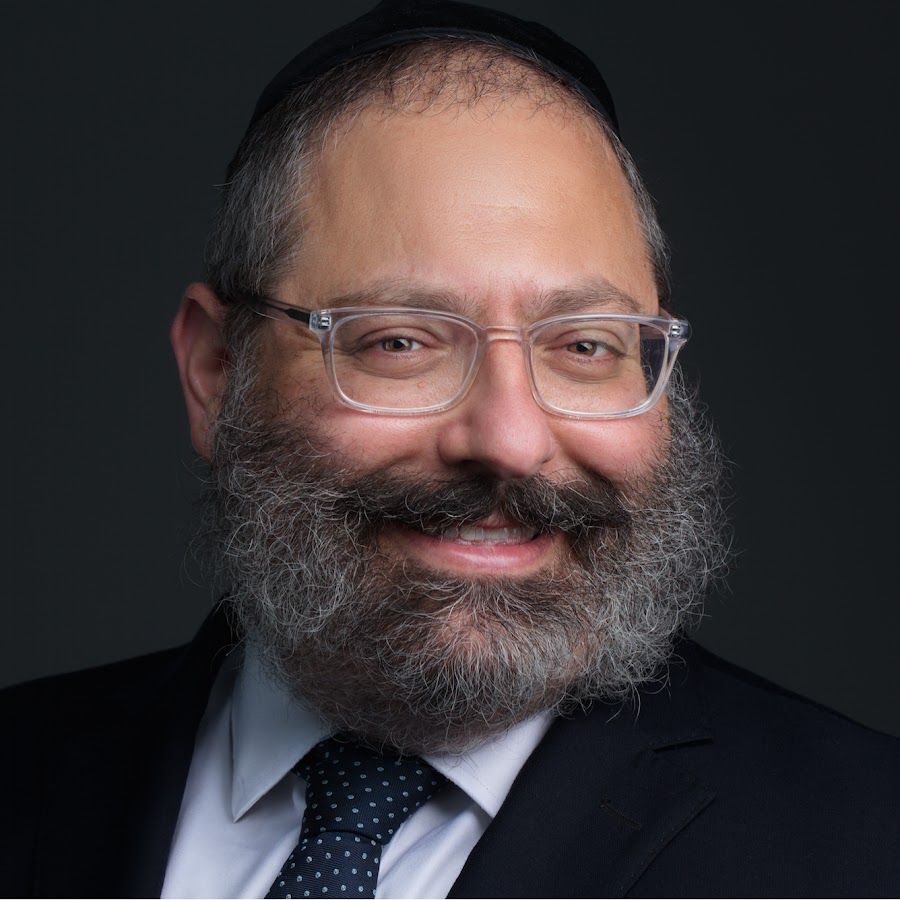
Why Could the Baal Shem Tov Not Sleep with Money in His House? To sponsor or dedicate an upcoming class click here: https://www.theyeshiva.net/donate To watch more classes & to read Rabbi YY's articles visit: https://www.theyeshiva.net Follow Rabbi YY Jacobson: Youtube: https://www.youtube.com/c/RabbiYYJacobson Facebook: https://www.facebook.com/TheYeshiva Instagram: https://www.instagram.com/yyjacobson Twitter: https://twitter.com/YYJacobson Linkedin: https://www.linkedin.com/in/yyjacobson/ Telegram: https://t.me/RabbiYY
Categories:
Torah
Comments(0)
Transcript
Auto-generated transcript. Not time-synced to the video.
What's the seder?
Beautiful.
I don't know the blessings.
Shikoyach.
So, we began yesterday. Thank you. So,
we began yesterday
a ma'amar of the Alter Rebbe Torah
portions Lech Lecha. "Will I carry out
your name Avram while your name is
Avraham because I am going to make you a
father of nations?" It's page
23.
And we are
in the middle of the third paragraph of
the ma'amar.
In the Hebrew, it's Yud Beis, column
two.
Yud Beis Beis. Yud Beis column two. In
the English, it's 23. On top, it says
Lech Lecha.
In the middle of the second column.
Today's class is dedicated by Kevin
Coller in honor of his daughter Sara bat
Iris and bat Chaim who is serving in the
army with heartfelt prayers for all of
our soldiers. Hashem Yishmor tzeisom
u'vo'om
ad olam. May God protect them all
and bring them home safely and
experience complete victory and peace.
Amen. Thank you very, very much. A lot
of hatzlacha.
Okay, so what was the summation of what
we learned this ma'amar? The Alter Rebbe
said
as I mentioned yesterday Erev Rosh
Chodesh Kislev 5566.
That's 1805 at the bris of his
great-grandson
Reb Baruch Shalom, the oldest son of the
Tzemach Tzedek.
So, it's really a bris ma'amar, a
fundamental ma'amar
of the Baal HaTanya on the whole mussar,
the whole concept of what a bris milah
is, what a circumcision is.
And uh
it begins with a pasuk that Hashem says,
"Your name is not going to be Avram,
your name is going to be Avraham as a
result of the bris, after the bris."
He changes his name
from Avram to Avraham.
And he says, "Because you'll become a
father of multitudes of nations."
Avraham is av hamon Hamon of the
a father of many, many nations.
And for this, the Alter Rebbe began a
whole discussion.
Why do you b'chlall need a bris?
And he tells the story of the Medrash
that a philosopher asked Reb Hoshia, "If
Hashem wants us to be circumcised, why
did he create us uncircumcised?"
And he answered him that the whole world
is that way. The whole world needs
tikkun. The whole world needs an
upgrade, it needs repair.
In other words, the way the world was
created is beautiful, but it wasn't just
there to leave it as it is.
Right? The same is true in every aspect
of life. You say, "This is how I am.
That's it."
It was l'chatchilah created with a
calling, with a mission. Asher bara
Elokim And it says in the pasuk, "Asher
bara Elokim la'asot."
It was created la'asot u'ltaken.
So, it's not a full product. You go to
the store, you pick up the product, and
that's it.
E- Exactly. Exactly, very good.
Somebody goes and buys a Lego for their
child, and they see on the box this
beautiful, beautiful picture, you know?
This whole airport or this whole
airplane or this ship. And then they
come home, and how disappointed they
are. They open up the box, and what do
they see? It's a churban.
It's a churban. No airport, no boat, a
non-piece there, another piece.
Suddenly, there's a thousand pieces.
This is what I bought. So, they go and
they sue the company. So, So, come in
front of the judge, and they saying this
was absolutely a scam. I paid $160 for
this legal Lego set, and they deceived
me.
Huh? Very good.
Yeah.
Now, of course, we laugh cuz the
the judge says that's that's the whole
thing. The picture on the town that
on the outside is just telling you what
the potential is. Right? It's not just
wasn't a mistake. This is the very
purpose.
And the same is true in a person's life.
We're given raw materials, but to to put
it together, that is the whole purpose.
I should buy the lucky molasses the
second.
And he gives the example the measure
gives example of turmusin, which are a
very bitter
It's a very bitter legume, and it needs
to be cooked many times in water again
and again and again. It's cooked and
cooled and then cooked and cooled it's a
seven times until it becomes edible,
sweet and edible.
And the same is true bris milah that the
child is not created
in a way that it's perfect, and
therefore you need a milah.
But the rebbe said, why does he give a
mashal dafka of turmusin from all the
things? He gives a mashal from this
particular legume. What's the
significance of it? And also it seems
much more radical when it comes to bris.
So, from here he went into a whole
explanation. This was the main thing.
That we say in the morning
but to avoid
the whole yum to with masa berishis.
So, what does that mean?
That he creates the world anew every day
constantly.
But it also means something deeper. I'm
a khadesh is not just he creates the
world anew.
It's also
the koach Eloki, the divine energy that
creates the world has to be constantly
renewed.
There's a constant khidush in the
in the divine energy that creates the
world.
And they explain, what does that mean?
So, from here huh?
Yeah. And we're going to explain why,
because
he said just like the Beis the Beis of
the base is like a replica of the
universe."
So, we see by the base of the base of
the base
that there was a
there's a curtain separating the
from the
base.
And as the base says in the base of the
second base of 13
base
and each curtain represented another
transition. In other words, you're going
from the base of the base of the base of
the base
and then at the door of the base of the
base of
the base at every entrance which
represented a different stage and also a
different stage of holiness, a different
phase of holiness.
So, the base of the base was like the
passageway
from one state of reality to a new state
of reality.
Why do you need a base of the base?
So, you have different rooms. Why do you
need a base of the base?
The base is
that
the base of the base of the base of the
base had the
the revelation of the base.
If the flow from the base of the base of
the base would continue uninterrupted
into the next phase, into the next room,
into the next chamber
so then he says
everything
would be in the state of the base of the
base where you see the oneness of
everything.
And therefore, it wouldn't allow for the
identity
and for the sense of uh
of um
for the for the reality for the base
of that which is outside of the base of
the base to be because it would be
completely saturated with the flow of
the base of the base
and therefore, would not be able to be
anything outside of oneness cuz over
there you had the full revelation of the
base which ain't no base.
Yeah.
So, therefore, you need a you need a
curtain. What does the curtain do?
The curtain filters the energy. It
restricts it. It it dims it.
Right? It dulls it.
It It compromises it. It dilutes it, you
could say. It's It's something that
shrinks it.
So, that which comes just like when you
have light if you have intense intense
light in a room, and then you have a
curtain
Yeah, if the curtain is not so dense,
the light may travel through. But, the
light on the other side of the curtain
is going to be already a very different
light.
Of course, if you have a very very thick
curtain, maybe nothing may come through.
Right? You put down the curtains in
front of the window, nothing going on.
But, somebody may have a lighter
curtain, and the light of the sun could
come through.
But, it's still not the same.
The masach, it dilutes it, it dims it.
So, the light that comes from Kodesh
Hakodashim through the paroches into
Kodesh, it's still holy. It's still a
flow. You still recognize the continuum.
But, it's already not the same quality.
It's not the same fabric. It went
through a transformation, it went
through a change.
And that then you have another paroches
and another paroches and another
paroches, and each one represents in the
whole world what we call seder
hishtalshelus.
Seder hishtalshelus means what makes one
world higher than another world. The
answer is a paroches.
That's why, as he says, the Targum
translates the word masach as parsa.
That's the word parsa. Parsa means the
partition, literally the partition
that allows the light to come through,
but not to come through in a way that
it completely is like the first world.
It's now a lower world. The energy lost.
And then you have one another world,
another world, another world. And the
whole hishtalshelus is this.
And that's parah machadish bituvi b'chol
yam tab b'masah u'vedishus.
That when you say the world is created
yesh me'ayin ayin ayin actually is
referring to the light
that has to be new because the light
that's creating the yesh
relative to its source is also ayin.
That light itself is the beginning of
higher.
So, that light that's creating the yesh,
he said, is a hidush de kal light. It
had to go through a masach and a parsa.
It's like a new light. It's called an or
shel tolda, a completely different type
of light than the light on the other
side of the curtain.
The curtain transforms it. It's like an
interface, and what's on the other side
could now be tolerated. It could be
experienced in the kelim, in the vessels
of that new world. It's not the same
essence as the first light.
And they'll tell you hit the bottom of
hishtalshelus, which is gashmi.
Here, the light goes through so many
masachim, so many curtains until the
final one, which really creates the the
greatest transformation, that now
suddenly you look and you see something
that's completely physical.
It has an ego itself contained. It's a
yesh gashmi mamash. It's defined. It's
limited. It's not even energy anymore.
Now it's a physical reality, whatever
what the world that we see it. Which is
also It's all
but it's the
completely new type of
So, the
is on the
The
from Ein Sof to be a yesh gashmi,
you need a new a new It's talking about
the
The
has to be constantly to be able to
create that transformation from pure
infinity to something that is absolutely
physical, gashmi.
In that itself, though,
you have so many different types of
masachim.
Motzei Yom Tov, we say Motzei Shabbos
that goes into Yom Tov, we say ha mavdil
bein kodesh le kodesh.
Motzei Shabbos, on a regular Motzei
Shabbos that goes into the weekdays, we
say bein kodesh le chol. Both have
havdalah, but you can't compare.
Here you have a havdalah, ha mavdil.
We say Motzei Shabbos havdalah that goes
into Yom Tov, we do yaknehaz. We say ha
mavdil bein kodesh le kodesh. It's also
ha mavdil. There's a separation, cuz you
can't compare
the ambiance, the holiness of Shabbos,
the holiness of Yom Tov. Shabbos stops
and now you're going into Yom Tov when
Yom Tov is Sunday.
Motzei Shabbos is Yom Tov.
So, we say about to do the end of
davening.
And you say the
my kiddush, we make Havdalah. Kiddush
includes also Havdalah for Shabbos.
So, you're recognizing also that Shabbos
has left and we went into Yom Tov.
But then there's Havdalah that we do
every Motzei Shabbos on a regular Motzei
Shabbos. Havdalah
and finally
Havdalah.
Now, the Rebbe said it's a different
type of Masach.
In the Beis Hamikdash, there was a
Paroches, another Paroches, another What
is all Beis Hamikdash?
It was all Havdalah.
In In In In Sefirah, everything that's
reflected in space is reflected in time.
So, the difference in space is also in
time.
The difference of Shabbos and Yom Tov
was at second the Beis Hamikdash, the
Paroches.
So, even on the other side of the
curtain, it's still a flow. You're still
in flow.
You're still experiencing holiness. In
other words, you know that there's a
source. It's like the light of the sun
may be coming through a curtain, but
it's still the light of the sun. You
know it's the light of the sun. Is it
the same intensity? No. Is it the same
heat? No. Is it the same energy? No. Is
it the same impact? No.
If you're close to the sun,
you know, you become toast. When you're
further from the sun and there's more
Masach and more curtains, the light is
dimmed. It's dimmed, but it's not
concealed.
That means you're still in flow. You're
still There's a continuum of light. You
recognize it as a continuum.
What what makes holy holy is, as he puts
it, the Masach is so powerful that
the Ohr
It's not that you feel it's the same Ohr
as in Gashmius. It just became more
consolidated, more fixed, more limited.
Rather, as he puts it, it so eclipses
the light
In your own perception,
there's complete separateness.
Right? This is the idea that a person in
life feels alone. You're alone in life.
I'm broken. I'm isolated. I'm
fragmented.
You're not part of something greater.
It's not just I'm part of something
greater, but it's it's in a lower level.
There's a complete period.
Yeah.
So, that light is even a bigger khidush.
Yeah.
That that that light is the biggest
khidush cuz over there it goes through
like this.
Yeah. Like a completely new light.
In the other ones, it's like or khidush
on the other side.
But, they're still they're still
hamshakh.
It still feels that there's a flow even
though it's a new because in order if
without the khidush it would never be
able to be transformed
into the light that creates this new
world, but it's still a part of kedusha.
In khail, it goes through such a
transformation that it doesn't feel any
more that it's light. It's complete
interruption.
The light becomes so filtered that it
looks like darkness. I mean it looks
like there's no light.
As the Alter Rebbe says, in this world
you could say Hashem is the God of gods,
but I'm also a god.
Even if you're not kofer.
Of course you can also have kofer, but
even that
that's the idea of nifrad. That the or
goes through so much that now it's
khashakh not even
It's not like the or is less. It's
dimmed. It's 1%. It's a fraction. It's
fractal. It's It's an interphase.
You know, it's giving it to you in a
filt very filtered restricted way.
Rather complete complete sense of of
separateness.
That's the second havdalah. Second type
of havdalah of the khidush.
And then he continued, but in khail
itself you have two levels.
When you speak about khail.
One is khail gamur.
Khail gamur means it it perceives itself
as khail. You put it khail is the
khail is the
There's the chambers of Clipper Niga
where they call Hashem the God of gods.
And then there's what the Gamara calls
Hulin Shanaso Ataras Kodesh.
Or what we call Chala Mayet.
It's Chail. Chail means mundane. It's
not holy.
But it's Hulin Shanaso Ataras Kodesh.
It's dealt with with the same purity of
Kodesh of holiness of Korbanos.
Which in Halacha means somebody who's
dealing with Hulin in the same
sensitivity with the same sensitivity
and sanctity like they would eat be
eating Korbanos.
For them there's no difference.
Huh?
They kept the same standard that you
would need for Korbanos. Everything
pure, the person pure, the vessels pure,
everything pure. The same standard they
kept also with Hulin.
So it's a Halachic term, but the Alter
Rebbe is using it here also as a as a
existential term. That it's a
relationship. It's Hulin that is looked
with and dealt with Ataras Kodesh.
That's the idea of Chala Mayet. It's
Chail. It's not Mayet. It's Chail, but
it's Chulin Shel Mayet.
It's part of a Yom Tov. In other words,
it's Chail being treated with Kodesh.
And he says that's the idea
that the bittle
of Shabbos of Kodesh
is permeated. It's it penetrates even
the Chail.
And just like we say by Shabbos there's
a ray of Shabbos that continues
throughout the week. The first three
days of the week still have the energy
of the previous Shabbos. The last three
days of the week, Wednesday, Thursday,
Friday already have the energy of the
new Shabbos.
So that means that it's not
disconnected. It's not like you have
Shabbos and then you have six days and
you have Shabbos again. It doesn't work
that way.
That's the idea of Hulin Shanaso Ataras
Kodesh that the consciousness, the
holiness of Shabbos it permeates and
penetrates the six days of the week.
So he says this is the Chiddish.
This is the real idea
of the gift that the Jewish people
want to receive and want to create that
in the six days of creation
all their mice and all their work in
Kyle should be holy and also holy. And
that's the real idea of Havdalah.
Cuz what do we say about Havdalah?
Baruch atah Hashem hamavdil bein kodesh
l'chol.
What does it mean Baruch atah Hashem
hamavdil bein kodesh l'chol?
So literally it means blessed are you
Hashem, you separate between holiness
and and and and unholiness and the
mundane. But the Rebbe teaches the real
idea here is the real idea whenever you
say the word bracha means hamsacha.
The word bracha is not just I bless you
or I thank you, I acknowledge you.
The real idea of the word bracha in in
lashon kodesh means hamsacha,
communication, flow. That's what brought
Baruch means. Like hamavriches hagafen.
He says this in many many my mother.
Bracha is lashon hamsacha.
So Baruch atah Hashem hamavdil bein
kodesh l'chol, what are you trying to
say?
You're thanking him for separating
kodesh l'chol? You're thanking him that
Shabbos is over?
You're blessing him that Shabbos is
over? What's what's what's exactly the
bracha?
So the deeper idea is Baruch atah Hashem
hamavdil bein kodesh l'chol. I I I'm
asking, I want to access
you in the Havdalah. Meaning Baruch atah
Hashem hamavdil, I want to be able to
know that the Havdalah is also from you.
So Baruch atah Hashem
allow me to experience the manifestation
of you Hashem in the hamavdil.
That you're the one who's making the
Havdalah.
If you're the one who's making the
Havdalah, so then the Havdalah is not an
absolute
uh
interruption.
Where it's now after Havdalah it's all
over.
Now it's experiencing you in a different
setting, in a different realm, in a
different reality, post masach, but it's
the same year.
The God the God
is
the God
and the God.
in literal words Like I said yesterday
from the lips of the Rebbe. The same God
of
the same God of
how could you compare?
is
the and it's uplifting
you know back to work back on your
heads.
That's why there's a dollar. But it's
the God in other words is not a random
mistake. Somebody threw you into
somebody threw you into the abyss.
The
is a divine dollar.
He made the dollar and God bless you.
So it's true the light is going through
the now you can't compare
to you can't compare Sunday to you can't
compare Monday to etc. MS
But it's
my model. I wanted to take you with me.
I want to understand that you're
manifested in the it's your dollar.
So therefore the consciousness of the
consciousness pre the God
could continue in the even though it's
in a different way it's in a different
realm it's in a different scene it's in
a different form but the relationship is
the same relationship.
You're not abandoned and that's the key
that's the difference. There's a sense
of abandonment. And therefore it's
separateness it's like break it's it's
it's breaks you're broken off.
At least in your perception we're
talking in your perception.
In your perception yeah because the is
too dense it's like when you put a
curtain that blocks the light.
It doesn't continue the light sometimes
you have a thick curtain right on the
window you close the curtain nothing
comes in it's you have some homes like
that right? 2 in the afternoon it's
almost like a middle of the night.
They close the curtains in the room and
it's pitch pitch pitch dark and if you
have a really really powerful curtain
and knows how to do it.
It's not passing through any line. In
other words, you completely There's
There's There's a There's a complete
interruption. means
that even though it seems like there's a
complete interruption, that's why it's
holy.
Nonetheless, the holy
permeates the holy also. So, the bit of
alignment, the flow that exists in the
holy continues in the holy. And that's
really the idea of Havdalah.
So, it's to be
after Havdalah that you're the one who's
holy and holy.
So, now it's not a different Havdalah in
the morning.
But it's a different Havdalah that
started at the connection was was was
compromised at all.
So, now let's see what I did.
You see we're in the middle of the
paragraph because it's holy.
It's the third paragraph of the memoir.
And he finishes about Havdalah. There's
a parenthesis about Havdalah, right?
You are holy and not holy.
The line starts with you are holy and
not holy. Holy.
So, the the Havdalah is holy and not
holy.
To be
you into the holy.
That since you're doing the Havdalah, so
it's your Havdalah.
So, therefore, even the holy could be
connected to the holy.
On this it says in the six days you
should do your work.
And on the seventh day you should rest.
Six days you should do your work. And on
the seventh day you should rest.
So, it's from here that the six days you
should do your work is also a mitzvah.
Right, it doesn't just say
you know, six days you're allowed to do
work and on the seventh day you have to
rest. It sounds like that the six days
is also a mitzvah. Six days you should
do work.
It's not just telling you not to do work
on Shabbat. He could have said six days
you are allowed to do work and on the
seventh day you have to rest. But here
he says six days you should do your work
and on the seventh day you have to rest.
But here he says six days you should do
your work and on the seventh day you
have to rest. So, you could learn just a
permission.
But the pastors of the past because no,
it's not a six days I want you to do
your medicine and on the seventh day I
want you to be shy of us.
Huh? Yeah. So, he says because of it
Would be like the concept of diving
when you're bowing down.
It's impossible.
And not allowed to lift up your hand in
front of the king fully.
And if somebody starts making signs with
their hands in front of the king, they
can get the death penalty.
What the what
the
but really the
you get a couple of cycle.
You should eat from the toil of your
hands. So, you have to pick up your
hands.
You got to work with your hands. And
that's practical how it is
through the 39 types of labor that we do
during the week of doing
planting
plowing
harvesting fully.
So, you have to pick up your hands.
But if you're sending in front of the
king you're not allowed to pick up your
hands.
So, that's what it has to be a
cuz really
Work is
in front in front of the king. You got
to
what are you plowing on me?
So, how So, there's a
and how could this happen cuz there's a
there's a curtain and it veils the
light.
So, the king is let more less more
concealed. So, now you could take over
with your hands. You get the and do the
work.
He's referring here to a story the says
in Hagigah
that it base.
I
think I got it for another reason. So,
it's here already. I'll read to you the
story. It's a very interesting story.
It's interesting that the never brings
in the story. It's a story about Rome.
I'll I'll explain in a moment.
It's a fascinating story about Shimon
ben Hananiah.
Yeah. Shimon ben Hananiah was a Levi.
He was one of the
He was one of the the vocalists in the
second The says in
that he was a Levi. He was one of the
singing the
and then he observed he was part of the
generation that experienced this
destruction of the second temple. He's
known as Shimon ben Hananiah.
He was an unbelievable debater. He was a
brilliant debater to the fact that he
was considered the representative and
the spokesman of the Jewish people to
the Romans.
And anybody who wanted to debate like he
was the go-to guy. He was the the man.
He was brilliant and sharp and an
incredible person. So, the says in that
hey, that's what is referring to. He
just says a few words, but you know what
he's referring to cuz it's an
interesting Shimon ben Hananiah was in
front of the Caesar. He was in front of
the Roman emperor.
Yeah.
And
he says how who cursed it. There was
there was an
there somebody who was a didn't believe
in anything in it.
And he was also there in front of the
king.
And he was standing there.
And
as he was standing there with
this man turned his face away from
Shimon ben Hananiah.
He was trying to represent something
through a gesture, not through words. He
He turned away. What was he trying to
say? He wanted to bring out that Rabbi
Yeshua belongs to a nation that God
turned away its face from.
You know, later this would be the great
idea of the Christians that God used to
have a covenant with the Jewish people
and then they rejected him, so he
stopped the covenant and he made a new
covenant. That's why they call it the
New Testament versus the Old Testament.
Yeah, very good. Zivcheini.
So so this is this is So when he turns
around, he's trying to tell Rabbi Yeshua
bar Hananiah, God lost interest in you.
He doesn't like you anymore. Like a man
he turned away on his wife. He's not
interested anymore.
So Rabbi Yeshua
Rabbi Yeshua makes with his hand like
this, like that he's still protecting
us. The Gemara says, "Achvelei yado in
netuya." Rabbi Yeshua stretched out his
hand, like when you're trying to protect
somebody and embrace somebody to say,
"No, he's still protecting us."
So the case that tells Rabbi Yeshua,
he's sitting watching all this not not
what Rabbi said. Says, "Mai achvelei?"
What was this What was this guy doing?
So Rabbi Yeshua says, "He was trying to
tell me that we're the people that God
turned away his face from."
"What did you show him?" "I said, 'No.
Hashem is still protecting us. That's
what I made with my hand.'"
So this was his conversation with Rabbi
Yeshua.
Now the case had called in the other
guy. The the the the apikoros. Who
meaning is called.
And he says
"What were you trying to do?" He wasn't
standing there by the first
conversation.
"What were you trying to do with your
with your motion?"
So he said, "I was trying to say that
this is a nation that God is not
interested in."
So he said, "And what did he do back to
you?"
With his hand. Says, "Lo yadainai. I
don't know."
"I I know.
I don't know what he did.
So this is the Gamara. Amru, they said,
"Gavri de layada my machvele bemachi
yachve kam amalka?"
A person who doesn't understand
what
they're showing him
should show these signs in front of the
king?
Apku vekatlu and they killed him.
This guy.
Why?
You're standing in front of a king
and you're making with your hands.
Manda machve, that's what it says. Manda
machve bemacha, machve machve means
you're making signs with your hands.
Kame malka, it's a midda debemalkhus.
You're standing in front of the king
with all reverence, respect. What are
you making with your hands?
These were not democracies. You know, if
you did the wrong thing in front of the
king, you were killed.
So if at least if you understood what's
happening, so now it's part of the it's
part of the show. It's like doing a
circus in front of the king.
But you're stama batlan, you're stama
shlamazel. You're standing there. You
don't know what's happening. You're not
fit, so they kill him.
Okay, so that's the mice. So what does
it bring out? It brings out that the
cases are mashugana, a tyrant, a
dictator, a rasha merusha, a sadist. It
happened to me in this case. Rebbe
Shmuel Machanaya was protected.
What what why did the Gamara want to say
this story? So the Alter Rebbe
fascinating. He says really the story is
bringing out a very deep nekuda.
Yeah, and then by the Romans it worked
out, but the Romans are bringing out a
nekuda. What's the nekuda? The nekuda is
when you're standing in front of the
melech even a gesture with your hands
that doesn't fit in to the service of
the king is called midda debemalkhus.
Midda debemalkhus doesn't just mean you
tell him drop dead or you curse him out.
Even I'm making with my hands, that's
already
a denigration
of the honor of the king. Why?
Huh? Yeah, why? Why? Because it's a it's
you know they had a camp bedside
inspection.
You're standing in front of the king
with all. You don't make with your
hands.
The king is talking to you, you know,
and your phone vibrates. You don't take
out the phone. You're checking your
texts. It's
what's wrong? You're not going to check
your texts.
If a person is standing under the hoopa,
and they have a condition, oh well, one
second. He takes out his phone. You
understand something is off. Everything
is according to the time.
In another place, check your text. You
can do that. But you're standing in
front of the
man
come a man come a
It's
It's treason.
So you understand what his word is?
His word is why don't we work on
Shabbos?
It's not you don't work on Shabbos
because it's a day of rest. Because it's
a man come a man come a man come a man
come a
Cuz on Shabbos, the
is not of a man come a man come a man
come a man
Shabbos is holy.
So on Shabbos, the consciousness of the
soul is open to the flow of the divine
presence in a very very real way. So how
could you pick up your hand? It's
The whole idea of
is I'm doing. That's what work means.
Work means I do this. I'm doing it. I'm
plowing. I'm planting.
But you're in front of the in front of
the
That becomes completely inappropriate.
And that's the idea of 18.
The 18 when you're in a state of
If in the middle of your
one second, I have a telephone call.
It's
Why? Cuz you're just in a state of
surrender. You're in a state of You're
in complete flow.
Any anything outside of that is already
a betrayal of the relationship.
That's how sensitive it is.
The way it came down in the story is
when you're walking in front of a king,
even a gesture of your hand, you have to
be careful. Why you making this gesture?
You say, "What's the big deal? I can't
stand and make jokes with my hands." You
could, but not here.
It's It's not just a word respect. It's
It's experiential.
It's It's It's It's a result of being in
a certain space.
Right? There's There's an awe. It's like
you melt.
There's There's a certain reverence.
Moshe Rabbeinu standing in front of the
sneh shalom says, "Take your shoes off
your feet."
Right?
It's natural. It's not even You don't
even have to tell the person really. You
know, that if you're in touch with
what's happening,
you can't do anything else because
you're completely like, you know, when
you're mesmerized by something. You're
enthralled. There's no space for
anything else. You're just completely
completely surrendered. Sometimes a
person can have a
Some people have very very deep
spiritual moment when you experience a
the intimacy of Hashem's presence, the
intimacy of the divine.
You can't do anything else.
Yeah, the Rebbe once said he doesn't
know why it has to say in Chumash that
you should fast on Yom Kippur.
And he doesn't know why it has to say in
the Navi that you should fast on Tisha
B'Av.
They said, "What do you mean?"
He said,
"Yom Kippur
wer will essen
und Tisha B'Av wer kann essen?"
Yom Kippur, who wants to eat? And Tisha
B'Av, who can eat? So, he doesn't know
why it has to say.
Even if it wouldn't say Yom Kippur, who
wants to eat?
Verstehst?
Okay, there's a mitzvah. He doesn't
understand he would anyway not eat Yom
Kippur. Who wants to eat on Yom Kippur?
If you go into a yichud room,
yeah. You never see a chassan and kallah
I go in sometimes they do a wedding you
go into a yichud room usually the food
is untouched.
So, the photographer eats it and the
rabbi eats it.
The best food of the wedding is in the
yichud room cuz that's for the chassan
and kallah and they were fasting all
day. So, the rabbi and the photographer
have a good time.
They eat up all the sushi, the spare
ribs, whatever there is.
That's part of the payment, huh?
Yeah, in a chinami.
That's the vart. That's what the Rebbe
would say. What do I don't know why you
need a possuk to work that you're not
allowed to work on Shabbos.
So, it's not like you're telling the
chassan and kallah, "By the way, don't
answer your cell phone during the
chuppah."
It's it's it's if they it means you're
not in touch with the energy.
We don't live We live in the world post
mussaf.
So, therefore it's not coming malka.
But on Shabbos, mitzvah de kedushas
Shabbos, it's like a middle of Shmoneh
Esrei. Middle of Shmoneh Esrei, somebody
talks to you, you don't answer. Why not?
It's not nice. Somebody said, "Shalom
aleichem."
Somebody said, "Shalom aleichem."
And the Gemara says if somebody tells
you, "Shalom aleichem." and you don't
answer, it's not a nice thing.
It's a goizel madnei sanim, whatever.
Somebody said, "Shalom aleichem." What's
the answer?
The answer is, "Yeah, of course you
should answer aleichem shalom."
But this is a moment where you're having
intimacy with Hashem.
It's it's irreverent.
It's it's it's it's it's We're not
talking about Pikuach nefesh, I mean
Pikuach nefesh is Pikuach dechiyos kol
haTorah kulah, but the Mishna says
Akrav karakhlav yafsik, right? If
there's a scorpion
But the chiddush here is
and especially during the hishtakhavah,
the hishtakhavah represents the moment
of of complete surrender. There's no
room for anything else.
So, that's what he's saying here.
So, you need a mitzvah sheshes yamim
ta'aseh mal'akhtecha. Why do you need a
mitzvah? Go work. You need to make
money, work. No, it's a mitzvah.
Hapesha osur, hu hapesha hitir. The same
king
that says "Ein od milvado", he says "Six
days a week, I want you to go work."
What? I'm lifting up my hands in front
of you? Yeah, I want you to lift up my
hands in front of you. It's like a
special heter. Well, how can that be
lefa'ol? Cuz there's a masakh.
There's a masakh
And inside that masakh, it feels like
there's a separateness, and that's also
from him.
He puts down the curtain on Shabbos, and
now now you can go do your work. You can
go plant and and and and and and you're
you're made in your yada lifnei
haMelekh. On Shabbos, when the curtain
goes up, it's man demakh kam Malkah.
It's a time of silence, time of awe.
It's a time of of meditative oneness.
The hest.
Is he saying that if you don't work,
it's bitul, meaning the curtain was for
naught?
Yeah, so so
No, in other words, you you need a
tzivah sheshes yamim ta'aseh through the
whole of masakh like it. If there was no
masakh, it'll mamash. The state of
consciousness would be complete flow, so
you would be in a state of bitul. How do
you How you picking up your hands?
In practical terms, the whole concept of
malakhah doesn't exist in another world.
You know why? Cuz everything is God, so
what are you doing?
Over here, I think my plowing, my
planting, my this, my my my my my my my.
I'm making the money.
That's what the tzimtzum, that's what
the masakh accomplishes.
Two things happens. First of all, I
don't see the king.
And therefore, I have the audacity to do
it. I'm not in awe. I'm not in that
silent enthrall awe. And number two, I
could experience my creativity as the
source of success.
Because I'm the one who runs the show
here.
That's what hol is.
In the state of shabbos, it's bitul
mamish. So in bitul mamish, how do you
even lift up your king? And there's no
other reality.
Yeyey toyfus.
So how to us.
The So it's like wait in the middle of
shmin esrei. The whole shabbos is like
shmin esrei.
Mishtakavus. So you don't lift up your
hand. Forget man demacha macha kama
malcha, it's a death sentence. It's it's
a complete betrayal. But it says yigiya
kapecha ki socha. So you do lift up your
hand. Al amatas malachis that we do
throughout the week, you have to lift up
your
You can't plow without lifting up your
hand. You can't plant. You can't
harvest. They're all about lifting up
your hand. So he's using that word man
demacha bemacha told al amatas malachis.
And the answer is because the mussaf
comes down and there's a mitzvah shaysha
amatas malachis. Yeah, I'm going into
hiding and now the ball is in your
court.
You could you could have fun. Go.
Go do what you got to do. Go work.
Yeah.
And that that's good for for me.
So it's like a pesha oseh who a pesha
hiten.
So that's what he says. And he continues
the hind What this means is sh'ideha
ma'aseh mamasha chaviya chadasha vis
chabos d'avar chadash.
That through your ma'aseh, you're takah
creating something.
You're mamasha chaviya chadasha. You're
actually creating something new. You
plant and you created a tree. You plant
and you created the vegetable. You
planted and you created the legumes or
the grain, whatever. Vis chabos d'avar
chadash. Li'es amach chadash bituvai
ma'aseh bereishis d'afka.
That there should be amach chadash
bituva
>> You become part of that process. That's
the
That actually it's it's for you to be
It's for you to do the work.
And the truth is that in the state of
Because the deepest bliss is when the
person surrenders completely.
You're completely subsumed in the light.
There's no separateness. So if there's
no separateness, there's also nothing
I'm not making with my hands. I'm not
doing any actions. I'm just in a state
of complete oneness.
And that's the whole energy of And
that's where we don't do because you
don't lift
up your hand in front of the
So what do you do? You're in a state of
And that's what oneness and that's what
bliss is and that's really what is.
That's the energy of is.
Of course it doesn't mean literally that
on you're not allowed to lift up your
hands to make you lift up your hands and
to eat you lift up your hands and to
walk you lift up your hands. But
conceptually
means separate. What are you standing
here and making puppet shows and making
circuses and making with your hand?
If you're If you're was also making with
his hands.
But it was part of the service to the
king. Was part of the connection to the
king. That's fine. But
something separate
that's the state of
And then comes
>> is the minute of the malchus.
So, that's the state of tinok. And then
comes sheish shishim ta'asur masoch.
Again, there's two nikudus here. One
nikudah is in front of the king you
don't lift up your hand, and another
nikudah in front of the king you
recognize that you're not separate, so
you're not creating anything. It's all
It's all oneness.
But once there's a masoch, two things
happen. First of all, he's concealed, so
you can do the work. One is the gavna,
and one is the cheftza. In the gavna is
that you can do the work, and in the
cheftza is that you're creating it.
You're You're doing something.
That's what happens in this world. In
this world, you you feel like you're
being creative. Your creativity has pro-
produces things. That's what work means.
Work means you go, you invest your
resources, you invest your time and your
energy, and there's results. And that's
how our system works. That's the masoch.
In a higher frequency of reality, you
would see everything is is divine
oneness.
And it operates in a completely
different way. But in this world,
right, the way we function alum hazah,
it's no. Hashem says, "You're doing the
work, and it's going to produce results.
You should know that I'm here."
But it's a different type of
relationship. It's a relationship which
I want you to do the work sheish shishim
ta'asur masoch.
You had taka people that even in choil,
the real hamavdil bein kodesh l'choil,
even in choil, they understood that
connection.
Right, the classic example would be the
Ba'al Shem Tov. The The story of the
Ba'al Shem Tov that I once heard it from
the Lubavitcher Rebbe at a farbrengen. I
remember he said it. That the Ba'al Shem
Tov once needed money for tzedakah.
And uh he was collecting for something.
So, he went to somebody's house,
somebody he felt that had the money, and
he knocked on the door.
He finished knocking, and he walked
away. And he went. So, his talmid, who
was with him, asked the Ba'al Shem Tov,
"Rebbe, Rebbe, Rebbeinu,
why do you knock and leave?" And he
says, "I knocked cuz I need to I to ask
him the money for tzedakah." So, why
didn't you stay?
Why didn't you stay?
He says, "What do you think? You think
he's giving me the money?
What? You think he's giving me the
money? He's not giving me the money.
Hashem gives me the money.
So, why didn't you go knock? So, go to
Hashem. He says, "God made a system in
this world that you need to make a kayli
b'derech hateva."
You need to make a derech hateva. I
can't just sit and say, "Oh, give me the
money." You need to make a vessel
b'teva.
So, what I went and made a kayli
b'derech hateva. I knocked on the door.
That's my kayli.
So, what's it going to help? You have to
wait. He says, "I made a kayli b'derech
hateva. Everything else is up to God."
Of course, a few minutes later, the guy
comes running out of the house and he's
chasing the bus driver. He's like, "What
do you want?"
So, he got his money.
So, wasn't it such a stick?
Right? If you believe in God, so don't
knock. You don't believe in God, so stay
by the door. But, what what are you
making a stick for?
But, that's that's the vort.
But, the Bal Shem Tov wasn't This is how
he lived. You know, the Bal Shem Tov
wouldn't go to sleep if there was money
in the house. He said he can't sleep. He
couldn't sleep if there was money in the
house.
He felt that the house is not a safe
place cuz it's like contaminated. The
money that you had today, that he asked
today, has to be given for tzedakah.
After the house was empty, now he could
go to sleep.
But, you understand how well he slept.
That's called menuchas hanefesh.
It was like a like a child with a
mother, you know?
If when the child falls asleep, the baby
falls asleep, the mother is there going
to be milk for supper? Is going to be
milk for breakfast?
The baby doesn't know if there's milk,
there's no milk. I have a mother.
He lived in that consciousness.
Elohai on Shabbos,
it's b'hishtadlus. And you may ask,
"Well, I have to make a kayli." So, I'll
go knocking on doors.
So, people think that the Bal Shem Tov
was irresponsible.
From a certain perspective, you call it
irresponsible.
But really,
it was the most smacker life in the
world.
Cuz if you're really living in that
space, and you're really experiencing in
that space,
that's
that's called that's
he felt if there was extra money in the
in the house, he he pushed it, he
couldn't sleep. He would wake up. There
was a mice in the middle of the night
and he woke up and he said, "There's
something wrong. I can't sleep. There
must be money in the house."
Why? Cuz it's like God is feeding me
today. He gave me money. There's extra
money. It doesn't belong here. It's
It's like overwhelming. It's It's
creating anxiety.
For most of us, if there's no money in
the house, it creates anxiety.
Right? You need It's like the money,
exactly. Money is like the money.
Why not save up for tomorrow? What's the
problem? Everybody saves up. It's called
a savings account. Nobody heard of that?
And if you come from Russian families,
you put the cash in the pillow cases,
you make sure there's $300,000 in cash
in a few different pillow cases for
World War III.
Right? It makes sense. And there's a
plan and everything.
All right.
But but but but let's understand. What
was talking about the by the money? Why
can't you leave over for tomorrow?
What's wrong? You have extra. You ate.
You have a bunch of You have 11 kids.
Shouldn't there be in the house in case
Yankee wakes up 3:00 in the morning? No,
nothing?
Right? It's very irresponsible parents.
Come on.
And yet, if he left over the money, the
it decomposed, it got rotten. The answer
is cuz the midbar was a relationship
with the with the
What
What type of betrayal? Who do you think
created the world? Me. I'm right here.
It's like a little baby in the in the
arms of the mother. You think I could
trust you with milk? I'm going to go
find my own food.
I gave birth to you. I have all the milk
for you. You can't really walk.
Right? And that's even a mother who is
not the balabusta of the milk.
What I don't know. I told you I'm giving
you food. Why are you saving food like
it's such a betrayal of the It's such a
spit in the face.
It means you don't know me.
It means It means our connection is so
so so poor.
Yeah, there's no trust.
And that was the whole idea in the mid
of SS come out come finish out of
literally like a child
the possuk says.
The Bal Shem Tov lived in that space. It
wasn't a joke. Why do you want to take
me away from this space? I don't know. I
have the best life in the world. I'm in
God's embrace 24/7. Why in the world are
you forcing me to live in another place?
I don't want to live in another space. I
don't want to.
You're going to force me to live with
anxiety so I could take control of my
world by having a big ego? Sorry.
Thank you, no thank you. You could do
that to yourself if you want.
Avada. Kasha I pre dash him. That is it.
It says the dish many Rashi brings.
I shall say after 7 days of parting
Kasha I pre dash him. It's hard to
separate.
Boyu in the galgal. Let's Let's roll
together one more day.
It's not a stick. You know It's a stick
then it's stomach. We're not talking
here a stick. We're talking about an
experience.
Today we don't have that avoid. You know
you're allowed to leave over the money.
You're allowed to have leave over food
in your pantry. Yeah? You have some food
in your refrigerator left over?
Healthy food?
Nobody says if you leave over food in
the refrigerator for tomorrow, it's all
going to be spoiled. Hopefully your
refrigerator works and it won't get
spoiled.
But in the midbar, it would be a merit
of a malchus. Why are you leaving over
ma? Why?
Huh?
Yeah, the Gemara says, what does the
Gemara say? If you're If you're worried
about uh
Moshe said, if you're worried about your
your parnassah coming tomorrow, that is
a miktanah emunah.
The Kotzker says, everybody that is a
miktanah emunah cuz you don't believe in
tomorrow. He said, that is a miktanah
emunah about today. You think that what
you have today you do have.
That is a miktanah emunah not because
tomorrow, cuz you think what you have
today you do have. That's your problem.
It means you're not ex- The whole idea
here is that Ein Od Milvado is a very
That's the reality.
But we don't experience that. That's
true. Intuitively, we don't experience
it. And that's why Shabbos and weekdays
is a real difference. So Shabbos, this
is everybody's avodah. Kol melacha
asuya.
So what do you mean? But somebody got to
take care of this family.
You're in the presence of Melech Malchei
Hamlachim Hakadosh Baruch Hu. Man
demacheh macheh kamah malcha. So first
of all, mitzad me, you're completely in
a state of oneness, of intimacy, of
bliss. Bikores Halashabbos, ein od.
And mitzad creativity, I'm just a
channel.
I'm just a channel. I don't do anything
on Shabbos.
Not because I'm lazy, because there's no
I, because I'm one with Ein Sof. I don't
do anything on Shabbos. Hashem does
everything on Shabbos.
Once the mussach of Havdalah comes down,
Baruch Atah Hashem Elokeinu Melech
Haolam, now he says, go work.
And it's not merit of a malchus. It's
not merit of a malchus to go work. Why
not merit of a malchus? Cuz there's a
muscle. Now there's a perception of
separateness and that's also part of the
divine plan and you're allowed to lift
up your hands and you have to lift up
your hands
and now I want you to create in the
world and not just say I'm nothing. I
don't do anything. I'm a channel. I sit
on the couch and that's that's not the
avoid.
The avoid is yes, you do create. You're
a partner and you go create
and you're
just like is
so the
but too void that he creates a new
that comes through the muscle and it's
changed. That's reflected in the person
also. Part of that is that the person
can create something also.
So he continues with all of the muscles.
And and and that's
what
means you're going to do the work. It's
it's
but it's not
it's done with the inspiration and the
consciousness of this.
Now
we come back to the muscle of the fish.
are a bitter legume that are created and
they grow but they must have
they need to be sweetened to be edible.
You have to cook them.
That's the muscle he gave for a fish
meal. Why does he give this muscle cuz
this is the whole idea
we do the muscle.
He could have given a metaphor of
anything that grows. You have to plant
it. You have to produce it. You have to
prepare it. You don't get bread from the
field. You have to go through a process
but here the idea is it transformed
something bitter to sweet.
Are very bitter. That's why they're
unedible. When you cook them, they
become sweet. It's represents the whole
of wider. You're taking something that's
bitter and you're making it sweet. What
does this mean to me? That of
she is
the says in the desert.
Whoever whoever worked out of Shabbos is
going to eat on Shabbos.
Meaning literally it means you don't
have a meal on Shabbos without preparing
it out of Shabbos. If you want to have
fish Friday night, if you want to have
wine Friday night, you have to If you
want to have challah, you have to
prepare it out of Shabbos.
Over there it's a martial that those who
worked in golus can experience the
geulah.
It's work. And there's something bitter
about it. What's the most bitter thing
in life? The most bitter thing in life
is that you're alone.
That you're fragmented, that you're
broken, that you're detached.
That you're not part of oneness. That's
the most bitter thing.
And that's the Torah better of Shabbos.
I'm working in this world. I'm the boss.
I'm mastering I'm the master, so to
speak.
The purpose is you eat on Shabbos. You
should take What do we eat on Shabbos?
We eat on Shabbos not food of Shabbos.
You're not allowed to eat food of
Shabbos.
What are you eating on Shabbos? You're
eating the food of Friday. You're eating
the food of Thursday. What does that
mean spiritually?
The energy of Shabbos is coming from
what? From the weekdays.
In other words,
You can't stand
a whole day shmona esrei. It's not the
avoid. I mean you could, but that's not
the kavana.
You can't do what you're supposed to do
by standing all day shmona esrei.
Shmona esrei is the is the is the
zenith. It's the moment of intimacy.
But then you have to finish shmona
esrei. You have to go back three steps.
You're leaving the king, right? We say
oseh shalom and you go right, left. What
We're leaving the king really? God is
disappearing? After oseh shalom there's
no God anymore? He's like, "Bye, I'm
going to Hawaii." What happens by oseh
shalom? You go back three steps.
Bye-bye. Oseh shalom and then you say
and then you say goodbye to the right,
to the left. Yeah, that's why you first
do to the left cuz the king is in front
of you. So, you go to the left which is
his right.
You remember that? Oise Oise Shalom and
then you
remember this?
They didn't teach this to you in
Yeshiva?
So, you're going to flunk then. Okay.
So, it says in Shulchan Aruch when you
go back three steps, you go Oise Shalom
and then you go to the left, to the
right, and then to the middle. Why? Cuz
the king so to speak is in front of you.
So, when you go to the left, it's really
his right.
So, first you acknowledge his right
side, then you acknowledge his left
side, then you acknowledge the middle
side, and then you you so to speak bid
farewell and that's why you go
backwards. It's saying goodbye to the
king.
Now, what does this mean? What? God is
leaving? I understand if I have an
appointment with the president of the
state, so I say thank you very much, Mr.
President, your majesty, and you leave.
But what does it mean here, leaving? The
shot is in consciousness, you can't have
min which is bitter, which is shabbos,
which is shabbos, which is
In the pre-reality, of course that's
what it is. Everything is there's
nothing outside of there.
You're in complete complete bitter and
it's the it's the greatest bliss in the
world. There's no other bliss in the
world. Everything else is fake news cuz
that's the truth.
And that's why when you have those
moments and experiences where you let go
of every sense of separateness and
you're just prostrated to him and
there's no ego. It's called death of
ego. You will never have more enjoyment
than that in the world. Everything else
is a distraction.
Either it's a distraction of that or
it's a continuum of that.
But the continuum of that is through a
mask.
To stay in just like the doesn't stay in
forever.
You go into
stay there? No, you have to leave.
Why do you have to leave?
Huh? Yeah, we want to go
you got to go home. Why?
Cuz that's the whole purpose of
creation. There's a masoch.
It's time for Shabbos then. You can't
say Shabbos never ended. Shabbos did
end.
It's not a good feeling always.
But Shabbos ended. To say Shabbos didn't
end is beautiful, but it's not true.
Right. Very good.
Yeah.
So you toifus. So you can't have cooler
Shabbos.
So first you have your may a hole, but
what do you do with your may a hole? You
mean you take the Shabbos day of
Shabbos. You take the may a hole and
that's what creates Shabbos. How does
that create Shabbos? Cuz everything gets
uplifted into Shabbos.
When all my plowing and all my planting
and all my work that I did with my
creativity, I lifted up my hands as a
separate being in my own perception.
From that comes the day of Shabbos. That
all becomes sublimated in the minucha in
the serenity of Shabbos, which all
brought back into oneness.
The hole and become sublimated. The hole
and become
sublimated by the koidish.
Cuz it's not separate. Even when I'm
separate, I'm not separate. I know that
it's just another way of connecting in
this realm. It's a continuum even
through the interruption.
This entire tikkun, this entire we're
talking about that's what milah is.
That's what circumcision is.
And he's going to say here a half a
liter of water. Mama cheta. A gili
alocus.
The whole mind map, but uh
I'll just say I'll just say one word and
then we'll see it inside.
What's a bris be pashdus?
Hashem created that a male
has what's called an arlah. An arlah is
a foreskin.
And the foreskin covers
the organ that the ever abras, what
desire calls ice breeze koidish.
And what's Mila? Mila means to open up.
Literally, Mila means to open up.
Circumcise. So, you cut the arla. Right?
They cut off the arla, the foreskin. And
what happens? The organ is now more
exposed. Push the push this. In Mila
itself, there's two levels today. One
called Mila, one called priya. Priya is
like a more thin membrane. Yeah, we do
both. We do Mila then we do priya.
So, fine today people will tell you that
there's health benefits. In fact, many
gentiles today do circumcisions in the
hospitals. I think in America most kids
go through it for all the different
reasons they they give for it.
But Alter Rebbe says it is really a very
deep taich in here.
It's
It's mama shall have for the cover. He's
And he said this at a bris, so.
From all the parts of the body,
which part of the body is the one that
creates?
And the answer is ice breeze koidish.
With your head, you can maybe produce
brilliant insights, but you're not
creating anything. And with your hands,
and with your legs, and with all the
parts of your body, you could run, and
you can accomplish, and you can achieve,
and you could make money, and you could
build your mom lockers, but you're not
creating life.
The only way we create life is there's
only one part of our body which is
responsible for creating life.
And that's
what's called the procreative organ, and
it's called procreative, which is the
ice breeze koidish.
That's the language of the desire, ice
breeze koidish. That's the That's the
creative part of the That's the creative
That's from where you create life.
Hashem created the seed of life that
gets um absorbed by the feminine
and meets the egg and becomes a a zygote
and then an embryo, and then a fetus,
and then a child that's born, that comes
from one place in the body, from the
base kedusha.
So, that's the space where we, like God,
create life. You can't create life. My
nose, my mouth, my mouth could spew
amazing stuff, but life it's not
creating.
Only one place from which you could
create life.
And that's where we reflect Hashem most,
cuz we create life, so to speak.
We're not mamesh creating a yesh meayin,
you know.
Obviously, God arranges the seed with
the cell, with the egg, but we're doing
we're doing pretty remarkable stuff.
And it's really it's really beyond
comprehension of what happens, like
every part of biology, but this is
especially.
Because basically, what happens is
You're familiar with the process.
You're talking about hundreds of
millions, hundreds of millions of cells
in a sperm, in a seed, hundreds of
millions.
And they all are flying to try to reach
the egg. That's the you know, that's the
trophy, that's the destination, that's
the Nobel Prize.
But there's crazy barriers, and most
cells, 300 million cells, never make it.
And then there's one or two cells who
make it, and then one of them often
doesn't make it, and then one of them
from hundreds of millions, boom.
It's it's half of a fellow what happens,
you know, today with the microscope, we
could see much more. It's incredible.
So, that's where we represent Hashem
most.
And by the way, I'm parenthesis, it's
not the toichen of the shear, but it's
an an amazing point that comes out of
this moment. That's why that part of a
person is so holy and so precious.
And that's why
when it's violated, when it's not
protected,
it can be the most devastating.
L'chaim,
somebody hits me on my hand, it's also
not comfortable. If somebody smacks me
in my face, it's also not comfortable.
And it can also be abusive. But you
often see
not to minimize other forms of abuse,
but you often see that a violation
that's done in that part of the body
can have catastrophic event catastrophic
results
that are unbelievably powerful.
Emotional murder
to the nth degree. Sadly, sadly, sadly,
as some of you know unfortunately very
well what I'm talking about.
Why is that?
The answer is because this is your most
godly part.
It's Kodesh Hakodashim. It's somebody
coming into Kodesh Hakodashim and
tampering with it
and utilizing it and abusing it and
using it for their own benefits.
And that's why this self-destruction
that it creates could be the worst.
There's nothing that teaches you that
you're worthless and you're a shmata and
you're meaningless and you're just a
piece of garbage like violating that
part.
People need to understand this.
Perpetrators need to understand this and
victims need to understand this. What
happened?
Cuz it's really your divinity. It's your
creativity. It's where you where you are
like the boyre. It's your tzelem Elokim,
literally. It's your tzelem Elokim.
So with it and and and somebody's coming
in and completely disvalidating,
invalidating, and delegitimizing your
your dignity, your divinity.
The good news though is they can't
really do it.
In other words, it could feel that way
and it could feel that way for many
years and I may develop all my insanity
based on it,
but it's not true.
Nobody could really do that. It's just
as a child, I don't know.
So now let's think about this. But when
it's created, what happens? It has an
orlah.
It has a foreskin, which means something
is covering over
that part from which you create life.
Something is covering. There's an arlah.
Right?
When we're When one removes the arlah
When one removes the that dimension is
more revealed.
So, the Alter Rebbe says, "Think about
this.
The way the person is created, it's a
metaphor for the whole universe."
What's the source of life of the whole
universe? Hashem.
And everything is just a flow of God,
and everything is one. Everything is the
flow of Hashem. Everything But, nobody
sees it. You know why? Cuz there's an
arlah. There's a foreskin.
The foreskin doesn't only exist in us.
The foreskin exists in the universe. All
divine energy that flows from the
source, the seed of life, is covered
over by a masach. That's called an
arlah.
Aral fasai means my lips are stuffed. I
can't get my words out. Aral. V'asireisu
es arlas l'vavchem, the foreskin of the
heart. My heart is blocked. It's always
called arlah. Arlah means something that
blocks something, and it doesn't allow
exposure.
So, the arlah is really a metaphor.
It's a microcosmic metaphor for the
whole universe. The whole universe has
an arlah.
What's the arlah? The arlah is the
masach hamavdil bein kodesh l'chol.
That's why there could be chol. That's
why you could feel nifred. Are you
getting energy this moment from Hashem?
You are Hashem. How could you feel
separate? How could there be a metzius
that somebody feels broken, lonely,
separate, detached, isolated?
Your very feeling of isolation is also
from God.
So, how could you feel isolated? The
answer is, there's an arlah.
That's the answer.
It's clogged. It's And that itself is
coming from the divine.
Because the divine energy is coming
through the arlah. If not, you wouldn't
have it. You wouldn't be alive.
But, we're not feeling the experience.
We don't feel the flow. That's called
arlah.
So, Alter Rebbe says like this, "When
you make a bris, when you cut the arlah,
you're not just cutting the arlah on the
skin.
You're cutting the arlah of the whole
universe.
What you're telling that that this child
is allowed what happens in the life of
this child is you're opening up
the arlah in their consciousness that
they should be able to experience
the flow of life from Hashem into them.
So, the physical act becomes reflective
of the entire purpose of existence.
What's the purpose of existence? Purpose
of existence is to bring the light
through the arlah, to bring the light
through the masach.
Or in other words, as he said here, to
take the turmisin, which are bitter,
and make them sweet. To take the
separateness and reveal the oneness.
That's the whole nekudah.
Let's see.
Before Avram was circumcised, he was
called Avram.
Now, here you'll see in the name
amazingly. What's Avram?
Av ram. What does Avram mean? Av is a
father. Av is a father. What's ram?
Huh?
Exalted, above, sublime. Ram, right? Ram
and us.
So, the Av is ram.
A father represents the beginning of the
revelation.
The source of flow is called the father.
Just like a father and a mother. The
mother takes the seed,
develops it.
The seed fertilizes the egg, and she's
the one who does, you know, the main
avodah. But, the beginning
of the flow comes from the Av.
Spiritually, what is this?
>> But it remained wrong. It remained
above, exalted. It wasn't integrated.
Why? Cuz there was a masach, or what
we're calling an arlah. It's all from
the av. Av is the source of ashpa, which
is divine. But it remains above. It
doesn't go into your nervous system. You
don't feel it. You don't experience it.
Why? Cuz there's a curtain. And the
curtain blocks it. So what you're
getting is a feeling of interruption.
You're not feeling the flow. You're not
feeling that you are in the embrace of
Hashem every moment. So of course I have
anxiety.
Of course I have anxiety. That's Avram.
Ayede hamillah, Avram Avinu now removes
the foreskin. Not just of himself, the
whole world. Nikra Avraham. Av hamon
lo hoysif hiskalus nitzutzos. Now
this av is not anymore ram. Now he
becomes Av hamon He becomes the
father of nations, all the sparks.
Could now be absorbed. Kiliyoisa degilu
gamur. Since the light is now revealed,
there's no foreskin. Achrei hiskalus
nitzutz lekol tahas kanfei hashchinah.
For the heart to be revealed, until the
spark could now be absorbed on the wings
of the shchinah. Like a flame that's
close to the bonfire, and the flame is
absorbed because the nitzutz doesn't
feel the masach. The spark can get
through the curtain. But once the
curtain is removed, the spark right away
gravitates to the source. You know who
you are. We all know who we are.
There's no question who you are. Eino
ach meluvada, you're divine. But there's
a big masach. There's an arlah. So I
don't feel it. So I'm now busy
controlling things and busy in my ego
and my anxiety and my insecurity. The
moment the masach goes away, the nitzutz
goes back.
Who ayede hamillah? This is through
milah. Ki milah oisiyos malyutke. This
is the word milah. Milah is malyutke.
What's pshat? Chachmah and binah in the
yud and hey of Hashem's name is chachmah
binah, and mother. Chochmah is the
spark, the seed. Binah is the feminine
that takes the seed and develops it just
like Chochmah is the epiphany and Binah
is the the full idea. The developed
idea.
Umal ulashon is galus. The word mal in
Hebrew means revealed. Ki mal milashon
memalela.
It says Vayihi Adam lenefesh chaya, the
Targum says leruach memalela. How do you
say word in Hebrew? How do you say the
word word? Milah.
What's the connection? Ruach memalela
means a spirit that speaks. Memalel
means speaks. Umalilu milo.
Speak. Ki mal milashon memalel
shihadibur hu megaleh es hachochmah.
Words, letters reveal the wisdom. Li
yesh hachochmah yetzasi mikol apela
lemalel legiluy. Dibbur actualizes the
chochmah from a state of concealment
into a state of revelation.
Velechein lo asah
epel am misaf berurah. When Mashiach it
says Mashiach comes I will transform and
give the nation safah berurah. Clear
language. What does clear language mean?
Ki ksixvi ro kol basar yachdav ki pi
Hashem dibber. Mach Mashiach igaleh
bechinat dibbur is galus Elokus is galus
chochmah. They will see that God's mouth
spoke meaning the inner energy will come
out in speech. Safah berurah. It will be
revealed in dibbur milah mal. Mil malyut
key. Milos yut key. Chochmah Binah which
is the source of the flow. Instead of it
remaining ram exalted concealed malyut
key it's opened. That's what mal means
it's open. Umaltem that's what happens
when you circumcise. What's
circumcision? You open it up. It's not
blocked anymore. So the moment you feel
that you're in the flow of yut key
everything it's a game changer.
So now the nitzutz can right away be
absorbed in the avukah there's no
separateness anymore. There's the
experience of oneness and bliss.
Vigilu is elemilo bechinat chashmal.
This revelation by Hashem Lamaila is
called Hashmal.
One of the most mysterious prophecies of
Yechezkel, chapter 1 of Yechezkel verse
27, Maaseh Merkavah, is he says "Va'era
kein Hashmal." I saw something that
looks like Hashmal. What in the world is
the word Hashmal? So, in modern Hebrew
it became electricity. But, Yechezkel
lived a couple of years before Edison,
before Thomas Edison. So, there was no
electricity in the times of Yechezkel.
Right? So, we named electricity
We named electricity Hashmal cuz we
don't also know what electricity is.
Nobody knows what electricity is. Fine.
So, it's a good word for electricity.
What is Hashmal?
The Gemara even says in Chagigah daf yud
gimmel there was a child who was
learning Yechezkel, and he said the word
Hashmal and he experienced it,
and his soul was gone.
So, they wanted to hide Yechezkel. And
the Gemara says they decided they said
this one child is in a different league.
It's fine. Most people read Hashmal,
nobody gets burnt up cuz they don't know
what hit them anyway. It's fine. Just
another word.
So, the Gemara says what's Hashmal? Two
words. Khash Mal.
Itim khasho is itim emalelo is Chagigah
daf yud gimmel. Sometimes you're quiet
and sometimes you talk. Khash is Khash
means quiet, like lakhshut. That eight
lakhshut.
Mal, we just said is dibur, milah,
speak. Khashmal is silence and speech.
So, he says "Itim khasho is sometimes
this gili that we're talking about is
mamesh called Hashmal." Why? Sometimes
it's quiet. Ain ohr shel panim uvchinat
helem. Sometimes it's ya'al shugla
khakhma shtikah.
The fence around wisdom is silence.
Sometimes the khakhma doesn't come out.
He teaches here that sometimes the
deepest protector for khakhma is
silence. Don't say a word. Words ruin
things.
Look who's talking.
Speaking about anything ruins it cuz you
have to bring it into a new world, you
have to dull it, you have to compromise
and it always gets diluted. It's never
the full intensity.
The less words, the deeper,
the more authentic. So that's the
but we eat them in
but sometimes it comes out in words
brings deeper revealing.
There's another Peter Mall. Who you
should be moving means he's sitting
right in front of me
Peter.
When you say
means you're not sitting somewhere else.
You're sitting right in front of me. So
Mall means something that's revealed.
When you're sitting right in front of
me, I could see you. I could talk to you
directly. When you speak, it comes out
in Revelation. So the concept of Mall is
that which is essentially silent and
above Ram becomes Avraham.
And the moment it becomes revealed cuz
the muscle is is removed or at least
somewhat removed, so everything changes.
Now Avraham could begin to change the
world.
Now the whole world can experience the
divine flow. That's why Avraham really
begins to change the world after the
bris. Before he was also doing a good
job, but you can't compare it to after
the bris. Once he removed the Arlah,
this is already a new phase in the
transformation of life cuz now he could
bring the world back to its reality in a
much more integrated fashion.
This is all true below in our own person
in every person.
Hashem says let's make Adam in our
image.
That means everything in our body
is an image of Hashem.
So he says look in muscle Avraham
Ashpia.
There we have a muscle, we have a veil
on the Avraham on the organ
that creates life that's muscle be a
life.
The organ that is bris which is life,
has a masach. It has a curtain. It's
called arlah. It's called the foreskin.
Shehu pnimis ram. And therefore, what
happens? The av, the organ, the bris,
remains ram. It remains above. It
remains concealed.
The flow is not seamless because it's
not connected.
And that's also on a spiritual level.
When you don't understand the power of
your own ice bris kodesh,
right, it's really a very, very exalted
element. It's your divinity.
The arlah means it's blocked. What does
it mean it's blocked? It means the
person is not in touch with the real
energy.
Right, when a person just treats it in a
cheap way,
when I sell it in some cheap way, or I
squander, whatever it is, what does that
all represent?
Av ram, there's no connection. I don't I
I'm not connected to it.
I'm not a master of it. There's no
integration with it.
So, this is the idea of the arlah that
it blocks
the connection with the powerful energy
of the bris. Hanistoros Lashem Elokeinu
chochma u'vinah. Haniglos lanu
u'l'vaneinu. Sh'ai dei amila nasan
niglos lanu u'l'vaneinu. This is the
meaning of the pasuk as it says in its
oven. That's what is concealed is for
Hashem.
What is revealed for us and our children
is to do all the mitzvos. So, Moshe
Rabbeinu is talking about
things we know, things we don't know
about. The Rebbe teaches like this.
Hanistoros Lashem Elokeinu chochma
u'vinah. Chochma u'vinah is Yud Kay.
That's from the concealed reality of
Hashem. Haniglos lanu u'l'vaneinu.
Through the milah, it becomes revealed.
Hanistoros becomes niglos for us and our
children.
Because this is what comes out through
birth. This is how you create children.
So, it's lanu u'l'vaneinu. Through this
place, you create children, which brings
out haniglos. Lanu u'l'vaneinu.
>> The fascinating thing is when he added
the hey, he didn't take away the rash.
And the hey is making him accessible to
everybody, so take away the rash. His
new name should be Avraham.
Avraham
Avraham take out the rash. Rash means
he's above, he's exalted.
You never take out the rash, you leave
the rash. Why? Cuz it's not that when
you reveal it, you dumb it down. You
don't dumb it down. The same ram comes
out in Avraham you don't take away the
rash. When he added the hey, he didn't
take away the rash cuz he still remains
ram.
It still remains
it's not that Avraham loses that touch.
It's just it can be revealed also big
Louie.
That's what he says
Louie Louie Louie Louie Louie Louie
Louie.
In its pure formula.
Shagiliya.
remains in the stars. Even after it's
revealed it remains a secret.
The hey I mean
so Miller's revelation or pre
then you have a second stage of Miller
called pre yeah.
Where you reveal it even more like it
says
you open you expose the head of the
woman by a sight of
where you expose the signs of the
animal.
So that's the next stage of Miller.
Now see finishes he says
Louie Louie Louie Louie.
Cool and
that is good. So what does Miller do? It
reveals it's the gilly of the muscle
that veil that separates between
condition
so that they can be cool and
that is
that's what Miller accomplishes.
It doesn't remove the muscle completely
but what it does is it allows that the
shouldn't block the energy.
So that this child you're giving them
the empowerment in their own life for
their whole life.
It's the middle of the creates the
covenant that throughout life they
should be able to always have
never interrupt the flow completely.
The muscle should not be one that comes
down and just creates an absolute gulf
where there's no set where there's no
connection.
And this is the main of dollar been kind
of keep a Shiva of dollars. The tomorrow
speaks about seven types of separations.
We have a partial of dollar been a
dollar may
We have a dollar been a
we don't say all of them.
The main of dollar is the dollar. Once
you remove the of dollar been a dollar,
then all the other of dollars are also
healed because the real key is if it's a
dollar or not a dollar.
The real of dollar, the source of all
the others things that have been
perceived as separate is all because of
dollar. So, the moment you say a dollar
been a dollar of dollar.
A dollar been a dollar, why do you
finish with that is a dollar
been a dollar.
The tomorrow speaks about
but this becomes the main of dollar
because
that's the main of dollar and the moment
you heal that of dollar
all the of dollars ultimately fall back
into place.
Good Shabbos, good Shabbos, good
Shabbos, good Shabbos.
Mazel tov a baby boy, wow. So, we have a
breeze coming. Huh?
Okay.
Good morning.
Next week I'm not here. Next week
there's no classes, okay? But we'll
resume after that.
Everybody have a beautiful day. A
friendly Shabbos, a Shabbos, a
Shabbos.
Cool
Shabbos is cool Shabbos.
Can't get over the internal
contradiction. Ah, hol amaya, hol amaya,
that's the whole mikudash.
Hol amaya trips, it's all about a hol
amaya trip.
Slach lanu, bruchim habaim.
Yeah.
Yeah, yeah.
Lach amishna, yeah? That's how we do
lach amishna for the man, yeah?
The nifrad versus
preparing an eruv shabbos. I didn't
understand what what what the rav meant
in terms of
and
and that disconnect with the mitzvahs of
bracha
and the rav was speaking about somehow
preparing an eruv shabbos, a hachana on
eruv shabbos.
There's a relationship between Is the
He said
the greatest
Like, what's the greatest pain is that
disconnect
Slach lanu. The question is
A dank far coming.
And somehow that's tied into
the hachanas on eruv shabbos. In other
words, that on during the weekdays,
Hashem says go work.
And over here you could perceive
yourself as a separate person who's
creative and you're doing work even
though in front of Hashem you wouldn't
do work, but there's more concealment.
But the whole purpose of that is mish
ataurach b'eruv shabbos, achal
b'shabbos, that the food of shabbos
comes from eruv shabbos meaning that all
of it gets sublimated on shabbos. You
bring back the choil into kedusha.
You demonstrate that all my work that I
did all the six days of the week was
just as a conduit for God.
separateness in down being
Exactly, the perceived separateness is
sublimated back to the source. You're
bringing it all back into alignment.
It's like you went out to a foreign
territory and you build it all back to
the melech.
You don't stay in the kodesh hakodashim,
in the hub of the king. You left. You
were like so go, leave. Go out of my
court, and that's why you could do work,
and you could you could you could
demonstrate your prowess in front of the
king. You would be surrendered.
>> If that's the case, so then how is it
that you have
living in the midbar
with the mana
every day.
If that's true, then you have that
perception every day. You should be
having that perception every day. You
shouldn't need the lechem mishna every
Shabbos.
Because you have that perception So, I
guess even in the midbar there were
different levels. Even in the midbar you
couldn't compare Shabbos to the
weekdays. It's a good question.
Even on Shabbos itself, there's the
Shabbos in the midbar which was a
completely different uh
But it's not either or. There's so many
states of surrender, higher and higher.
But you have also then, if that's true
also, you're you're saying that
the fact that I go out and I can walk
out in the week, which I didn't have the
opportunity to do in the midbar.
The the emphasis is that that's
connected to I actually have an
an achsmoy
Yes. for Shabbos. Because I guess I I
didn't have an achsmoy in in in the
midbar.
It relative to now. Relative to now,
yeah. I have much more of an opportunity
The wind and the rain are covered, yeah.
And the chanamah. I have a much greater
opportunity now to have an
>> Yeah. achsmoy than in the midbar. It's a
different shlichus, yeah.
It's a different mission. So, I'm saying
that that alone would be you'd say like
why would you want to leave that? That's
what the Say so, I because I can have an
achsmoy. Yeah, the Alter Rebbe says
that's why the miraglim didn't want to
go into Eretz Yisrael. They weren't so
stupid.
They weren't so stupid in terms of what?
They want They didn't want to leave the
spiritual uh hub. No, but
Who could care? You should It was a
mistake, but it shows us that there was
a very deep idealism there. There was a
There was They wanted to remain in the
in the in the holy sacred space.
So, it's an unhealthy space, almost I'm
saying from that perception.
I wouldn't call it unhealthy. It's just
not the purpose.
>> want to be have a have an aspect. But,
it's not unhealthy. It's It's It's
really one with with a source, but it's
not this purpose.
>> the tacos that they that that the goal
that they The purpose was dirah
betachtonim.
>> be close. So, what that means Right.
Right. You have a mission to do. You
have a mission to do.
toivah ha'aretz me'od me'od. Yeah.
>> once it's Shabbos, people have to run
out and get pizza like you. Yes. Motzei
Shabbos is a hard time for people.
>> Is that because the
Abdullah's too hard?
>> Yeah.
No, because it's it's Motzei Shabbos is
a difficult energy. It's It's a serious
transition. So, you have to know how to
integrate it.
How do you
You learn Gemara. You learn Gemara.
Motzei Shabbos you learn Gemara.
Cuz that brings the Gemara is nigleh, so
you bring halachus into nigleh. You
reveal the godliness in nigleh, yeah.
Cuz yeah, that's the eitzah, cuz Gemara
is is godliness in the world of nigleh,
in the world of of halacha. So, that
integrates the kedusha into the
weekdays.
You understand, yeah?
Yeah, yeah, that's what the That's the
best eitzah in Motzei Shabbos.
What do the women do?
The women will figure it out. If the men
figure it out, they work