0:00 / 0:00
Vayikra - Israel's Foes Already Fell
1,100 views
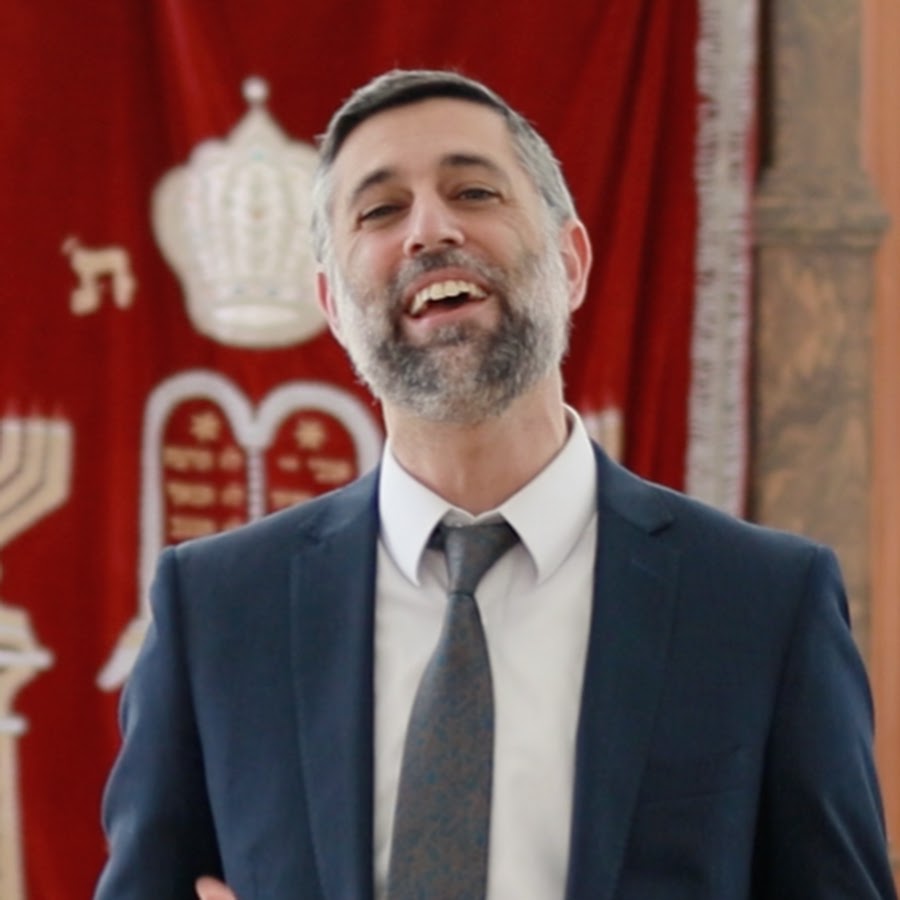
Why is Moshe chosen as the only one who can hear Hashem's voice speaking from the Ohel Moed (Tabernacle)? What is unique about Avraham that he is chosen? How is he able to destroy many kings in one night? Why is he chasing them if they've 'already' fallen? How is Dovid Hamelech chosen, in a parallel way? I he chosen because of something that he did, or is it just a kindness from Hashem? How can each of us become 'chosen,' and how does the fall of the enemies in those times parallel the fall of Israel's enemies today? Find out in this week's Parsha Podcast.
Comments(0)
Transcript
Auto-generated transcript. Not time-synced to the video.
You're listening to the weekly partial
podcast with Ari Goldwag, recording with
the show's never-ending assistance in
Ramat Beit Shemesh Israel 5786
2026.
This week's parsha is parshas Vayikra,
beginning of a new safer of the Torah.
Hashem calls to Moshe,
Moshe Rabbeinu,
alone, hears the voice of Hashem calling
to him from the Ohel Moed, from the tent
of meeting,
from between the cherubim, from between
the two cherubs which stood upon upon
the Aron Habris, the Ark of the
Covenant.
The Medrash teaches us, as always, a
beautiful beautiful idea that has to do
with
the chosenness, the specialness of Moshe
Rabbeinu.
And before getting to Moshe Rabbeinu,
we're going to look through two other
people who were chosen and Hashem spoke
to them. One was Avraham Avinu,
and one was David Hamelech, King David.
And in understanding each of them, we'll
understand Moshe, we'll understand why
he was chosen.
We'll also We'll also understand
how we can all make ourselves prone to
being chosen.
And the Medrash
in speaking about it, brings psukim in
Tehillim, perek peh tes, beautiful
psukim.
And in perek peh tes, pasuk yud tes,
it's going to start talking pasuk chof,
but already going to share with you
something from pasuk yud tes.
It says like this, "Ki l'Hashem
magineinu,
to Hashem belongs our protection. He is
our shield.
U'ktzish Yisrael malkeinu,
our king
is
either belongs to our king belongs to,
meaning whoever is the leader of the
Jewish people,
he's in the hands of Hashem, or
the one who is our king is the Holy One
of Israel.
That's the Ribono Shel Olam, the master
of the world.
And then it brings another psukim and
focus in over here very well because
we're going to understand and explore
these psukim in the Medrash together.
"Az dibarta Az dibarta b'chazon
l'chasidecha, then you spoke with a
vision
to your to your righteous one.
At timer shivisi ezer al gibor,
and you said, "Shivisi,
we've spoken about the word shivisi, but
in this context, it means to place,
or as we'll see, it can mean to value.
Shivisi ezer al gibor, Hashem says, "I
have placed
the help on the one who is mighty.
I've given you your strength," Hashem
says to King David, and we'll see it's
Avraham and also to Moshe.
"Hareimosi bachur m'am,
I have lifted out the chosen one from
the nation."
This Hashem chooses
David, Hashem chooses Avraham, Hashem
chooses Moshe to be the one that he
speaks to. And we'll see why.
"Matzasi David avdi b'shemen kodshi
m'shachtiv, pasuk in the pasuk chof is
talking about King David, "I have found
David my servant,
and with my holy oil
I have anointed him.
Asher yadi tikaneinu, my hand will be
established with him, Hashem acts
through him.
U'zro'i t'amtzenu, my my arm will give
him power."
Okay? So, it's important to understand,
as we'll see in the Medrash, that what
gives a Moshe Rabbeinu his power, what
gives an Avraham Avinu his power, what
gives a David Hamelech, a King David his
power, it's Hashem's power.
He's just an expression of Hashem.
Let's study this together.
Rebbi Avin b'shem Rebbi Brechya saba
pasach, Rebbi Avin in the name of Rebbi
Brechya, the elder one, opened. And when
we open, we're opening a new book,
Vayikra, and we're opening a new chapter
in our understanding of our relationship
with Hashem, what it means for Hashem to
call a person. What does it mean Hashem
called Moshe?
Why did Why was Moshe chosen? How can we
be chosen? How can we be called and hear
the voice of Hashem?
>> [snorts]
>> So, in explaining this, he brings our
our psukim in Tehillim, perek peh tes,
chapter 89, verse 20. "Az dibarta
b'chazon l'chasidecha, then you spoke
with a vision to the righteous one."
"Vayidaber Elokim el Avraham." The
Medrash starts over saying that this is
speaking about Abraham.
Avraham Avinu, "Asher nidbar imoi
b'dibur uv'chazon, Hashem spoke to him
both with words and with visions, right?
Right, often it says, "Vayidaber Hashem
el Moshe, Hashem spoke to Moshe," which
means that he heard Hashem's voice.
But sometimes Hashem speaks with a with
a with sound to the to the navi, to the
prophet, and sometimes Hashem shows him
a vision, he sees something.
Ad lo dichsiv,
this is what it says,
"Acharei hadvarim ha'eileh hayah dvar
Hashem el Avram b'machazeh leimor,
Hashem spoke after these matters." It's
a pasuk in Breishis, in Genesis chapter
15, verse 1.
Avram hears
the word of Hashem and he sees a vision
of that which Hashem wants to show him.
L'chasidecha,
to the righteous one.
What is it that qualifies a person for a
vision? How do we get to hear Hashem's
voice? What is it that we need to do to
merit it? We need to be a chassid, the
pasuk tells us. We need to be righteous.
Right? The word righteousness, a
chassid,
is someone who does chassid, does
kindness.
Titein emes l'Yaakov, chesed l'Avraham,
the pasuk says,
"Give truth to Jacob,
kindness to Avraham." The mida of Yaakov
Avinu, of Jacob was truth.
The mida of Avraham was kindness.
And it's that kindness, we'll see more
about this in relationship to King
David,
but it's that aspect that qualifies him
as a chassid and therefore
allows him to hear the voice of Hashem.
At timer shivisi ezer al gibor, pasuk
says
that there is a statement, and the
statement is
that Hashem places
help upon the mighty one.
Wait, so I have a question.
If we are defeating our enemies,
if we are
killing out the leaders of Iran,
right? If we are succeeding in battle,
so does that make us mighty?
Do we
the pasuk says says, "Shivisi ezer al
gibor, I have placed my help upon the
mighty one."
So, is he mighty? Does he have any
strength of his own? Is Hashem just
helping him? Let's see what the Medrash
says.
This of course applies to our times as
well, so important.
"Sh'arag arba melachim b'laylah echad,
the psukim tell us that Avraham Avinu
killed four kings in one night.
He ki- He
He
had a targeted strike against four
leaders on the same night. "Ad lo
dichsiv,
pasuk says in Breishis yud daled, pasuk
tes v'eileh, "Vayichalek aleihem laylah,
v'yagimem,
they went out at night and attacked the
four kings in the battle of the four and
five kings."
Amar Rebbi Yitzchak,
the pasuk says something funny.
It says that they killed the the dead
ones.
They killed the dead ones. Amar Rebbi
Yitzchak, "V'chi yesh adam rodef
harugim? Can you Can you
run after
Can you chase down the dead ones? People
who are dead?" "Vayakin vayeredefem ad
Chovah." Pasuk says they struck them,
which means they killed them, and they
ran after them until a place called
Chovah. How do you run after somebody
you've already killed?
Ela m'lamed she'Kadosh Baruch Hu horeg
v'Avram rodef.
This teaches us a foundational idea.
You want to know how Klal Yisrael has
the ability to destroy our enemies?
Avraham Avinu was the example of this.
How was he able to kill these four kings
who had captured his nephew Lot
and bring back the people of Sodom to
win in battle and of course to
be a representative, myself as Siman
L'vanim, that Am Yisrael in the future
will have successful battles, as we see
today.
How is it possible for Avram to kill
someone who's already dead? The answer
is, that's the secret. He was killing
someone who was already dead, which
means to say that Hashem had already
determined
that these kings would be vanquished.
Why was Avram able to vanquish them? Why
did he run after them if they were dead?
They were dead, as it were,
in a spiritual sense.
Hashem had already decided that these
kings
are finished. Their time is up.
Their ability to suppress, to oppress,
to do whatever evil they've done,
it's over.
Time is up. The time is up for the
Iranian leaders.
Now, when Klal Yisrael comes in and
destroys them, of course, it's with
Siyata Dishmaya, it's with
spiritual help,
it's with help from Hashem,
but on a deeper level,
their spiritual life force was already
taken away from them.
That's what gave them the the That's
what gave the ability to Avraham Avinu
to kill, to run after those who are
already dead,
spiritually dead, spiritually detached
from Hashem, and therefore Avram is able
to get them all in one night to destroy
the head of the viper, the head of the
snake, alongside all of his henchmen all
in one blow.
Why? Because Hashem had already taken
away their spiritual sustenance.
I remind you
the possuk says,
Hashem separated
a chosen one, a bachur. What's a bachur?
We think of a bachur as a young man. The
word bachur means a chosen one. Like in
the lashon
Ze Avraham bachur Hashem Asher bacharta
be'Avraham. Hashem chose, like we see
every morning in davening, Hashem chose
Avraham.
Which means, what does it mean to
choose? It means to separate something
out from something else.
I have a whole
display of apples, I choose the ones
that I like
and I put them in my bag.
Now, as we're going to see, was there
something specific?
What's the idea of choosing something?
Is it random? Is it a random choice?
Is it something that they've already
earned?
So, we'll see that it's not per se
something that they've already earned.
It just represents
something that they are
and the potential for who they can be.
Let's see this in the context of David.
Till now we're speaking about Avraham
Avinu and we will return to Moshe, of
course, which is our parsha.
Davar acher az dibarta b'chazon
l'chasidcha. They have another
explanation by this possuk.
Then you spoke with a vision
to your righteous individual.
V'dar Avraham David she'ne'emar b'chazon
u'v'dibbur.
It's speaking about King David. Hashem
spoke to him. Shem interacted with him
both with speech
and with a vision. Navi d'tzidkecha
Avraham Avinu k'chol ha'chizon ha'zeh.
Kein diber Nosson el David.
Possuk refers to Nosson ha'navi, the
prophet Nathan.
That he had revelations through speech
and through through visions
which were intended to be given over to
David ha'melech, to King David.
V'chasidcha
It's for the righteous individual.
That's a reference to David, to King
David she'ne'emar shomra nafshi ki
chasid ani.
He says,
"Protect my soul because I am
righteous."
V'ta'am she'v'si ezer al gibor.
Just like we said by Avraham Avinu,
Hashem was his help. Which by the way,
by Avraham, just taking back for a
moment,
we said, "She'v'si ezer al gibor." He
was a mighty one. Hashem gave him help.
So, we understand that his strength
didn't really come from himself, right?
He was only able to defeat them because
Hashem had taken away power.
So, maybe it could be that the ezer al
gibor, Hashem is the gibor. Hashem is
the mighty one. And the human being
helps, as it were,
because he's the one, the human being,
one who is zocheh, one who merits, he
becomes a vehicle for the divine justice
in this case.
He becomes the one who metes out the
punishment, brings about the downfall of
these kings.
Rebbi Avraham bar Chanina, back to David
ha'melech. Omer shlosha asar milchamosav
shel David.
Rebbi Avraham bar Chanina says, King
David waged 13 different battles.
Rabbanan acherim shmona asar. The sages
say, "No, there were 18 battles."
V'lo pligi, they're not actually
arguing. Were there 13? Were there 18?
The answer is yes, there were both. Mai
d'amar shlosha asar she'l Klal Yisrael.
The one who says that he waged 13
battles, obviously we're saying with the
help of Hashem
and he was able to defeat his enemies.
Why? In a similar way
to Avraham Avinu, because Hashem had
taken away their spiritual sustenance
and now
it was possible to destroy them in the
in the physical realm.
So, the one who says that there were 13
battles, it's because it's referring to
the 13 battles that King David fought on
behalf of the Jewish people.
V'mai d'amar shmona asar, one who says
18 battles,
chameish l'tzorech atzmo, there were
five that he did for his own self.
Shlosha asar l'tzorech Klal Yisrael, and
there were 13 that were done on behalf
of the people of Israel.
The bottom line is,
he's able to do it. Why? Because Hashem
is doing it. I remind you bachur me'am.
Here's where where we come to an
important point. Hashem chose out,
Hashem lifted out King David from the
nation. He He chose him. Zeh David
she'ne'emar David avdi.
He cho- chose King David, his servant.
And
and in the next possuk, which we also
read, possuk aleph says, "Matzasi David
avdi."
I found King David, my servant. Why is
David ha'melech chosen?
Why is Avraham chosen?
And why will we see that Moshe Rabbenu
is chosen?
So, the reason is because he's Hashem's
servant. I want to read to you inside
what the Malbim says on these psukim in
Tehillim.
Possuk says,
I remind you bachur me'am, I remind you
me'am,
it's out of me bli hachana klal.
Rachamim chati l'kach. Malbim says an
amazing thing.
I chose him
without any preparation. I just plucked
him up and pulled him out from the
entire nation. This is my guy.
Which almost sounds random, but it's
not.
Says the Malbim, "Matzasi mefaresh neged
emunah k'fi ha'chana."
There is an aspect here of no
preparation, but there's a different
aspect of preparation indeed.
Omer matzasi David avdi she'matzasi oso
muchan l'kach.
It looks like I just plucked him out
randomly, but that's not the case.
David ha'melech was chosen because of
his own personal preparation.
Mitzad she'hu avdi v'lo avdi l'eisi.
Because he serves me, he's my servant.
V'neged ha'chesed ha'elyon omer, so
there's one aspect which is rightfully,
it's right it's rightful, it's it's
correct. Tzmi'da k'neged mida, you want
to serve Hashem, you are chosen.
But then there's an aspect of chesed as
well. Hashem is doing kindness with him,
he doesn't deserve it.
Omer v'shemen kodshi m'shachtiv, the
possuk also says
that Hashem anointed him with the oil
of his holiness. M'bli ashkeif al
hachana.
There's an aspect of Hashem looking at
his preparation, there's an aspect of it
without any preparation.
K'yishpati al kiddush elyon al yedei
m'shichasi.
Hashem pours out
an amazing, awesome, transcendent
holiness
upon David ha'melech. When David
ha'melech succeeds, King David, we've
spoken in the past about ruach
ha'kodesh,
a spirit of holiness.
It really means something that it's
beyond any human nature. It's beyond
something that a person naturally can
accomplish.
Esther ha'malka couldn't naturally walk
into Achashverosh, she would have been
killed.
She should have been killed.
Shimshon ha'gibor couldn't naturally
have such incredible physical power.
Avraham Avinu couldn't naturally kill
four kings in one night. The Jewish
people today,
the the
very
Iron Dome
that quote unquote protects us,
knocks down the missiles from the sky,
it doesn't work the same in the rest of
the world as it does in Israel. In
Israel, the numbers, the percentages of
how many it's able to knock out of the
sky are much higher than anywhere else.
The same system.
It works because Hashem allows it to
work.
Siyata d'Shmaya, we don't deserve it.
We don't deserve it.
But Hashem pours it out on us.
Yeah.
Okay. So, that's the idea that I wanted
to share from the Malbim. So, the Malbim
is telling us that David, Avraham, Klal
Yisrael,
we get this amazing divine assistance
without necessarily
being worthy of it. In some ways we are.
Why are we worthy of it? Because
we have shown ourselves to be interested
in serving Hashem.
What are we doing here in Israel? Why
are there Jews in Israel? Because this
is the land, this is the place that
we're meant to serve Hashem.
Right? The mitzvos
The mitzvos are meant to be fulfilled,
they're designed to be fulfilled in the
land
of Israel.
Now he brings, the Medrash finishes off,
Davar acher az dibarta b'chazon.
Then you spoke with a vision. V'dar
Avraham Moshe she'ne'emar b'dibbur
u'v'chazon. It's speaking about Moses.
God spoke to him both with speech
and with a vision. She'ne'emar peh el
peh dibarti vi.
Possuk says,
"Mouth to mouth I speak to him."
And
there's also in that possuk it refers to
the fact that there was something that
he saw. He saw.
He was able to speak, right? Face to
face.
L'chasidcha
Why is Moshe, how do we see in other
contexts that Moshe is referred to as a
khasid
as someone who is
uniquely righteous.
Shimon Ishi Levi possuk says cuz he was
from
the tribe of Levi.
Refers
to the righteous individual of Levi of
the Levites possuk in Devarim.
Possuk says I have placed help
upon the one who is strong.
This is a reference to that which it
says
Hashem
uniquely spoke to Moshe.
Now this is something that requires a
lot of strength, stamina, ability to
receive, to withstand.
Usually something that's difficult for
one person to carry it's easier with
two.
If two people have trouble carrying
something, bring four.
Do you ever find
that there was something which was too
heavy for 600,000 people
but it was easy for one person to carry?
All of the people of Israel stood in
front of Mount Sinai and they said
Im yeshua nachnu shmaya
They said we can't withstand listening
to Hashem's voice.
The first two
of the dibroys
the first two of the 10 commandments
were stated
by Hashem, heard by all of the Jewish
people.
And then
subsequently they said we can't handle
it.
They said we can't carry this.
But Moshe Rabbeinu 600,000 people can't
hear it but Moshe
says the Medrash
he was able to hear the sound of
Hashem's voice and he lived.
Teida d'kashu kein.
We can know that this is true. Shem kol
karah dibur el Moshe.
>> [snorts]
>> Because of all
of the people who the the word of Hashem
called out to
who heard it?
Who is the one individual who heard it?
She amar vayikra Moshe it was
specifically Moshe.
Rami assi bachur me'am.
Hashem chose him from all of the nation.
He lifted him out. He chose him.
Lulei Moshe b'chira possuk says here it
refers to Moshe that Moshe was the
chosen one. He was chosen by Hashem.
And again I want to reiterate and and
repeat and think about and and
bring awareness to
why was Moshe chosen?
Why was he chosen? Why was he the b'chir
Hashem?
Why was he called the eved Hashem? He
was called the servant of Hashem.
That's why he was chosen to be the
b'chir Hashem.
Bachur me'am. He's the one who's chosen
from the nation.
He's the one who out of 600,000 people
they can't hear Hashem's voice but Moshe
can hear. Why?
Cuz he's similar to a Dovid Hamelech.
He's similar to an Avraham Avinu. What
is unique about these individuals?
They had the ability
to stand up and serve Hashem to make the
center of their life
their most important central component
of their life was
serving Hashem was being an eved Hashem.
And as a result of that a Moshe Rabbeinu
is called
Right I I was discussing recently with
someone
about the idea of ruach hakodesh.
How does one get ruach hakodesh?
Is it possible to get ruach hakodesh
today? And we've talked about this
at length and I'm going to keep talking
about it cuz it interests me.
Is it possible to hear Hashem's voice?
The answer is yes. How do I know? Cuz it
says it in our holy sforim.
Shulchan Aruch says it. It's brought
down elsewhere.
Ruach hakodesh today? Yes.
And how do you get there?
The answer is what we're saying here is
eved Hashem.
Why couldn't we handle hearing it
600,000 of us? Why couldn't we handle
hearing it?
The recognition
that Hashem is all there is
it's a powerful recognition. Anochi
Hashem Elokecha the first two
commandments we heard.
But living in a space where Hashem is
all there is that means I got to get rid
of myself.
Means I got to get rid of what I want.
Means I got to get rid of
all of all of the uh
all of the things that
my ego desires.
But in doing so
I start to hear Hashem's voice.
I start to hear Hashem's voice. Anochi
Hashem Elokecha all there really is is
only God.
I don't have any other gods.
Don't let any of your
physical desires, your physical needs
become your god. And what is a god
really? It's the one that we focus on.
What is an eved? A servant?
It means that everything that I do is
just for my master. That's what an eved
is.
So if I know Anochi Hashem Elokecha is
the center of my life which was the case
for Avraham Avinu
case for Dovid Hamelech, case for Moshe
Rabbeinu what happens?
What happens is there are no battles.
There are no battles.
Avraham Avinu doesn't kill those kings.
Those kings are already dead.
Moshe Rabbeinu
doesn't battle Og. Og is already dead.
Dovid Hamelech doesn't battle his 13 or
18 battles.
His enemies are already dead.
Why?
Cuz he lives in a space
where he's aligned with Hashem.
There is no there's no power that can
oppose
the one who is only interested in
serving Hashem. There's no power that
can oppose that person.
To the extent that Klal Yisrael
is focused on serving Hashem there's no
power that can oppose us.
V'ru kol amei ha'aretz ki shem Hashem
nikra alecha v'yaru mimecha they become
fearful of us.
Not cuz we have superior weapons
but because we are superior spiritually.
I don't remember if I mentioned this
but maybe I did but
the there's a video I saw recently from
Rav Shmuel Eliyahu who's the
who's the
Rav of Rosh Yeshiva of Tzfat
the chief rabbi of Tzfat
and he speaks about the fact that the
Arabs have I mean now they can't go at
all because Har Habayit is closed
but over the last few months they've
been going less and less.
And when asked about it
they responded and said they've seen
how the Jews
were doing shticha v'avaya there showing
their full
complete subservience to Hashem.
And as a result of that they are afraid.
They're scared.
They're scared to come up there. They
know that once the Jews start to
completely
give themselves over and and fall in
front of Hashem
there's no power that can destroy us.
And that's in a certain way symbolic
but it's at the depth
of what's going on. It's at the depth of
what gives us our power.
Gives Klal Yisrael our power is that we
serve Hashem that we fall in front of
Hashem completely
uh bottle
completely surrendered
to Hakadosh Baruch Hu.
And
I I was talking to this person and
we were talking about ruach hakodesh and
he said uh
you know ruach hakodesh comes
accidentally.
It doesn't just arrive or or uh
a spiritual revelation sometimes we have
an insight.
It doesn't just
it arrives by accident. Right the sense
when a person has an insight or even
when I make up a song sense is that it
it just came.
But
it's a an important thing to be accident
prone. That's that's something that we
can do. It comes by accident so to
speak.
But we can develop the ability to be
accident prone. And the way that we do
that
is by making ourselves into servants.
We prepare ourselves
with hachana to be that person Hashem
will choose.
And then Hashem chooses us and what he
gives us is chesed.
It's a kindness.
It's not something that we necessarily
deserve. I want to bless you and ask you
to bless me.
Hashem should help us that we should
indeed be his servants.
We should indeed learn from an Avraham
from a Moshe, from a Dovid
what it means to truly battle.
It means to be his servants
so that our enemies
they fall before they fall
and we're chasing people who are dead
men.
Thank you so much for listening. Have a
wonderful Shabbos.
This podcast was made possible through
the gracious donations of listeners like
you.
>> [music]
>> For more podcasts like this please visit
www.arigoldweg.com
or search [music] on iTunes Ari Goldweg.