0:00 / 0:00
Zoe Fertik | The Deal w/ Nissim Black (Full Episode)
4,222 views
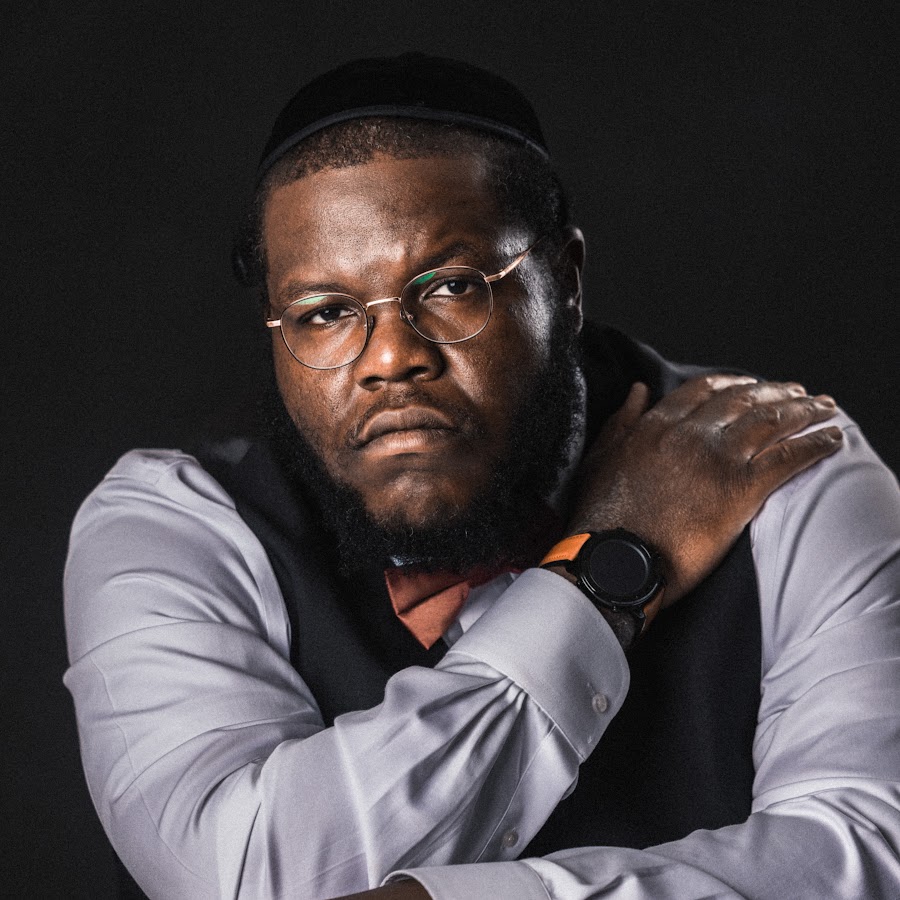
Zoe Fertik is the former Associate Director of Jewish Content at the Oshman Family JCC in Palo Alto. There, she built a partnership between the Oshman Family JCC and BINA: The Jewish Movement for Social Change, in an effort to expand opportunities for American Jews to experience Jewish learning in the style of BINA's Secular Yeshiva.
Featuring:
Nissim Black
Categories:
Music
Comments(0)
Transcript
Auto-generated transcript. Not time-synced to the video.
[Music]
so first off I want to thank you so much
Zoe for being on the show really really
do appreciate you coming on thank you
for having me I'm so excited thank you
thank you so much so listen now your
most recent position um had you running
a secular Yeshiva right so now you
already know that there's going to be so
many different questions behind that
like you're going to ask about the
Paradox of a secular Yeshiva yeah
exactly I mean like who wouldn't want to
know the the moment that they hear
secular Yeshiva and everybody wants to
know what does that mean and and and how
do you even get excited about doing
something like that yeah it's a great
starting question and unfortunately it's
going to take us down a definition
Rabbit Hole okay because when I say
something like secular Yeshiva it begs
the question what is secular and it begs
the question what's a Yeshiva so let's
start from the very beginning um let's
start with uh the word that's maybe
harder to translate but that maybe is
more familiar which is Yeshiva have you
spent much time in a Yeshiva n no thank
God thank God I have not why do you say
thank god let's just let's Jump Right In
I'm just saying the guys you know it's
it's like a Yeshiva thing and I'm not
against obviously I'm not against
Yeshiva but there's something uh that is
so great and so Grand about being that
uh either bcha and my case a g that came
from the outside that had this magical
love affair with the shim that came
running after whoever would teach me
something and not being able it just it
just so happened that I I you know
converted in Seattle um not a big
Yeshiva place there's no Yeshiva is
there really you know so there was no
place for me I was going to the co co
and I was learning with people at their
home and because that was my way
everything was I had to work for
everything I learned for there was no
system there was no base midis for me to
just go sit in and just jump into the I
I had to work for everything that I had
and I see the benefit of that over
everything's being handed to me in
Yeshiva there Riva go ask all my
questions to whatever the struggle and
the toil to find EMS is so much uh more
rewarding when you didn't come up in the
system so to speak great
so so I had a similar experience of
having to sort of Climb Every ladder to
get access to learning for different
reasons than perhaps you didn't find
learning readily available so that by
the time I found myself in a Yeshiva
setting which was in the summer of 2014
I just spent two months in Manhattan at
a amazing amazing institution called
yeshivat Hadar Hadar is on the upper
west side and by the time I landed at
Hadar and I was in what I what you call
sort of like the system I was so
relieved because I found myself finally
in a place where I wasn't fighting tooth
and nail to get access to the
learning but the learning was just all
around me and I was able to let go of
the struggle of how to find Jewish
learning and I was able to actually
enjoy it in an immersive way so I fell
in love with a Yeshiva and I'm not the
typical person perhaps that you would
think of when you think of a Yeshiva
student because I think probably like
the general the general uh image the the
stereotypical image of a Yeshiva Booker
is is obviously a Booker it's a guy and
we're talking about you know Orthodox
we're talking about people who know how
to like move their bodies like this back
and forth shuckling while they're
learning and you know they're wearing
certain outfits that I wouldn't wear and
uh I didn't care that I wasn't the
typical Persona of someone who would
have access to a Yeshiva I fell in love
with the idea of Jewish learning and I
was looking for learning wherever I
could get it this was um
in my early 20s when I discovered Jewish
learning and I'm sure you and I will
will get to how I how I became
interested in Jewish learning but uh
Yeshiva is a place where you can do
traditional Jewish learning it's a place
where the tables are sitting are in rows
and you sit across the table from your
Kusa from your kuta from your partner
your learning pair and there is a
certain noise of all of these learning
pairs sitting across the table from each
other and studying the same material but
in their own way right right right so
that's a Yeshiva okay fine now what's a
secular Yeshiva what's secular
so um I think secular is a terrible word
and I wish I didn't have to use it but I
don't know what word to use and if you
in your all in your command of the
English language and in all of your
artistic creativity can come up with a
better word for secular KNE seam then
this podcast will have paid paid the
dues um but when I use the word secular
I'm actually translating a word from
Hebrew which is the word koni right and
koni has a different connotation in
Hebrew and in Israeli culture than I
think the word secular does in in
English I mean but it's like that with a
lot of words it's so hard to like once
you say it in English it's like no but
really mean that right right right
exactly so when when you say in English
probably what you mean is like a world
without god um and that means a world
without Revelation it means that you you
access knowledge through reason instead
of through divine revelation and so if
you're just like on the street talking
about secular in America probably what
people think you mean is I don't believe
in God right right I don't think that's
what it means in in Israel I don't think
that Kon has anything really to do with
God I think a lot of Kon people in
Israel believe in God so when you say in
Israel what you're talking about is not
observant what you're talking about is
someone who's not show someone who
doesn't keep the Commandments someone
who doesn't keep kosher someone who
doesn't keep Shabbat right and I'm using
I'm using secular when I say secular
Shiva I'm really talking about
non-observant so I'm talking about a
place where you can learn Torah and tud
and all traditional Jewish texts in a
traditional way without having to keep
strict observance of The Commandments
that's what I mean when I say secular
Yeshiva got it got it so
and I mean I guess
the the the end goal would be I mean
what is the end goal from that if you if
you have a bunch of people who may be so
to speak out of touch with their Roots
you know how to touch with the roots and
and it's really it's like a big thing
for me I feel
as a person like I said I was not born
and did not um grow up you know in in
Judaism in the jsh I feel like when I
started learning Torah I was returning
home I felt like this was something that
was deep seated inside of me that
something I was connected to that was
beyond you know anything I could have
imagined in so how much more so for a
person who Kon who's secular or whatever
for lack of a better ter we we'll try to
come up with one before we finish but
um like how you know what's the end goal
are you seeing and whatever you're
trying to achieve do you see that you're
achieving it okay great yeah I mean I
can't say for sure that I can see that
I'm achieving it but I can tell you
about my own personal experience because
I feel like I achieved it right I was at
a Crossroads in my Jewish journey I was
in my early 20s I had grown up reform I
had spent time in Israel and there was
something still lacking for me there was
something that wasn't full about my
Judaism right but because I grew up
reform and because I hung out in secular
Israel and my teens I had come back to
America in my early 20s and I I wasn't
really sure how to fill up my Judaism
because to be fully Jewish in
America to have an immersive Jewish
experience to have a Jewish life that's
full of meaning I mean the truth is the
people who are doing the best are the
are the Orthodox Jews if I'm being
honest right and so I didn't I couldn't
figure out how to have a full Jewish
experience in my day-to-day without
becoming Orthodox and I am not a person
who keeps Shabbat I'm not a person who
keeps strict Kure and I didn't want to
be so I wasn't sure how to fill up my
Jewish life and what I experienced when
I started learning Torah for the first
time was that it was the first
experience I had jewishly where my Jud
it just felt like it was growing the
Jewish feeling inside me from the inside
I it was the first time where I felt
like oh learning Torah makes me feel
more Jewish all the time
247 right the way that it works I think
is probably as simple as this you know
when you like see a great movie or you
listen to a great song and then for like
the next day everything makes you think
of that movie everything makes you think
of that song right right right right
learning Torah is like that because when
you learn a piece of Torah in the
morning you walk around with it for the
rest of the day and everything makes you
think about it and so what ends up
happening is that you learn a little bit
of Torah in the morning and then the
rest of your day
feels more Jewish it takes on a Jewish
feeling because your reference set
becomes more Jewish in some way the
things that you are reacting to in the
world aren't just the song you you heard
yesterday the movie you liked last week
it's some Jewish story it's some Jewish
teaching it's some Jewish person and you
start seeing the world through Jewish
eyes when you learn Torah right no I
would I would definitely agree with that
and I think one of the biggest issues
that I've had um so to speak in the in
the wider juu I think much more so in
the system Yeshiva system is the lack of
study of of the whole Torah really I'm G
to say the whole Torah studying tanak
and these things are it's it's like oh
my goodness if you knew the the the and
and one of my favorite things is like
this I love to to learn tanak and I'm
really focusing on the relationships
that the individuals are having with God
in the Tanakh beautiful I'm looking at
the and the favor that hasem is placing
on on Abraham and I'm looking at that
and I'm and I'm reading the p and Hashem
sing blessing him and Hashem why don't I
have these blessings I also want these
blessings I also want this type of
relationship with you David you know
King David it says that he was a man
after after God's Own Heart I also want
to be like that how come I how come they
not saying what they going to write
after after the books written about me
what are they going to write and and the
the you know the the amount of faith in
a Muna that could come out of it that's
very simple without it having to be
forced comes very much so I feel like
when people study study tanak so my
question for you is what do you do with
the god question then right so I'm
assuming you know like you're learning
Torah especially learning and one of the
biggest things is that gamar and and and
and and Mish different things you can
learn um and you can forget the god of
whose Torah you're learning
um as opposed to where other pieces are
t a little bit more intimate so with you
um in studying so many different
subjects do you feel like sometimes that
the god question comes up and it's out
of place you don't know how to give it
over to people or you know walk me
through that oh gosh from what you just
said there's like 20 things I want to
respond to so let me quickly respond to
two things have been learning a lot of
toe yeah right the back and forth has
begun you're my Kusa
today um so let me quickly just address
two things before I you know poorly and
incompletely address the god question
okay so first of all I just want to tell
you that um from the little I know about
you I know that you have a really strong
relationship with Hashem and it's one
that I admire just from from hearing
your story and from hearing the way that
you talk about it and I just want to
tell you that the more and more you
learn T the more that I hope you'll see
that you're not alone in feeling like
why isn't God reaching out to me
directly there are so many characters
and so many people in our history and in
our Shar narratives who have also had
that struggle and that is the struggle
and and if you see God talking to
Abraham you see God talking to Moshe
there's also times when Abraham and
Moshe felt like God wasn't
was talking to them enough I just want
you to know that you're not
alone uh okay the second thing I want to
say is that it's really funny to hear
you say you know there's so much access
to something like tud but when are we
going to study Tanakh because I grew up
reform and I grew up a woman I had
Tanakh available there was tanak
everywhere for me but for me I was like
where's the rinic when do I get access
to tud right I'm I'm not observant and
I'm a woman do I just never get to learn
talmud and so thank God there are a few
places now where you can learn talmud
and it's from those institutions that
have done that incredibly important
revolutionary work of opening up access
to talmud study for women that I have
been able to really deeply fall in love
with our Torah tradition uh through
those amazing amazing people who have
made tment available to women um so
that's the second thing I wanted to say
now the god question it's a huge
question how do you learn how do you
learn these texts without having God be
a major part of your experience whether
spiritually or even just theologically
how do you deal with these texts without
God and the question is um you don't you
you don't learn these texts without God
right there there's a certain amount of
cognitive dissonance that one can PR
practice
where you can read these stories where
God is a character you're reading about
or an idea you're reading about and not
something necessarily that you yourself
relate to or you yourself can feel or
you yourself can access and I think the
more and more that you work with God in
these texts in a way that you're
comfortable with the more and more that
you will figure out the role that God
wants to play in your
study which is to say it's a journey got
it got it God there God's there got it
okay so here's my next question for you
now um which I could just stop after the
punchline you live in the heart of
Silicon Valley dot dot dot dot dot dot
dot dot okay so it's not a place where I
spent much of my time um at all um but
the energies often seem to be against
tradition they would seem to be against
uh setting the Torah um at The JCC uh
there's a lot of Jews there also too
right but it seems to be like there's
some
anti- Torah you know Vibes going on over
there so where do you see the the future
of Torah study happening for Jews you
know who see themselves secular you know
in that place okay great so so first of
all for those of you who I've never met
who are listening to this I live in Palo
Alto California which is as n said the
heart of Silicon Valley right and my
husband is involved in Silicon Valley
and Silicon Valley is everywhere here
you can't escape it right um and when I
sort of Came Upon the idea that I was
going to be doing this work of opening a
secular Yeshiva at The JCC in Palo Alto
I thought the same thing that you're
asking me pal Alto does not seem like
the right place for this kind of work
and the truth is what I've discovered
here thank God is just the perfect like
spot on place for a secular yiva why
okay so first of all yes we're in a
secular place we're in a we're not in
New York we're not in La we're in a
place with a lot of secular Jews or
non-affiliated
Jews but this is not a community that is
afraid of wisdom we live I live in like
the smartest place on planet Earth
everyone is brilliant and these are
people who are interested in learning
they are interested in finding wisdom
wherever wisdom is offered so this is
not a place where people are against
Torah learning this is a place where
they perhaps are not traditional but
they are not against learning in
whatever form it appears got it the
second thing is that this is a place
with a ginormous population of Israeli
expats and the Israelis who live here
are not traditional they are secular
because they came here for work they
didn't come here for any other reason
except to work in Tech and that is a
primarily secular Community right and
when that Israeli Community gets to Palo
Alto they start discovering that they're
actually Jewish and so what they're
looking for is a place to deepen their
Jewish commitment but they're not going
to change their Jewish practice right so
finding a place where there's access to
learning and no no behavioral
expectations is actually kind of the
perfect The Perfect Blend got it got it
totally understood okay so for
me let see how you answer this one okay
I'm big my whole I would say my whole
Essence and I would say the anchor of my
whole entire Judaism hinges on prayer on
to F even in yeshivas where um a typical
Yeshiva where there's obviously a lot of
Torah study going on they also have time
for set regular prayers so not only in
in in the Yesa but also I guess I ask
also in your personal life where does
prayer fit into your um to your
curriculum and also where does Andor uh
where does it fit into your personal
life it's a great question can I just
ask you a follow-up question before I
answer for sure it did prayer come first
for you or did something else come first
um I think that
prayer um meaning something else as in
did you connect to Judaism through Comm
community and then you found prayer did
you connect to Judaism through Torah and
then you found prayer did connect
through Israel and then prayer okay very
good question no it was prayer first it
was definitely prayer first was it about
Jewish prayer I think even when I was a
very I had a to for a period in life
where I was a very strong Christian in
my teenage years even back then prayer
was my thing I read the whole entire
Bible I highlighted it so much you
couldn't even there was no point of
having to highlight it because the whole
thing was highlighted I remembered where
every verse was every scripture you know
whatever but my thing was that even at
16 years old 17 years I would close
myself inside of my room and I would
pray and just talk to God for so so long
and Cry tears literally um so by the
time
um you know I'm having my my wakeup
moment and I'm coming coming to Judaism
and you know I just got out of a very
bad situation my natural response was
was praying was praying and I prayed a
lot a lot of prayers and I think that
that the more and more I got involved in
in Judaism it left because that wasn't
what was going on um you know it was
just wasn't a part of the program yeah
we had you know Shak you had the three
daily prayers but nobody was talking it
wasn't until I came across the the books
of Rabbi arush and the breasta uh
teachings that I was like this is it
this is it I knew I was because I
started to feel like a great lack I was
gaining a lot of knowledge lot of
information I didn't know and it was a
beautiful thing but nothing helped me
like going back and realizing how
important toila was and how important
prayer was you know in your in your in
your own personal life so for me I live
with that I'm talking about I I I mean
when I to pray about something to people
I'm generally not talking about you know
go to this grave site say a few to hel
and everything's good I'm not saying
everything's gone but I have been at
grave sites where I've stayed 17 hours I
didn't move I prayed to God for 17 hours
15 I'm talking about I I literally live
with this in you so I I for me it's the
biggest thing I even use my music people
ask me what do you listen to I don't
listen to anything I use it if it's
usable for me to to get myself into a
place where I can speak to God then I
then I listen to it if not then I just
generally don't have time so yeah it's
really interesting what you're saying
because um I as I picture you as a kid
praying on your bedroom floor I'm
reminded that Jewish prayer is primarily
not spontaneous it's set um there's a
set there's a set text and there's set
times and I never really connected to
that I didn't have that experience as a
Jewish kid growing up loving those set
prayers because I didn't know what I was
saying I spoke Hebrew but I didn't
understand what I was saying MH for me
Torah came first or Torah connected me
best because what I started to discover
was that all of the prayers that I know
and I know them by heart they're
actually a hodgepodge of verses right my
my my teacher Rabbi Ellie coner taught
this to me and it blew my mind that so
much of our prayer is just a collage of
different verses from different places
in Tanakh and when I started learning in
a more serious way and then I could
locate and recognize where those verses
were coming from and what ideas they
were calling on that's when the prayer
started coming to life for me but I
didn't have a feeling of oh I can just
spontaneously pray and I will be moved
because I didn't know what I was saying
it's now that I've been able to access
the deeper meaning of those prayers
through my deeper knowledge and my
broader knowledge of of Torah and of
aranan that's when the prayers have
started to come to life for
me but I will say that I love singing so
any prayer that has to do with singing
I'm that that's amazing you know in
college I was in um I went to Wesley
University which has a a gospel choir
that you can had you can uh you can join
as an elective and I started um I joined
the gospel choir and I loved it so much
and I think Kirk Franklin was like the
greatest soundtrack for connecting to
God that I've ever experienced and I
started going every Sunday to a to a
Pentecostal Church in westart Hartford
because I just love the music and I
remember feeling like oh my God you're
so Jewish I know exactly right but I
remember feeling I was sitting in this
church and feeling to myself like oh why
isn't why aren't our services like this
why aren't we you know just singing with
all of this might and force um and I
will say that now that I have a better
sense of what our prayers stand for I I
uh I'm better able to call up that
reverence call up that feeling call up
that zest and uh and have a better
prayer experience but it it isn't
primary for me it really isn't see at
least not yet right no listen it's it's
coming
um let's just hope we get there and
nothing makes us pray so I think I think
the biggest thing for me is I felt that
same way also too you have to realize
coming in and I've had that question
from other people who were converting or
Bali Chu was who were coming back from
uh coming back to Orthodox Judaism from
um either the secular or primarily from
the Christian background who have had
these fiery Services where God is and
and I'm a big believer I know there's a
lot of people who are very anti or
whatever and very I was a Christian I
hate when one of the worst things that I
I I I dislike although I'm not a
Christian
today um I have been a Muslim but I
don't like hearing people down talk
these other faiths because I have seen
people with complete devotion and faith
in what they believe in not all of them
you know uh may agree with it but there
has been people that have been sincere
wholeheartedly have given over
themselves completely to God the best
way that they know how the best way
that's been revealed to them I me and my
wife were just talking about this like
you know with all these different things
that go on we have to hilling groups and
all this other stuff but she
participated in church shuttings they
shut the door they hit the lights the
candles everybody's on their face before
God screaming out to God now the truth
is that's not a church original that
comes from Judaism that's that's a play
out of our textbook right and and we're
no longer you know what we used to be
but one of the biggest things that I've
gotten encouraged from apart from my
mini trips to uman F roash Shana oh wow
I really want to go I really want to do
that it's it's a it's a it's a different
type of electricity it's a different
type of type of prayer I was in me
Sharin maybe I would say uh just before
Ros so maybe a week or two before rosh
Shana I I I stayed in Jerusalem and I
went to May sh and there's a certain
block like a you know place where uh
there's I don't I don't know how you say
every everybody has prayers It's Like a
Prayer Factory you know okay this it
starts at this time this room it starts
at that time whatever and I'm looking
for this place because I missed the main
minion that I wanted to go to so I ended
up stumbling into I think it was told
usit certain group and I'm telling you I
walked in the place was like electricity
these guys are praying and doing and you
see even the and I'm talking about such
fire that I was just I was stuck for a
second I was just like H God thank God
it still exists it still exists the feel
it still exist you know and I think that
it's it's more then and I tell people
this all the time because I'm a breast
lover people think I say it but I'm
telling you this even before I knew
anything about breast love even prayer
itself is more Jewish than Rashi and
toos this is the this is the most this
and I'm not talking about the
individuals I'm talking about the
commentaries and the MIM and everything
else that come out of it the most Jewish
thing you can do is pray I was reading
the par learn in Para today and I'm
reading in and the Mount of is saying
that and Abraham stopped and he went
invoked the name of hasem he would
invoke that that's our heritage this is
what they did this is what they did so
it's always that can be of any
encouragement you gotta pray keep
praying you and I in oura today we have
found our greatus we you and I have
found our great disagreement in our
today because you will say that the most
Jewish thing is prayer and I will say
that the most thing is Torah and we can
we can duke it out through a lifetime of
learning and conversation okay I would
say this I would say this at least you
can't have one without the other that
what I would definitely say well what I
will tell you is that I I'm not so
deeply connected to prayer but I've had
fiery experiences and God has accessed
in this world through fiery experiences
that come when they come right and I I
when I met my husband I had that
experience at our under our HOA I had
that experience right and it wasn't
connected to prayer but oh my goodness
did I have the experience of God's
presence on this earth right right right
it's amazing it's amazing okay so more
questions for you before before we end
before we get into a bigger M we still
got to figure out the solution for
secular in English but I didn't forget
it so so Israel's goal and his purpose
is also is always framed as being a land
for Jews right it's always this is the
land of the Jews but there's so many
different uh disagreements there's a lot
of mcus you talk about the torent theila
there's a lot of big issues going on
here primarily you see this between the
Orthodox or Ked community and the
secular Community um what do you
think that we need in order for it to be
a better relationship between between
these groups and do you believe there's
a solution yeah so I'm actually pretty
optimistic I will say I'm I might be in
the minority because I'm feeling some
optimism
about the divisions in Jewish in our
Jewish world and the reason why I'm
feeling optimistic is like is as follows
I I grew up really Zionist and I Israel
is in my bones and I feel like it was
there from from the moment that I
entered this world Israel was in my
bones and one of the things
that I have learned to appreciate so
much about Israel I knew I felt it I
knew I had this connection and now that
I've learned more about Israel and spent
more time in Israel I have a deeper
appreciation and one of the reasons is
because even from the very beginning of
Israel there were debates about what
Israel should be right there were people
who believed in sort of like what I'll
call The Herzel camp that Israel was a
place for Jews which meant it was a
place where we could be safe and avoid
anti-Semitism and have sovereignty and
self-defense and then there were those
who I'll call the aadam school aadam is
another one of these early Zionist
thinkers and he was more of the opinion
that the purpose of Zionism was not to
be a hub for Jews but for Israel to be a
hub for Judaism it should be a place
where Judaism was getting put back into
its Homeland so that Judaism could
flourish in its natural soil right and
that mission of aam got seriously
interrupted because of the Holocaust we
lost so many Jews that The Herzel vision
of what Israel needed to be one out we
needed to preserve our bodies because
how could we preserve our ideas and our
lives and our culture until how could we
preserve any if we weren't preserving
ourselves MH but now it's been 70 years
since the Holocaust and one of the
reasons why we have so much division in
Jewish life is because thank God we have
enough Jews again for there to be a
variety of different iterations of what
Jewish life looks like and I actually
think we're at this beautiful moment in
Jewish history where we're finally at a
critical mass again at post Holocaust
that we can have every little iteration
of what Jewish life should should look
like and every group has their own idea
of what's most important and every sing
and there's enough people for each of
those groups to
exist and so I actually think we're at a
turning point where the divisions we're
seeing now is actually a good sign and
some of the boundaries are going to
start melting away and I I'm hoping that
this is a journey towards a sort of
boundaryless Jewish life where we can be
more unified in all of the ways that
practice in all the ways we believe
right right it's very good very good
answer okay so my last but not least
question is this so you have been
involved in many different projects
which one was your favorite and why oh
that's so not fair that is so not fair
because I am I am made from all of the
amazing experiences and I am full of
gratitude to the oh my God the Jewish
professionals and Jewish philanthropists
who made my Jewish life possible I am a
product of programs I did I have done
every program and I have worked in so
many institutions and I love them all
thank God I about my songs but like you
know if I'm like holding on to one and
somebody else says no this one is that
you know hold hang on to one of your
songs it's motherland bounce I love
motherland
bounce thank you thank you very much
thank you thank you which which by the
way was not my favorite I definitely did
not that's what I'm saying sometimes you
never know um you know when it when it
comes to because sometimes even if it's
something that's dear to you right uh it
could later on being like wow well this
one was the most impactful so therefore
it becomes my favorite I'm G say the
motherland bounce but that was like the
one song I recorded and I was like all
right let's get out of here and
everybody else pushed me everybody else
pushed me to put that song out I did it
wasn't my favorite I had if you listen
to the album I think I had 17 songs that
never got released it was with the label
they still holding the album that's the
only song that sounds close to like that
nothing else everything else is much
more melodic and more crazy so it was
like through everybody else pushing that
that one song and now everybody's like
oh motherland balance and I wouldn't
have thought that so you never can be so
sure you know by the way not to knock it
but I also love the opening the opening
uh bars of the deal from which this
broadcast gets its name it's so good
thank you thank you thank you so much um
okay so my my Jewish Home has been for
about a decade in organ ganization
called Bina and B is based in Tel Aviv
and it is the place that hosts the
secular Yeshiva and it is the place um
through which I was able to start
building my own version of a secular
yiva here in Palo Alto which is housed
at the Ashman family JCC in Palo Alto so
through a partnership of The JCC in Palo
Alto and Bina I've been able to do my
work of creating a secular yiva so give
credit where credit is due that's that's
my home but I'll say that I think and
I'm going to put in a plug for an
organization that I'm only Loosely
affiliated with I think the most
important organization of our time is
safaria because safaria just gave access
to Jewish texts to anyone with the
internet and it gave access to those
texts as well as the layering of the
commentaries in
English right and I just I I can't
imagine how Jewish learning could happen
in our day and age without safaria so I
just want to give give credit to that
organization because I think it is the
most important organization of our time
um and and you know people are able to
participate in building safaria think I
was so lucky safaria asked me to write
an essay that they posted and I wrote an
essay about
kala kala the bread I mean the bread we
all know in love but know nothing
about and and I was able to write a this
essay about kala that got posted on
safaria and through that process I got
to know a little bit more about the
amazing things that Safar have have
created and and I I just sefaria.org
here's my pitch I think it's the most
important organization of our that's a
great pitch that's a great pitch by the
way um I didn't come up with anything
for secular but listen at the end of the
day it seems to be doing something I
think the biggest thing is that it is
you're doing something that is going to
remind people of the essence of where
they came from and and and it's it's
going to open up to to a lot of people
and I'm sure you see it and you probably
have seen it um the the opportunity that
they probably wouldn't have got if they
would have just lived life the way that
they they did that they wouldn't even
have stop to think you know how many
people will come up you know I was at a
I was at a uh I was at a concert I think
I was doing a concert years ago maybe
eight years ago at sat squash and I'm
you know there with I don't know how
many people are Jews at least people
know the Jewish or I'm trying to get a
minion I I it's early in the morning I
had to stay over there in the
campgrounds and I got you know a safeer
Tor with me I have a rabbi and I got
about seven guys and we're running
around asking are you Jewish are you
Jewish are you Jewish and one of these
one of the guys that was there he goes
he goes no I'm not Jewish but my
mother's mother was Jewish but I'm I'm
not Jewish um you know guys like him you
know what I mean who could benefit from
something like this to to to at least
know just the uh the beauty of what they
have and where the Nish comes from it's
a big big big steps so as my mother
would say from your lips to God's ears
oh man oh man thank you so much for
coming on the show I really thank for
having me thank you thank you so much
[Music]